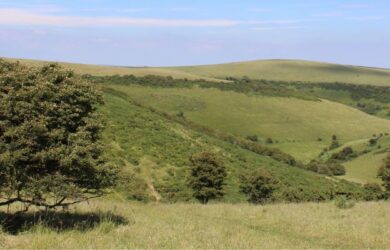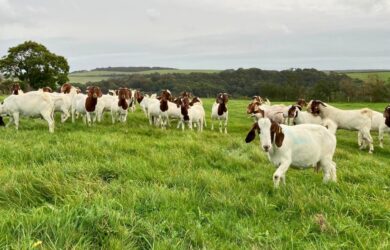
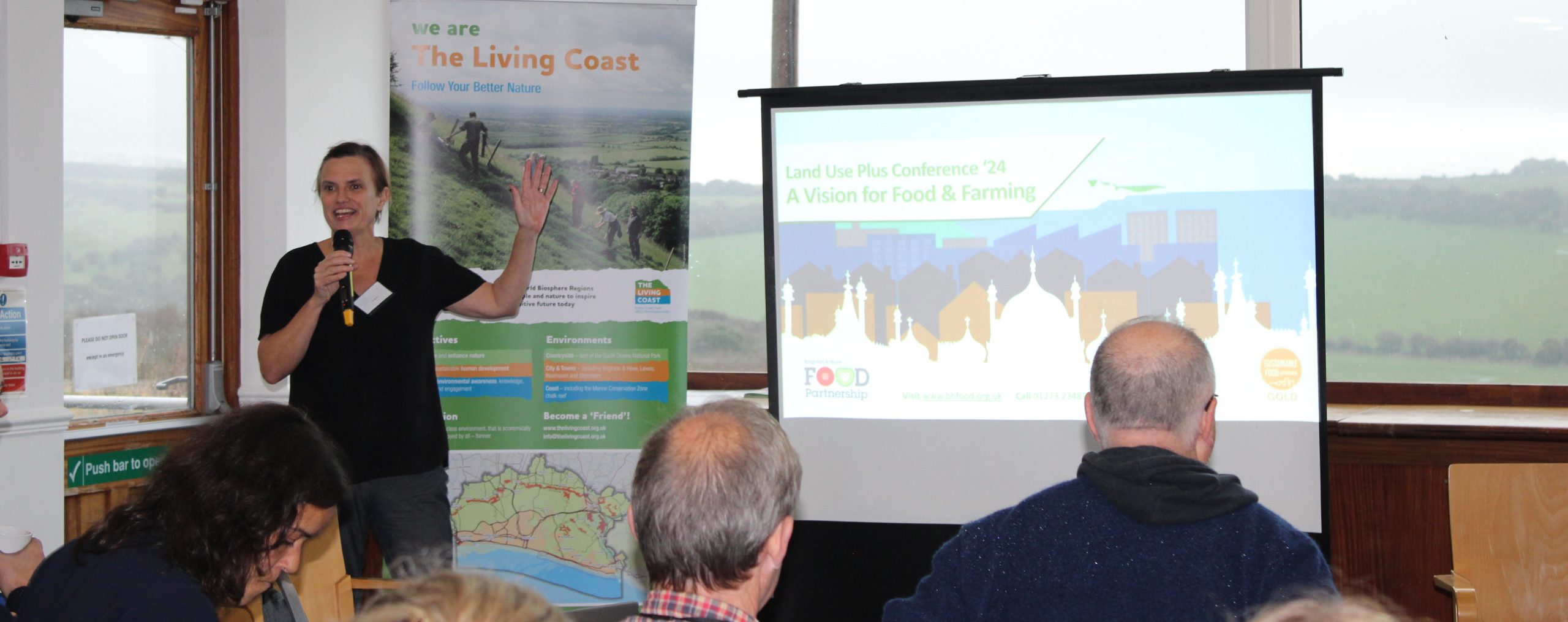
The theme of this year’s conference was “A Vision for Food and Farming” and delegates were encouraged to think about what the future of food production in Sussex looks like. In this blog, our Sussex Grazed Marketing and Events Intern, Georgina, gives us the low down on what she learned.
The day overall
The day began with farmer-led training sessions focused on the agroecological methods currently in use. This sparked discussions about the motivations behind farming with both environmental impact and profitability in mind, leading to larger conversations about maximising productivity through practices like enterprise stacking and share farming. Throughout five engaging sessions, we delved into the future possibilities for local farmers and landowners, wrapping up with a networking session. The conference was free to attend and attracted a diverse group of individuals and delegates. Including local farmers in our event was crucial for exploring how Sussex can take the lead in establishing and championing genuine farm-to-fork local food systems. The day wrapped up nicely with some local nibbles and some networking.

Farmer-led training
Paul at Wilding Waterhall, kicked off the day with an insightful demonstration showcasing the innovative no-fence collars used on the cattle grazing across the 90 hectares of grasslands and woodland. Paul explained how he trained the cattle to understand that the no-fence boundary works just like a physical fence, encouraging them to return within the designated area. We even got a firsthand look at the collars in action. He also shared how grazing areas are set up and how the cattle can be tracked using a mobile app, while being honest about some challenges he’s encountered with the collars. It was wonderful to hear that visitors are generally pleased with the cattle at Waterhall, enjoying the natural surroundings and familiar faces each time they come by.
Our next stop was the National Trust’s Saddlescombe Farm, where Roly Purzy shared the farm’s fascinating history and his journey as a tenant since 2013. From day one, Roly’s goal has been to boost biodiversity across the entire 450 acres, not just along field edges. He explained the disadvantages of typical grazing such as causing grass roots to contract, and why he practices rotational grazing. By dividing the fields and moving his Sussex Red cattle every few days during the rapid growth season, he ensures they don’t stay in one spot for more than four days. This approach improves soil structure, enhances frost resistance, boosts water retention, and increases resilience to flooding, all while promoting plant and insect diversity. It was an excellent opportunity for knowledge sharing, with farmers eager to learn from Roly’s methods. We wrapped up the training back at the clubhouse, enjoying a taste of beef from Roly’s previous meat share with Sussex Grazed. Read more about the Regenerative Grazing Practices at Saddlescombe Farm here.
The Local Meat Report: Panel discussion
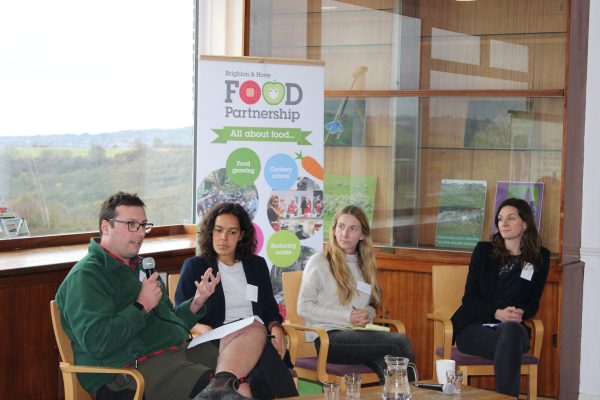
After a short introduction from Food Partnership Director Vic Borrill, and the UNESCO Living Coast Biosphere Melanie David-Durand, our panel assembled to discuss the findings of the latest Local Meat Report. The panel chaired by BHCC’s City Downland Estate Plan Programme Manager, James Woodward featured Amber Lawes-Johnson, PhD Researcher from the Royal Veterinary College, Harriet Henrick, County Advisor for Surrey NFU, alongside Laura Hockenhull, the Food Partnership’s Sussex Grazed and LUP Development Officer.
The discussions began with an acknowledgement of the alarming rate at which small to medium-sized local abattoirs are closing. This is concerning given that ‘an abattoir is a critical piece of livestock infrastructure.’ There has been a significant decrease in the workforce with specialised training in this industry. Yet, the consensus among the panel was that preserving the remaining abattoirs is currently the most economically viable way of having a more localised food system, specifically for meat. This means, investment into training and infrastructure is vital to support local abattoirs and ensure they can operate successfully. The difficulty lies in the fact that there is less political appetite for supporting abattoirs as they don’t want to be seen encouraging meat eating, which is often targeted as being “bad for the environment” by the press. Therefore, the future of local abattoirs lies in the hands of meat consumers who decide how they will purchase their meat.
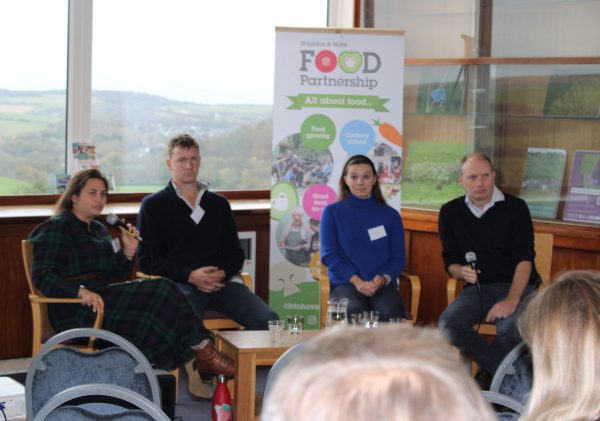
Enterprise Stacking: Panel Discussion
After a quick refreshment, our second panel began, chaired by Sophie Robinson, the Food Partnership’s Land Use Plus project manager, on Enterprise stacking, what it involves and the opportunities it can offer to landowners and users. James Hamilton, of Longbridge Regenerative, Kirsty Speed from C-L-M and Richard Harding, an Independent Agronomist made up the panel.
Enterprise stacking involves layering multiple agricultural enterprises on a single piece of land, with each enterprise complementing the others. This method boosts productivity and builds a resilient local food system, enriching the landscape with diverse enterprises. For example, apple trees could be planted among timber or coppice trees for wood fuel, offering additional products from the same land. In other cases, share farming helps cut costs and maximise land use. The panel shared fascinating examples, like ecotourism, that despite the high initial cost has the potential to provide substantial returns.
Given the current climate, enterprise stacking might provide farmers with more stability than government support alone. This sparked audience questions about whether the lack of financial backing forces farmers into enterprise stacking as a means of survival. While panelists agreed farmers shouldn’t feel pressured into this approach, they highlighted its potential to support a circular economy. The panel wrapped up by reflecting on how people often romanticise where their food is coming from; enterprise stacking gives consumers not only access to local farm products but also insights into the wide variety of produce and services their farms can offer.
A Beacon Farm for Brighton and Hove: Visioning workshop
We invited our guests to share their visions for a Beacon Farm within the Brighton and Hove food network, exploring what this could look like in terms of Community Engagement, Knowledge Exchange, Access to Land and Research and Development. With trusty post-it notes and pens in hand, ideas were brainstormed and mapped out, sparking some fantastic conversations among guests and speakers alike. People shared success stories and research insights that could make a real impact within the Brighton and Hove food network, which the Land Use Plus Project will take forward in their work. We wrapped up the workshop by sharing everyone’s visions for each topic area, creating an inspiring end to the session.
A Huge Thank You
Thank you to the amazing local food and drink producers who supplied the nibbles and drinks for the afternoon. The wonderful spread included local cheese from High Weald Dairy, hummus from Smorls, accompanied with crisps from The Sussex Crisp Company, some venison salami from Virtuous Venison and delicious bread and baked goods from Real Patisserie. There was a brilliant assortment of kombucha from Old Tree Brewery and fresh pressed apple juice from Brighton Permaculture Trust, as well as a variety of hot drinks including Skylark Coffee.