Here on the South East Coast, we are extremely fortunate to live in the UNESCO Brighton & Lewes Downs Biosphere Reserve, branded as The Living Coast. ‘A biosphere reserve is an area designated by UNESCO to inspire a positive future for people and nature, by considering everything that’s needed to make life sustainable.’ This area is rich in biodiversity and natural beauty with three distinct but inter-related environments; the countryside, the coast and our towns and cities.
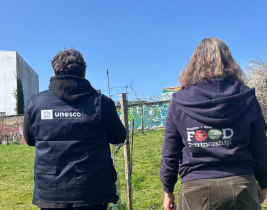 The Living Coast is unique for a handful of reasons, but out of the 700+ worldwide UNESCO biospheres, it includes a large urban area, Brighton and Hove. So, we were thrilled that this year, UNESCO decided to hold its annual meeting over the course of two days in our incredible city. The UNESCO team were joined by Chef Mauro Colagreco, UNESCO’s Goodwill Ambassador for Biodiversity and a three-Michelin-star chef. As one of The Living Coast key partners, the Food Partnership had the privilege of hosting a series of visits for the UNESCO team to learn more about the work we’re doing across the city to support people and nature.
The Living Coast is unique for a handful of reasons, but out of the 700+ worldwide UNESCO biospheres, it includes a large urban area, Brighton and Hove. So, we were thrilled that this year, UNESCO decided to hold its annual meeting over the course of two days in our inc
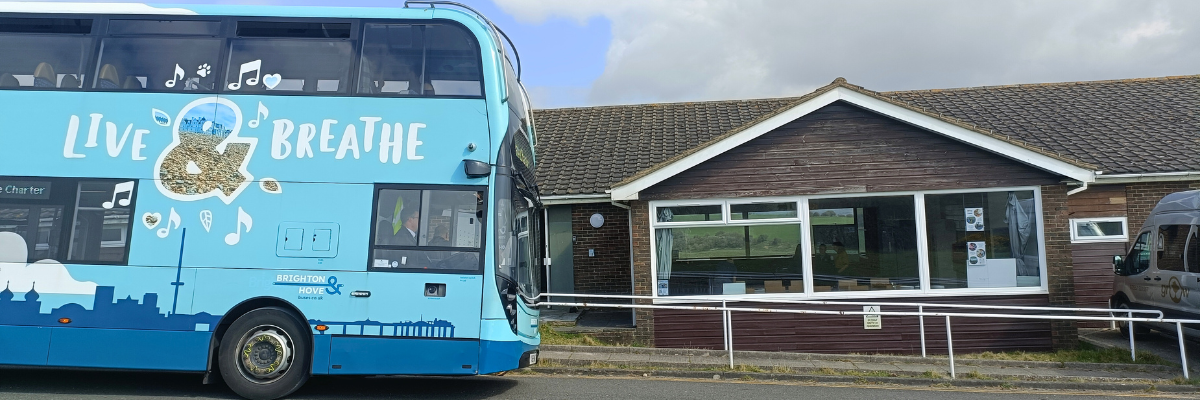
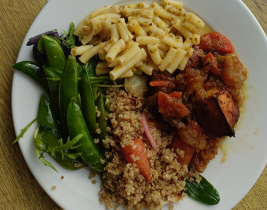 The team visited the Food Partnership Clubhouse, where they were given a tour of the surrounding Wilding Waterhall site. Over a delicious lunch spread catered by Sussex Surplus, using rescued vegetables from local farms, our guests enjoyed the beautiful views from our picture windows out onto the downland countryside. As part of the lunch, the guests were able to sample Goat stew, using goat sourced from conservation grazing in the South Downs. This is part of our Sussex Grazed project, led by the National Trust’s Changing Chalk project, selling conservation grazing animals that encourage biodiversity on the South Downs, in the form of a local meat box scheme.
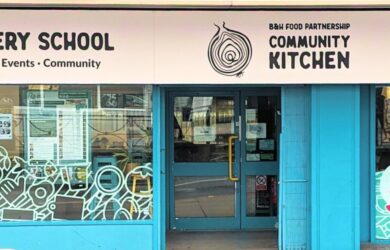
One of the highlights of the visit was a trip to the Food Partnership’s Community Kitchen. The UNESCO team was welcomed by manager Jo, who shared the kitchen’s work on food education. From low-energy cookery classes to high-end demonstrations, the team’s mission is to make food accessible to everyone. During their visit they were given a copy of the school cookery book, where each recipe ties back to the curriculum children are studying. Chef Mauro then joined Chef Caroline to make pancakes with a Year 4 class from Fairlight School. The children were thrilled to welcome our special guest and followed his instructions carefully to make the fluffiest pancakes!
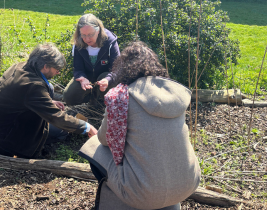 The UNESCO team’s tour also included a visit to Saunders Park Edible Garden, a community garden in the heart of Brighton. This project began in 2016 on what was once a neglected patch of land. Thanks to the dedication of volunteers, it has since been transformed into a beautiful, thriving garden that local people enjoy. Rosie, who has witnessed the garden’s transformation, shared its history and pointed out its community orchard and low-maintenance edible plants. These fruits and vegetables are available for the community to pick as needed. The garden is also home to an impressive array of plants and trees that attract pollinators, so it was buzzing with life during the visit.
Our guests also had the chance to explore the unique produce grown in the garden, including African Kale, and even took some home to try; a true reflection of the garden’s purpose.
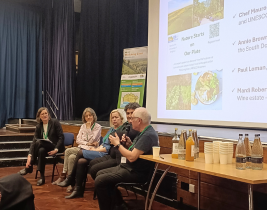 The final day culminated with an event titled ‘Nature Starts on Our Plate’, held at the University of Brighton. The event focused on the connections between the food we eat and the landscapes we live in. Nearly 200 people gathered, including students, members of the public, and representatives from various UK and international Biospheres. The event featured a panel discussion, chaired by Victoria Williams, Director of Food Matters and Chair of the Food Partnership’s board. The panel included Chef Mauro, Annie Brown (farmer on Brighton’s City Downland Estate), Mardi Roberts (Brand Ambassador for Ridgeview Wine Estate), and Paul Loman (Director of the Real Junk Food Project).
In his restaurants Chef Mauro advocates for local, sustainable ingredients that aligns with the UNESCO’s actions for biodiversity. During the panel discussion, Chef Mauro shared an insightful perspective on local food, saying, “When you cook with local products, you cook with biodiversity.” When asked about the low cost of food, he responded, “What is the cost of this cheaper price? Destroy nature, no justice for land workers, carbon footprint, doctors and medicine.”
Tony Whitbread, president of the Sussex Wildlife Trust delivered a short thought-provoking talk on how food plays a key role in nature recovery, contributing to biodiversity and helping tackle climate change. When discussing the idea of food in landscape recovery, he said we should be “Moving from a paradigm of destruction to a paradigm of regeneration.”
Sophie, Project Manager for Land Use Plus and Food Lead for The Living Coast spoke about the Food Partnership’s work in Brighton, highlighting the importance of partnerships and the opportunities they can bring. She shared the latest refresh of the citywide Food Strategy and the priority actions for the city moving forward.
It was an inspiring few days, and we’re proud to be part of this ongoing journey towards a more sustainable and biodiverse future.