What is the South Downs National Park Local Plan Review?
 The South Downs Local Plan sets out the vision and policies guiding development within the South Downs National Park. It shapes how planning applications are assessed and sets the rules for future development, covering everything from homes and businesses to infrastructure. The plan review is over 200 pages long, but we have read through it to highlight the key points that matter most to our work at Land Use Plus so you don’t have to!
Why does it need reviewing?
All local plans must be reviewed every five years to remain relevant and effective. This review ensures the plan addresses key issues such as nature recovery, climate change, and support for local communities. Keeping the plan up to date allows it to respond to new challenges and opportunities in the South Downs.
How can you be involved in the consultation process?
The consultation opened on Monday 20th of January and remains open until Monday 17th March. You can respond in several ways:
- Online: SDNPA Local Plan Review
- Post: Planning Policy Team, South Downs Centre, North Street, Midhurst, West Sussex, GU29 9DH
This is a crucial opportunity to have your say on the future of food, farming, and land use within the National Park. Remember to respond to the consultation using the relevant policies stated next to our questions below.
What does the local plan say about food and farming?
A search for ‘food’ in the plan review revealed just ten mentions, with only three being contextually relevant. This is surprising given that food production is at the heart of the South Downs landscape. Agriculture shapes this region, and food production is integral to its identity and sustainability.
We believe food and farming should be given greater focus in the Local Plan. Below, we outline key questions raised by the review, their related polices along with our responses. This is your opportunity to respond to the policies with any questions or comments mentioned here that you also believe should be covered in the plan.
Key Questions Raised in the Review
1.How does the local plan ensure that sustainable, locally produced food is accessible to local communities? (Core Policy SD2, Development Management Policy SD38)
The Local Plan includes a requirement for farm shops to sell at least 40% of their own or locally sourced goods, which supports local food production. However, it does not outline concrete measures to improve access to locally produced food in urban areas, leaving a gap in ensuring that sustainable food options reach towns and cities. While the plan emphasizes the importance of urban-rural food connections, there is a need for clearer strategies to make locally sourced food more readily available to urban populations.
Additionally, the plan promotes a circular economy and supports local supply chains, yet it lacks specific implementation strategies or guidance for businesses striving to achieve these goals. One major challenge in Sussex is the decline of small-scale abattoirs, with only one remaining facility where farmers can process their livestock for local sale. The potential closure of this abattoir, due to land being bought for housing development, poses a serious risk to maintaining a local meat supply. Without this vital infrastructure, farmers will struggle to keep their products within local markets, undermining the goal of a resilient and sustainable food system. To learn more about the impact of small-scale abattoir closures, read our blog post.
- How does deer management fit into the nature recovery strategy? (Policy SD9)
Biodiversity and sustainable land management are key priorities in the local plan, yet Sussex’s growing deer population is causing significant damage to woodland landscapes. To address this, the plan should outline clear deer management strategies that support ecosystem recovery. Increasing deer culls and promoting venison as a local, sustainable food source could play a vital role in achieving these goals.
 At Land Use Plus, we’ve recently started working with the Fair Game Project, funded by the University of Exeter. Backed by the South Downs National Park Authority, the National Trust, Natural England, and the British Deer Society the project aims to train a more diverse range of deer stalkers and create shared infrastructure for processing and supplying venison. By controlling deer numbers and making better use of venison as a local food source, it is a perfect opportunity to meet the goals set out to restore woodland habitats and boost biodiversity across the South Downs. Learn more by watching this video from Virtuous Venison.
- What support will be provided for regenerative agriculture and soil health? (Core Policy SD2)
The draft plan mentions soil conservation but lacks a clear commitment to actions that improve soil health. Regenerative agriculture enhances soil fertility, carbon sequestration, and biodiversity. These practices should be prioritised across the South Downs landscape.
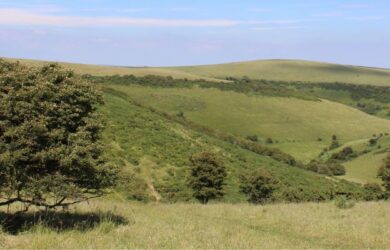
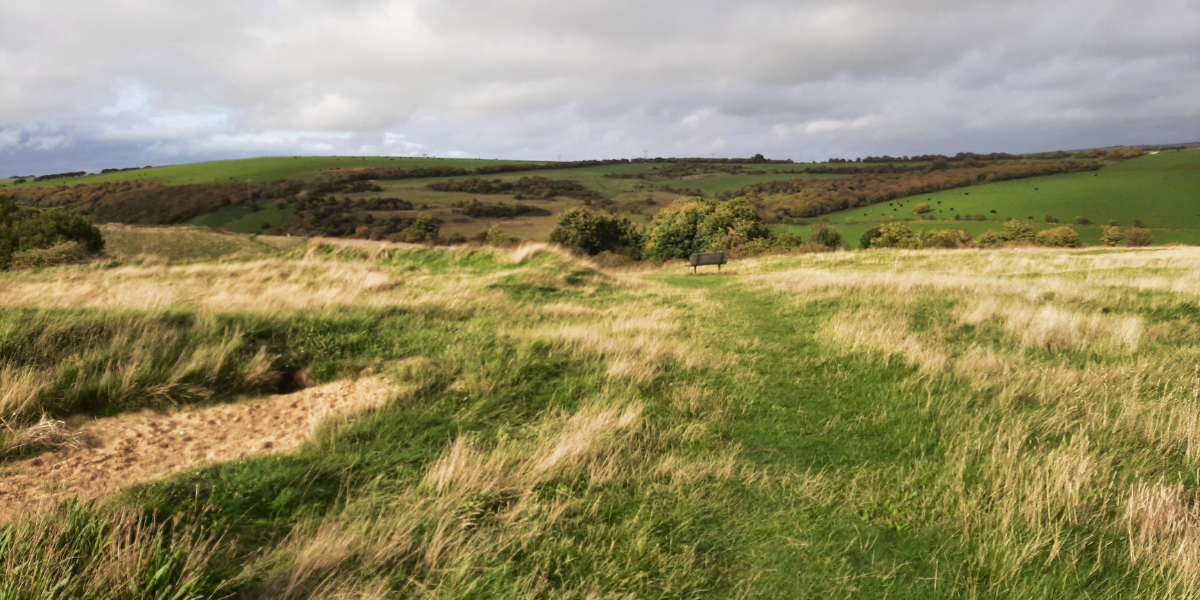
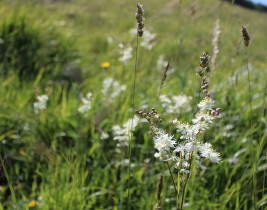 Shockingly, chalk grasslands, a key feature of the South Downs, aren’t mentioned, despite their alarming decline. Over 80% have been lost since WWII, now covering just 4% of the National Park. Often called the ‘European rainforest,’ chalk grasslands are rich in biodiversity, with up to 40 different species found in just one square metre. We believe that these landscapes must actively restored but under the plan they most definitely must be protected from future development.
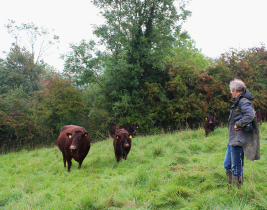
Sussex Grazed, part of the National Trust’s Changing Chalk project, highlights the importance of conservation grazing of livestock. This method not only restores chalk grasslands but also enhances soil health and throughout the project, supports local economies through sustainable meat production. Yet, the draft plan fails to acknowledge these environmental and economic benefits. Land should be allocated for conservation grazing to ensure these ecosystems thrive for future generations.
With this in mind, the plan must be updated to support and promote farming practices that not only safeguard and future-proof the landscape but also contribute to the local economy and protect biodiversity.
- How will farms be supported to diversify their businesses? (Core Policy SD2, Policy SD41, Development Policy SD40)
Through the Land Use Plus project, we are big advocates for the idea of enterprise stacking. This is the idea that farms can host multiple, complementary businesses on their land, like market gardens, farm shops, and visitor accommodations in the form of eco-tourism. This approach not only strengthens rural economies but also contributes to building a more resilient and sustainable food system. One of the goals outlined in the plan is to achieve a circular economy, and supporting enterprise stacking would be a great step toward making that vision a reality.
That said, the current draft doesn’t do enough to clearly support diversification. For this approach to work, farmers need practical incentives, more flexibility with planning, and easier access to funding to set up these complementary businesses without getting bogged down by red tape.
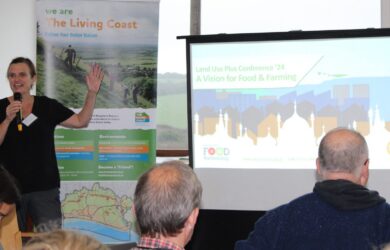
Enterprise stacking has a lot of potential, as we discussed in a recent panel at the Land Use Plus Food and Farming Conference. To really make diversification a reality, the plan needs to back farmers with supportive policies, that help them build strong, multifunctional businesses.
- What about farmers who are transitioning to more agroecological practices? (Strategic Policy SD34)
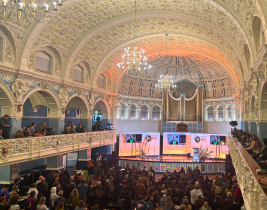 At the Oxford Real Farming Conference, there was a strong emphasis on the need for local support to help farmers transition towards sustainable, agroecological practices. This support is vital for enabling farmers to adopt new methods that align with both environmental and economic goals of the National Park. In turn they have a responsibility to assist local communities by providing guidance and resources to support farmers in this shift. This could be achieved through the establishment of knowledge-sharing networks or hubs, where farmers can exchange ideas, best practices, and challenges in implementing agroecological approaches.
However, to achieve this, rural spaces need to be created or dedicated to education and collaboration can provide farmers with a much-needed sense of community. Farming is often an isolating profession, with 95% of young farmers citing mental health as a significant issue in their field. Providing spaces for farmers to gather, share experiences, and access mental health support can help alleviate some of this isolation. There is mention in the plan about creating community hubs, however I think a lot of this is focused towards urban areas, but the importance of having these spaces in rural environments is just if not more important, in places where these spaces don’t exist.
Furthermore, establishing shared toolkits and resource-sharing platforms, where farmers can hire out equipment, would help reduce costs and make it easier for small-scale farmers to adopt agroecological practices. This collaborative approach can make transitioning to sustainable farming practices more accessible and manageable for farmers. But all this needs to have a space where these things can happen, and the plan needs to allow and encourage this.
Your voice matters
One of the key objectives of the Local Plan is to “protect and provide for local businesses, including farming, that are compatible with the National Park’s landscapes and special qualities.” However, achieving this goal cannot be achieved with the current draft, some big changes are necessary. The Local Plan Review is your chance to push for stronger policies that support food production, land stewardship, as well as more resilient local food economies.
For more information and how to respond visit the Consultation Hub.
The deadline is approaching. The consultation closes on Monday 17th March, please take the time to submit your feedback and make sure your voice is heard.