Creating the project
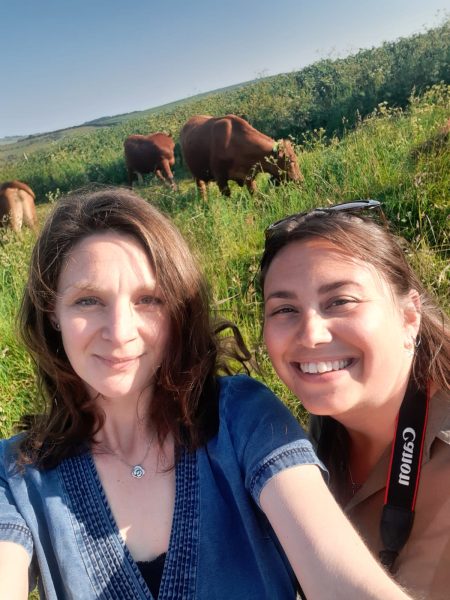
I joined the Food Partnership in February of this year to develop and lead the new Land Use Plus Project. This Esmee Fairbairn funded project takes on the far-reaching aims of supporting the delivery of the City Downland Estate Plan, whilst ensuring that local food production and supply are protected and reinforced alongside spaces for nature and people.
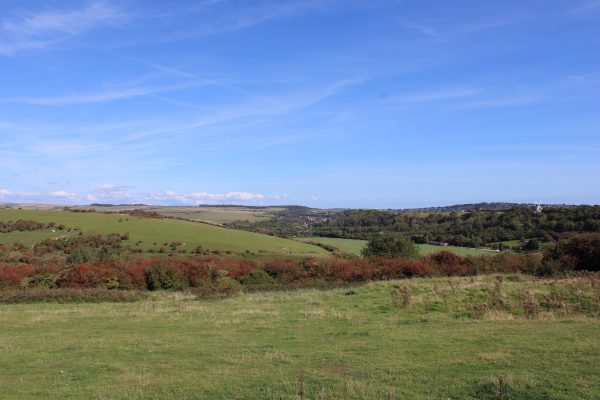
As with any new project, the initial task was understanding the “landscape” it sits within. The Food Partnership has recently been connecting with farmers through our Soil in The City project, which takes users of community food access projects on visits to local farms & food producers, but we knew we wanted to spend more time connecting to the local world of agriculture. Drawing on contacts made through our burgeoning Sussex Grazed meat box project, we got out on the land and spoke to farmers and experts who understand the intricacies of the iconic downland landscape.
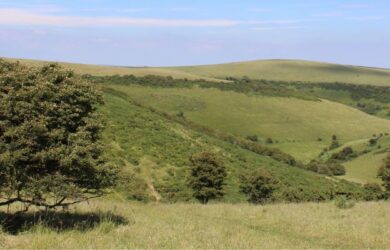
Seeking out knowledge was a vital part of creating a project which aims to identify barriers to and opportunities for nature friendly farming and a robust local food system. I also got to know the landscape on a much more detailed level, facilitating a local group of ecological experts to create a map of grassland habitats which we hope will identify interesting areas of biodiversity, and inform more traditional habitat surveys.
What we learned
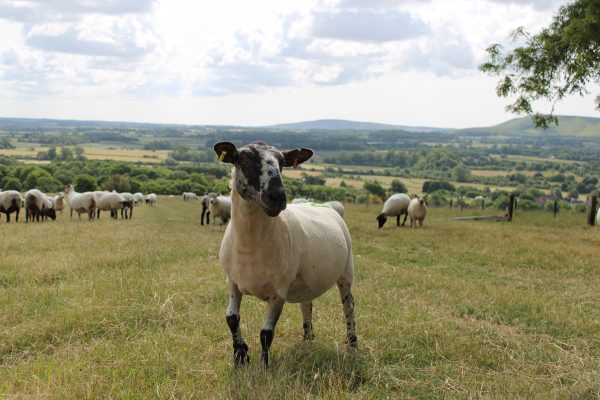
It became clear very early on that farmers often feel misunderstood. They are portrayed in the press as greedily destroying the environment whilst hoovering up subsidies. A recent report from Sustain found that the average farming household salary is just £18,000, highlighting just how difficult it can be to survive, never mind turn a profit, from farming. This was recently backed-up by Riverford’s Get Fair About Farming campaign. Farmers are highly adaptable people, something which allowed them to completely change their way of farming to match increasing demand following the second world war. I think it’s also important to note that they are the guardians of the countryside and are the people who know the most about how our land works. It is clear that, if we want to create a truly sustainable and resilient food system, we must work with farmers and not dictate to them.
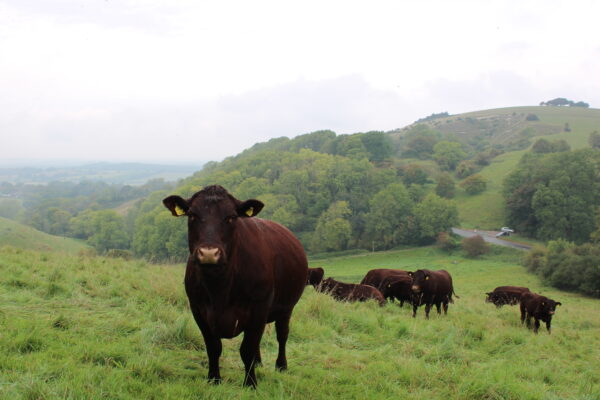
Surprisingly, we found that there isn’t much of a local food supply chain in Brighton and Hove. There are lots of incredible local vegetable growers and many brilliant companies make food and drink products here, however there is a clear gap in getting the majority of food grown in the area into the city and surrounds. This is due to a nationalised food system which has dismantled the infrastructure required to deliver truly local food. This is particularly highlighted by the closure of small abattoirs both locally and around the country. As I discussed in my first blog for the Food Partnership, our internationally significant chalk grassland depends upon grazing animals to survive and thrive. It is one of the few places that livestock farming could be sustainable, with the right approach.
Partnership work is key to what we do and, with this in mind, we created an interactive conference which brought together local decision makers, farmers, food producers, and stakeholders in the wider Sussex and South Downs area. This event built on what we had already learnt from farmers and other experts, and informed work-shopping sessions around four key themes of processing, logistics, finance and the consumer. The key theme that came out of this session was a lack of connection:
- Farmers feel like outsiders, and that the public don’t understand them or their methods
- Consumers are disconnected from the food they’re eating
- The infrastructure which would support shorter food chains is missing
- Areas of land can be difficult to graze / maintain due to their location
Find out more about what we heard here.
What we’re doing
From the information we’ve gathered over the past 9 months, we have identified four key areas of progression:
- Explore the possibilities for a wholesale “aggregator” style food hub, which could enable more locally produced foods to make their way into the city. This is particularly interesting as a lever to facilitate public procurement, making local food available to a greater proportion of the population. We also want to explore what other facilities, such as abattoirs, would be required to bring more locally grown food into the city.
- Support the development of a local brand (such as “Produced in Kent”) to allow people to engage with their local food, environment and farmers. We would also want to see a commitment to local food from local councils and institutions, supported by our infrastructure work.
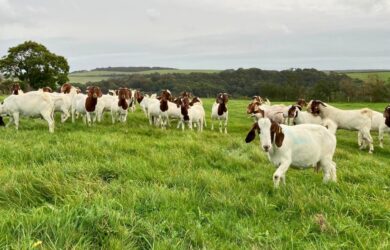
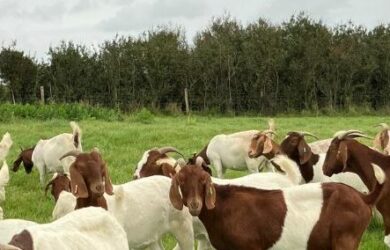
- Facilitate the introduction of a grazing hub to care for marginalised areas of land and bring the grazing animals into the local supply chain.
- Create spaces, such as a Beacon Farm, where residents can engage with their local environment, food system and farming practices.
This project is exciting, expansive, and feels well timed. We hope that through it we can deliver greater understanding of the environmental impact of food systems, as well as places for people, nature and food production.
If you have any questions, or would like to learn more about the Land Use Plus project, please contact Sophie on sophie@bhfood.bozboz.dev.