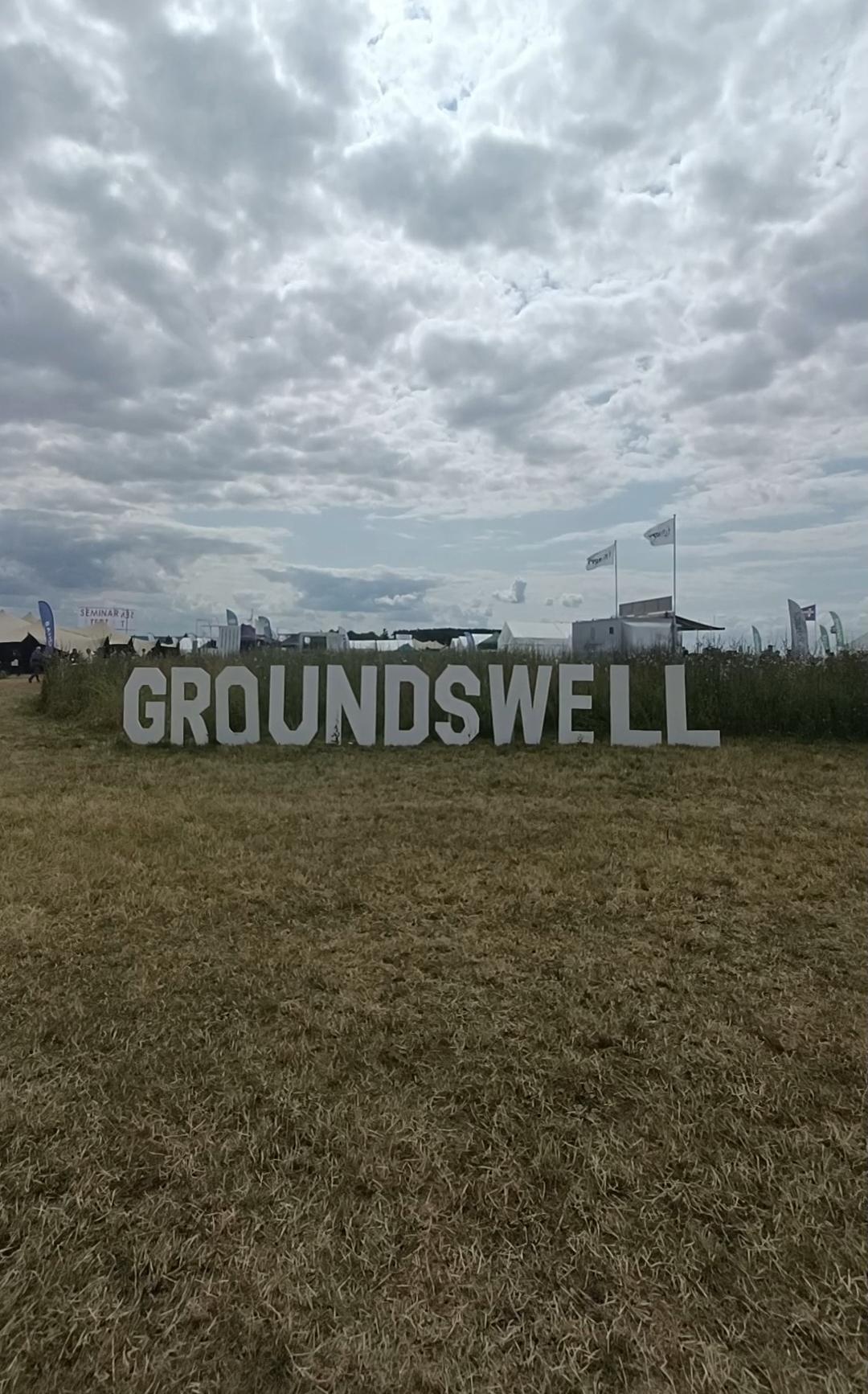
Groundswell is the agricultural conference leading the way in regenerative practices. Hosted on a family farm near Stevenage, it attracts people from across the food production industry creating a melting pot of ideas and inspiration.
The Sussex Grazed and Land Use Plus team attended this year, and this is what we took away.
Horticulture
Hearing from Horticulture greats like Guy Singh-Watson (Riverford Founder) is always inspiring, but this year the horticulture sector feels even more in need of support than before. DEFRA’s horticulture statists show a 5% drop in UK grown fruit and vegetables last year. This was due to an unfavourable and unpredictable climate and an unfair market. At this stage, we are importing more than half the vegetables and 80% of the fruit consumed within the UK.
Systemic change could (potentially) mitigate the effects of climate change and support British Growers. A more agroecological ‘small farm’ approach being adopted on larger farms would help to reduce emissions, agricultural inputs and help to improve biodiversity. There is also a need to move some crops under cover or indoors to protect them from extremes of weather. There is huge opportunity for peri-urban farming and market gardens. Growing food in areas visited or seen by the public could help to repair the public disconnect around food production and improve our understanding of seasonality. There was a warning that there is an over focus on technological solutions, when simply making more marginal land available for growing would make a big difference to production. Rebecca Laughton from the Land Workers Alliance highlighted the need for planning reform to support this and other advances in more agroecological land use.
Guy Singh-Watson called for supermarkets to be properly regulated and held truly accountable. Following on from Riverford’s Get Fair About Farming campaign, he believes a market can only be resilient where honesty and transparency are the norm.
A recently published Soil Association report calls for the new government to back British horticulture or risk losing it for good, it reflects much of what we heard about the industry at Groundswell.
Meat Industry
The future of small abattoirs continues to look unsteady, and there was much talk about this at the conference. Hearteningly, groups across the country are pulling together to save and sure up their local abattoirs. A great example of this is the Save Long Compton Abattoir campaign. Small abattoirs are key to supporting landscape restoration, rare breeds, the local farming community and food systems. There are fewer than 65 remaining in the UK, including only one in Sussex. Our Land Use Plus project has convened a “Meat Working Group” so that we can better understand what can be done to support both the last remaining abattoir and livestock market in the county.
We need this local infrastructure because, when the price drops in the national market, farmers can rely on the local abattoir and market. It helps farmers to spread the risk to their business, makes them more resilient, and allows citizens to traceable eat local meat. The Labour party said in their manifesto that they aim to have 50% of public procurement being done on a local level, this will require small abattoirs and other local infrastructure.
By-products such as animal hides and wool also have a role to play in supporting a more regenerative approach to agriculture, although there isn’t currently a strong market for them. Currently they are often wasted as it can actually cost farmers money to dispose of them, which goes against regenerative principles. They were once and could again serve as a valuable resource for producing high quality, sustainable and natural materials for the fashion industry, artisan crafters and agricultural wears.
Collaborative working
So many of the talks we attended had some for of collaboration mentioned. Be it through farming co-ops creating buying power for farmers, retailers telling the unique stories of farmers doing things the right way, or through a variety of land sharing and enterprise stacking models.
It has become increasingly difficult for new entrant farmers to access land. This is largely due to ever increasing costs, the absorption of small farms into larger land holdings, and house building. One way this can be addressed is through land sharing. This is where land holders invite complementary farm businesses to tenant part of their land. This makes land more accessible and can also help to diversify the productivity of the farm. For example, a livestock farmer could invite a market gardener to grow vegetables on an unused area of land (all farms have them!). Another way to do this is to invite food producers to tenant farm buildings. If you have an orchard, for example, a cider maker is the perfect collaborator. Food miles are reduced, and the farm can become a hub for food production and even retail.
By working in partnership, we can create truly multiuse plots of land which are as productive as possible, develop circular local food systems, increase buying power and provide spaces for peer to peer learning.
As always, Groundswell was an inspiring and invigorating experience, and we are incorporating these ideas into our projects.