Part one in our series delving into the surprisingly complicated world of conservation grazing, and how it could form a vital part of our local food system in Brighton and Hove.
Livestock farming is controversial. We are in a time of environmental uncertainty and the farming of ruminant animals receives a lot of bad press. There are many difficult debates; greenhouse gas emissions, the destruction of habitats and ecosystems, land use, animal welfare and healthy diets to name just a few. It is a conversation which is often globalized and generalized, and one far too complex to tackle in any single blog.
Agroecology is an area of exploration for the Food Partnership. Projects like Changing Chalk and Land Use Plus have highlighted the complexities of the farming industry and how it is intertwined with conservation and climate issues. Is farming the cause of our problems or can it provide a solution to them? In this blog series, we pose a question that we have been grappling with:
“Can livestock, grazing for nature recovery on the South Downs, also be part of a sustainable local food system?”
Livestock on the land
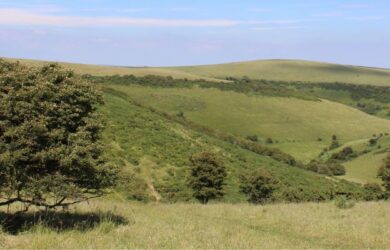
Livestock such as cattle, sheep, goats & horses can be used to keep habitats in good condition for wildlife (DEFRA). The internationally significant chalk grassland that we find across the South Downs has developed over thousands of years of use as grazing land. Grassland of this type thrives on the area’s thin, nutrient deprived, chalky soil and houses incredible levels of biodiversity. The remaining 3% of flower-rich grassland habitat still found on the Sussex Downs is under threat from spreading scrub including nettles, hawthorn, bramble and even saplings, and manual “improvement”.
Historically, Sussex shepherds would operate a mixed farming system; flocks grazed the downs during the day, stripping nutrients from the grassland, before being held in a fold (fenced enclosure) overnight.
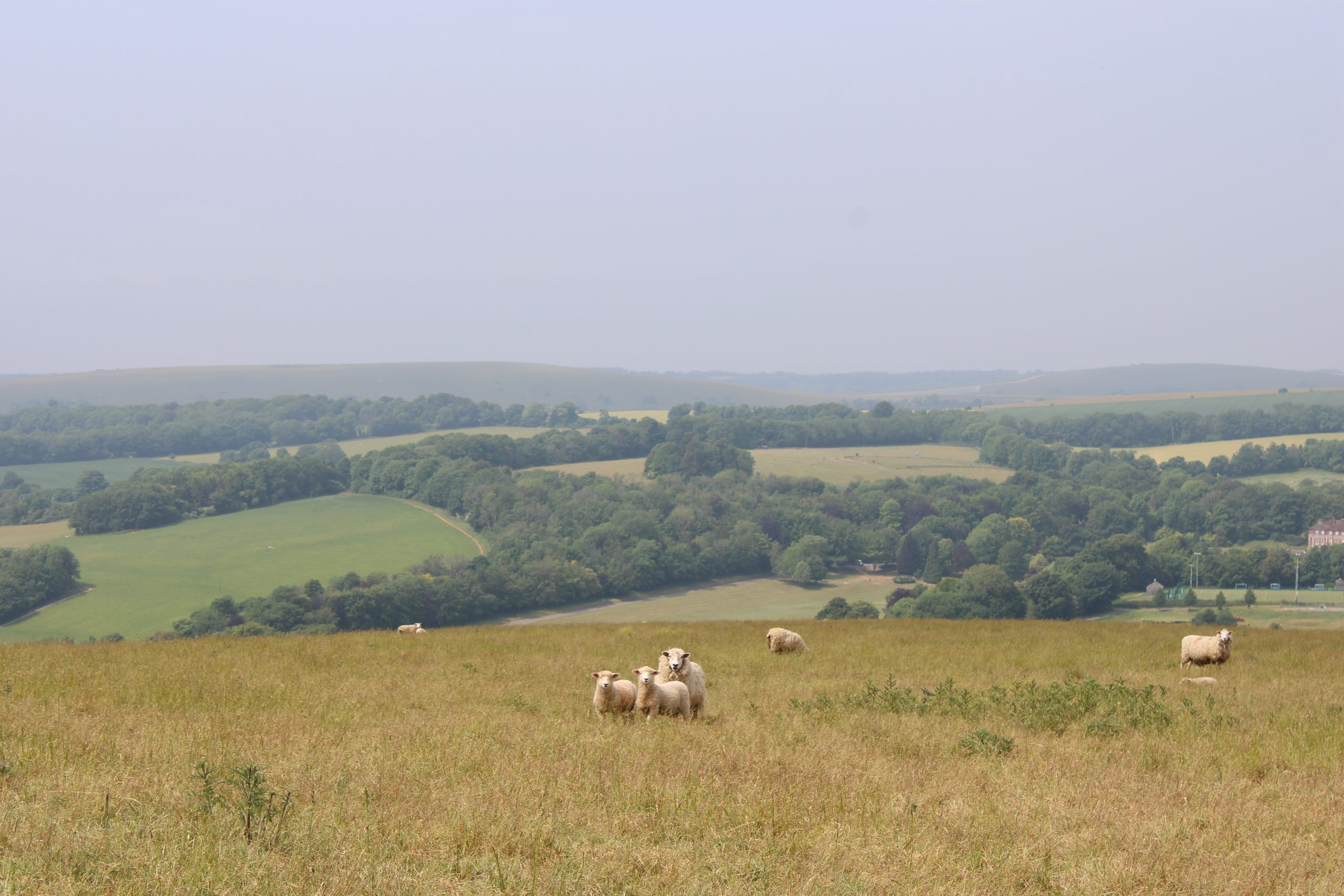
Sussex Wildlife Trust sheep conservation grazing on the West Sussex downs, photo credit Sophie Robinson.
Here they would graze forage crops, such as stubble turnips, and fertilise the land with their manure. The sheep would then be moved on to pastures new. The manure was ploughed into the land and planted with crops. This holistic and rotational system supported both livestock and horticulture on the downs.
Due to a modern-day quest for ever increasing yields, much of the UK’s traditional pastoral land has been planted with monocrops such as rye grass. These fast growing and sugarrich plants are known as “improved grassland” and allow animals to be fattened up much more effectively. Enriched pasture like this is usually treated with artificial fertiliser to increase nutrients in the soil, making the pasture uninhabitable for the grasses and flowers which would have originally populated it, as most native grassland plants require extremely low nutrient levels to thrive.
Types of grazing
There are many different systems of grazing which imitate the “old ways” and can have a positive environmental impact. These methods include rotational grazing, strip grazing and “mob” or mobile grazing. Although they offer varying results, their intentions overlap; these techniques are generally concerned with the promotion of livestock health via a reduced parasite load, habitat management for wildlife and improvements in soil health and biodiversity due to a decreased level of grazing pressure.
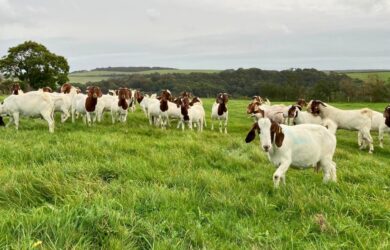
The strength of Conservation Grazing lies in its ability to create an array of habitats by using different kinds of ruminants. Types and breeds of animals are chosen for the particular way in which they graze. Sheep nibble plants closer to the ground, allowing more light to struggling species; they are relatively small and are less likely to cause damage to sensitive ground, whilst accessing steep slopes and remote areas. Cattle can tackle the taller grasses (like problematic Tor Grass), wrapping their tongues around it and pulling, making space for other grasses to thrive. They also create some bare patches which allow wildflower seeds to germinate.
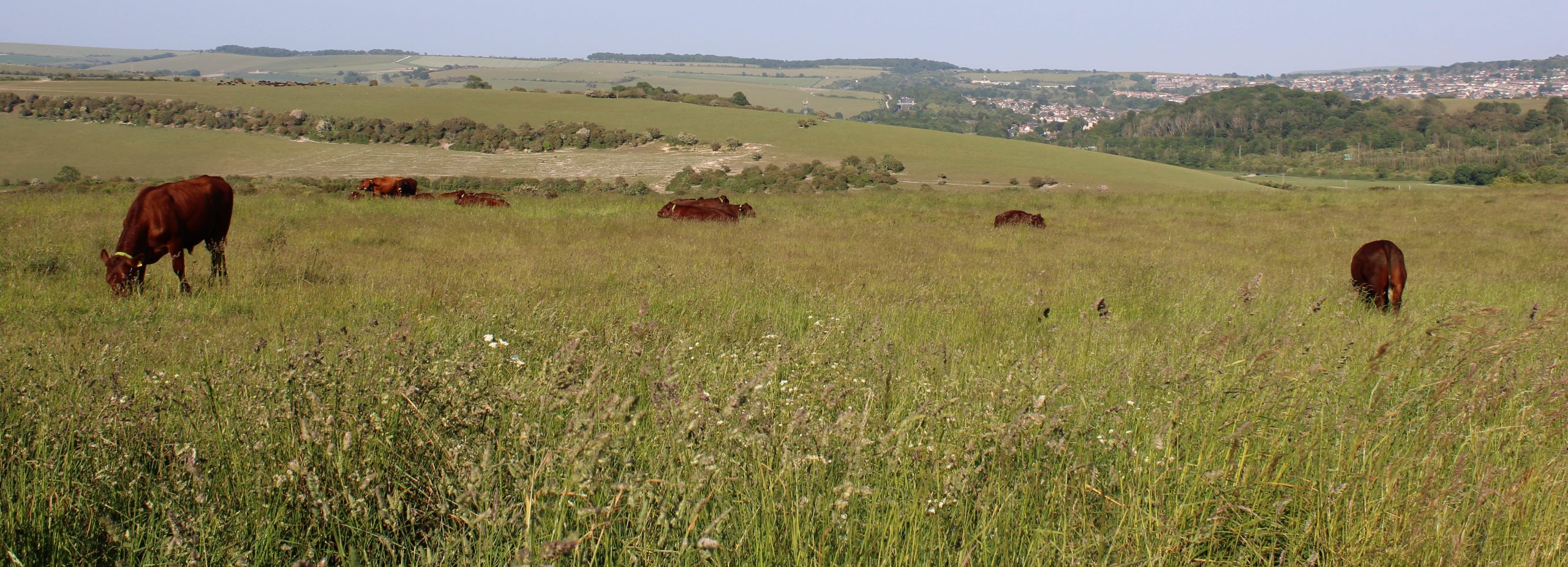
A local example of conservation grazing can be seen at ‘Wilding Waterhall’; a Brighton and Hove City Council project to transform an old golf course into an open access nature reserve. To restore the grasslands and improve biodiversity, they have employed a herd of Sussex Reds, who “mob graze” the site, using cutting edge “no-fence” technology. The cattle wear GPS collars which control their movements around the open landscape within a very specific targeted range.
Mobile Grazing uses a high density of stock on a small area of land for a very short period. After a day or so, the livestock are moved on, to allow the grazed patch to regenerate and recover. It can be left for 40 days or more before it is grazed again.
Wilding Waterhall has also introduced a herd of New Forest ponies and a small number of Herdwick sheep. This is gentle and strategic habitat creation supporting rare and declining species such as the Wart-Biter Bush Cricket, Adonis Blue Butterfly, Skylarks, Dormice & Adders.
The rewilding site is open access land, which means you’re free to walk it responsibly, and our Food Partnership Club House sits in the centre. With glorious views of the landscape and wildlife, it’s the perfect place to view our historic farming landscape and its regeneration using very modern methods.
In our next conservation grazing blog, we’ll be exploring the relationship between meat production and grazing for nature.