Our projects , Sussex Grazed and Land Use Plus , focus on land management and farming in the Downs.
As highlighted by a recent Guardian letter, the face of farming is generally assumed by the British public to be older, male, and white. Whilst there are, of course, farmers of all genders and races around the country, the Race Report has highlighted that agriculture is the least diverse industry in the UK. For more information on land, food, and racial justice, check out the Jumping Fences report.
Last year, research carried out as part of Farmer’s Weekly’s Level the Field Campaign found that six in ten women in UK farming feel held back by sexist industry attitudes, an increase of 8% since 2014. It is difficult to imagine how an industry could have changed its opinion so quickly, given that women kept Britain fed throughout both the First and Second World Wars.
Worldwide, women make up 43% of the agricultural labour force, particularly in less affluent countries. In southern Asia, for example, 71% of all working women are employed in the sector, whereas, in June 2023, only 12% of principal farmers and holders in the UK were female. In the youngest age group (16-24) this increased to 26%, showing a notable change between generations.
For International Women’s Day 2024, we want to shine a light on women farming in Sussex and the surrounding counties. This year’s theme is ‘Inspiring Inclusion’, so we asked local women in farming and growing about their experiences in this notoriously male-dominated field.
Barriers
A stereotypical understanding of gender roles means that daughters are still sometimes passed over when matters of succession are discussed. Traditionally, the “farmers wife” role has supported male farmers to do the “proper” farming. To this day, childcare responsibilities and looking after elderly relatives tend to fall to women.
Rachel Knowles from Trenchmore Farm told us “There seem to be some parts of the rural community that have an attitude that women are only really the ‘farmer’s wife’ (or farmer’s daughter in my case), which is outdated. But I do think this is changing as more women are becoming farmers, contractors, butchers, vets etc. I haven’t felt the attitude so much when I’m working, but certainly heard it thrown around at the local pub plenty enough. Not all farmers would offer their daughters the opportunity to join the farm, and only expect their sons to take it on.”
Another farmer, Fenneel, told us that she was discouraged from farming at school, and still struggles to be taken seriously by some colleagues:
“I was categorically told at school I wouldn’t be able to be a farmer without being ‘born into it.’ There’s also an element of bias; having to tell male colleagues you are more than capable of doing a physically demanding job, constantly having to reassert ourselves because otherwise you’re seen as weak.”
Access to land and funding were mentioned by several farmers. This is a barrier to any new entrant farmer, as land is bought up into ever-larger parcels, creating “super farms”. Small-scale farming lends itself far better to agroecological principles, and we believe that Government support in the form of funding is key to reducing emissions from our farming sector.
But local farmer, Annie Brown, offers hope: “Don’t be put off if you were not born into farming, there is a role for those who can show dedication. It’s not an easy way of earning a living but it’s very rewarding.”
The physical strength (perceived or real) required to complete tasks and the size of farming equipment were frequently mentioned. Farming aids are still designed to suit men best, and don’t offer the adaptations that would allow more people to work easily in farming. There seems to be a clear divide between horticulture and livestock farming, with growers feeling more welcomed, particularly on regenerative farms. One grower told us, “I think it’s getting better. Almost all the market gardens and small-scale farms I know of have women in leading positions in the organisation.”
Opportunities
Collette Haynes from Ashurst Organics feels that women could bring much needed positive change to the farming sector:
“I like to think that women would bring the desire for better husbandry back into land management. The ecological mindset is often female. Eve Balfour and Rachel Carson to name two of the early pioneers. The IFOAM principles of Fairness, Care, Health, and Ecology are traditionally female perspectives, given childcare.
When applied to the environment quick fix, industrial farming looks unkind. It may be a stereotype but I myself feel that I got into farming to act as a resistance to the notion that nature is to be exploited, plundered and dominated into submission to feed us rather than us being part of nature and working ‘with’ it. To feed ourselves and preserve at the same time.”
Almost all the farmers we spoke to echoed this message; diversity brings a difference of opinion and lived experience. A farmer who wishes to remain anonymous said that including more women in farming leads to different perspectives, approaches, practices, and cultures and offers a chance for women to reconnect to the land and escape superficial, oppressive, and outdated standards of ‘femininity’.
The future
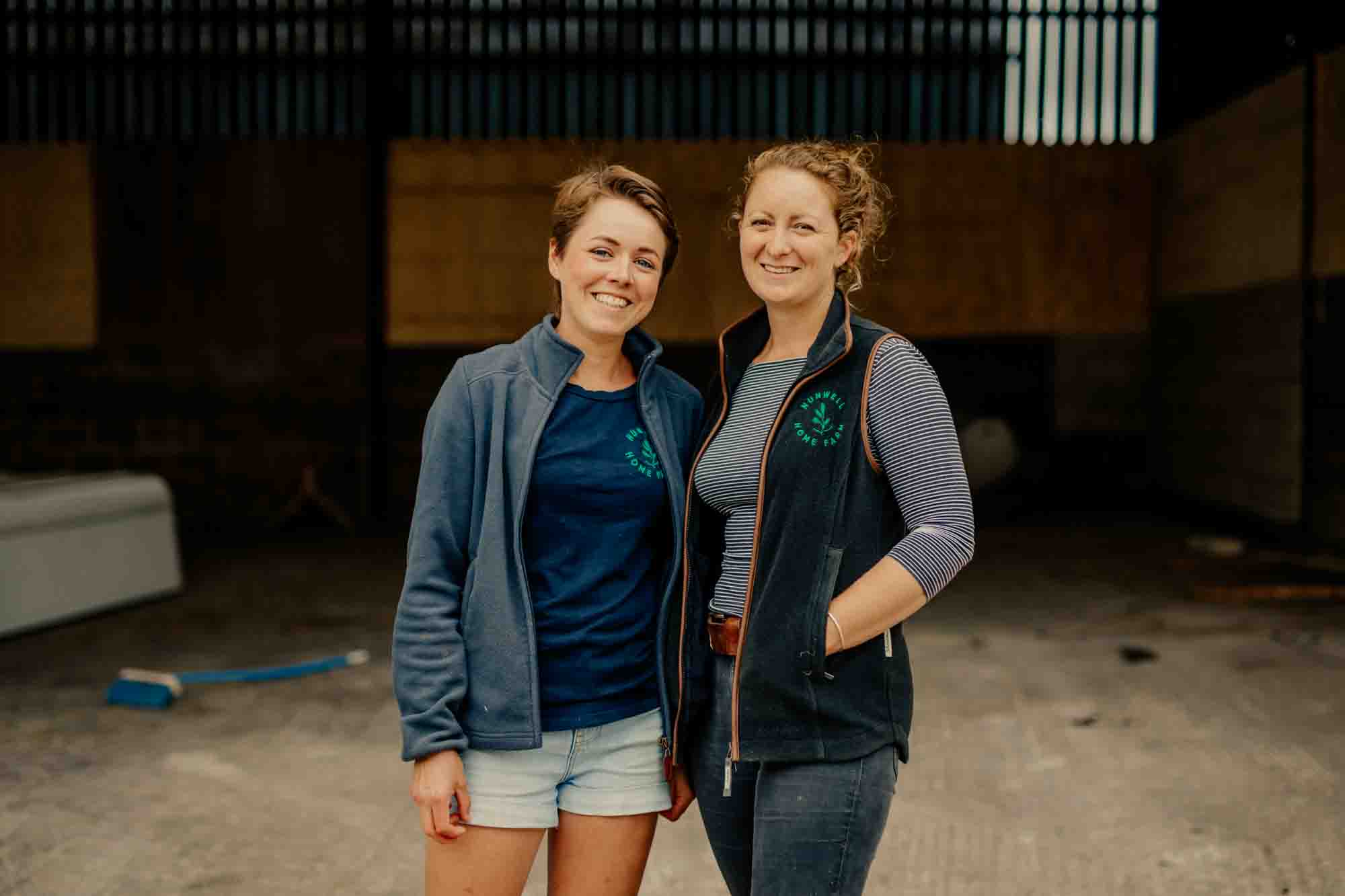
Francesca Cooper of Nunwell Home Farm says “there is a huge change in farming at the moment and this includes the rise of many more women in the industry. Women in many cases are well placed to face the new challenges of diversification and business planning needed going forward.”
Maggie Haynes, founder of organic smallholding and education centre Tuppenny Barn hopes “that investment is given to the sector to train more young people to sign up to farming.” Julia Lawton from local organic CIC Fork and Dig It sees a future where “all food is produced in an organic, agroecological way and feeds the people locally”.
Despite farming still being a male-dominated field, we are seeing more women entering the profession. Plumpton College told us that in their current intake (23/24), 42% of the learners in the Agriculture department are female. This includes courses ranging from the BTEC Level 1 Introductory Diploma in Land-based Studies to Level 3 Extended Diplomas in Agriculture, Land-based Studies, and Habitat Management. The Land and Wildlife Management (Countryside) department has 45% female learners across Levels 1 to 3 (equivalent to A-levels).
One student told us: “The biggest challenge for me in feeling included was being the only student on the BSC Viticulture & Oenology degree to have come straight out of college and into a University degree. Combined with the fewer years of experience in the world of wine, my age has sometimes felt limiting compared to my peers in gaining work opportunities or networking, by putting aside assumptions based on my age.”
It is heartening to see that, as new generations enter the farming industry, being female is no longer seen as a limitation.
Dismantling gender roles and stereotypes is key in making change in the sector; we need to move beyond society’s limited understanding of identity and make space for all with genuine passion for and skill in farming.
Claire Underwood, a mixed farmer on the Isle of Wight, thinks the most important thing for the future of farming is “that we focus on food production regardless of the gender of the farmer. If you have the strength of character, you can overcome ridiculous prejudice; if you don’t have that, forget about becoming a farmer. Strength of will is a prerequisite!”
*Some quotes in this article have been edited for clarity or length