“Never hear the church bells twice”
Regenerative Grazing Practices at Saddlescombe Farm
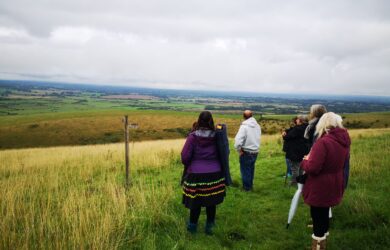
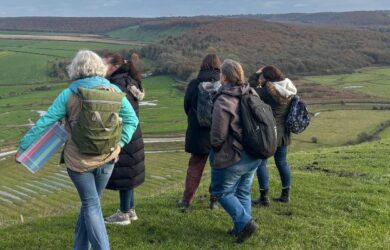
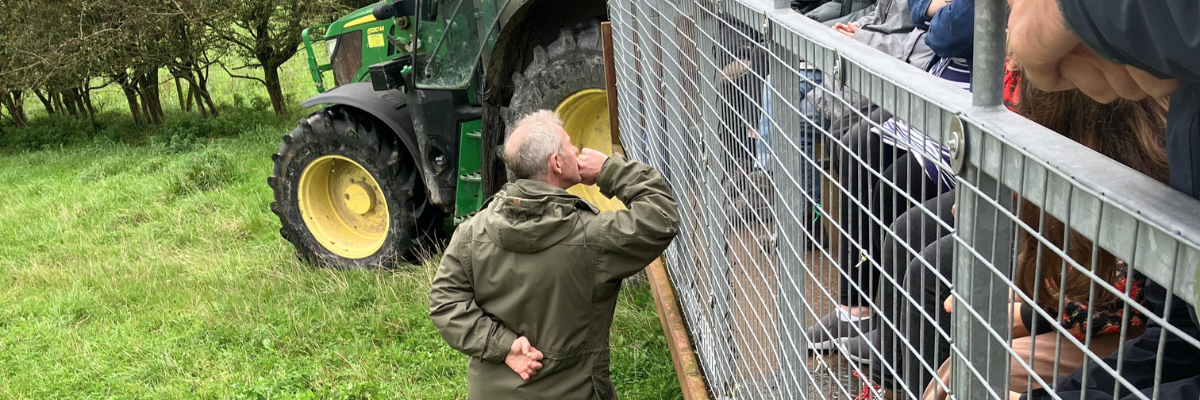
This September, Sussex Grazed went along with the Changing Chalk project partners for a farmer-led tour around the National Trust’s Saddlescombe Farm.
Roly Puzey and family have been tenant farmers here since 2013. They reintroduced sheep back to Saddlescombe after an 80 year hiatus, itself a regeneration of this historical working farm. The real regenerative farming approach is in the agroecological farming practices which are being developed here by Roly and supported by the Trust.
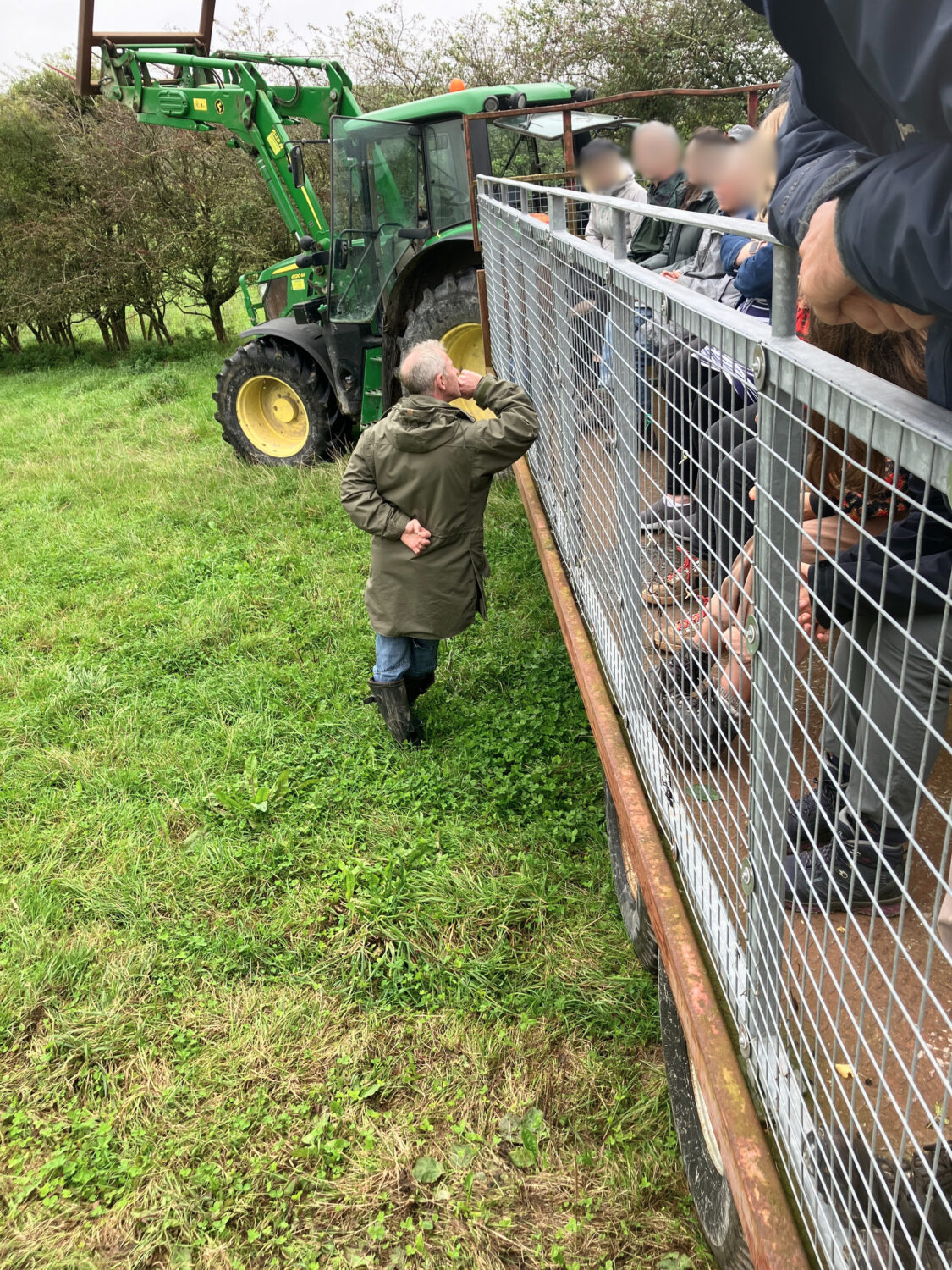
Fast forward to 2024, the farm is in conversion to organic and has scaled back on livestock numbers. Taking a temporary break from sheep farming, they are focusing on honing the grazing of Sussex Red cattle across 440 acres of estate land; working with nature and producing food, whilst maintaining a sustainable work-life balance.
The cattle were previously set stocked, which means grazing a wide, unrestricted area of land for a long period of time. The problem with this system is that the cattle are too selective, only grazing their favourite species of flora. This leaves problematic and less palatable plants to take hold, to the exclusion of native chalk grassland species, which support a wider spectrum of wildlife.
The farm made the change from set stocking to a rotational grazing system to improve soil and plant health. The land is now allowed to recover through long rests; this helps to protect the soil from the heat and encourages water infiltration.
The rotational system focuses on smaller areas of land with temporary fencing. The cattle are moved on to a new patch frequently, spending no more than four days in each area. In the winter they are supplemented with hay and moved on even more regularly.
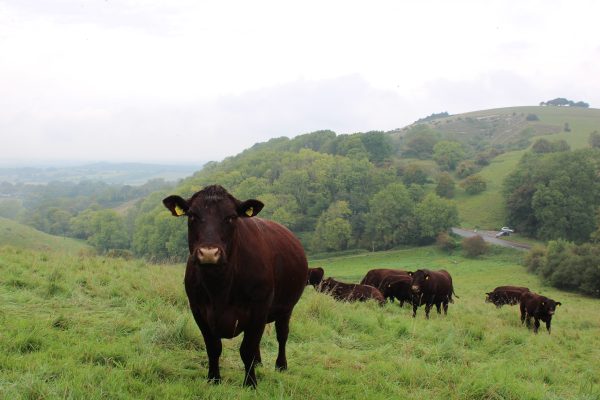
“In the winter months I need the cattle to clean up everything and effectively reset the pasture. I’m constantly learning and adapting to try and achieve the balance between animal performance and grassland restoration towards species rich grassland.” Roly Puzey
Although the sheep are taking a break from this small corner of the downs, the old saying (reiterated by Roly) still holds true:
‘Sheep should never hear the church bells twice’;
always keep your animals moving on to pastures new.
Roly talks about community dynamics in the soil; keeping it alive by sustaining a diversity and density of living plants. This less intensive and carefully managed grazing keeps enough growth above the ground to keep the soil cool in the warm months and negates flooding in the wet months. The plants above ground are mirrored in roots in the soil which provide structure, nutrients, support mycorrhizal fungi and capture and store carbon.
For the tenant here, there is no longer pressure to keep the farm ‘tidy’. If there is range in the sward, with tufty patches of grass here and there, this simply provides habitats for a wider range of wildlife with different habitat requirements.
You can see the contrast as you look around the neighbouring fields at the markedly different landscape which is being cultivated at Saddlescombe. Perhaps the most striking difference is the hedges, which are gradually being reinstated as natural boundaries for the cattle as they mob graze the land. These stretches of hawthorn, bramble and blackthorn create field boundaries, often following historic hedgelines.
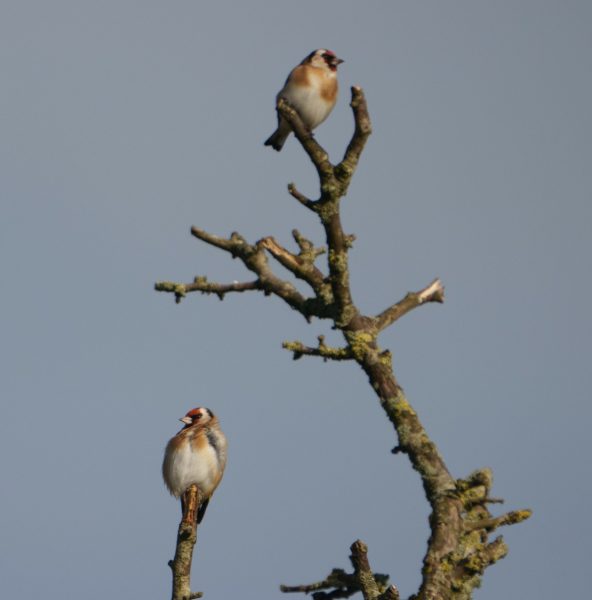
With a nod to the five freedoms for animals, we are reminded that this habitat creation will provide much needed shelter for the outwintered cattle. In the open landscape of the downs, the careful balance of grassland and scrub will be appreciated by many species in the cold months, not least by the charms of goldfinch, so affectionately admired by their landlord.
Through DEFRA’s Higher Tier Countryside Stewardship the farm has been granted subsidies to sow native British seed mixes as “preparatory works for priority habitats (creation and restoration) and priority species” These designated stretches of land, midway up the downland slopes, have been sowed with chalk grassland species. They will be fenced off until they are established before the cattle can go to work grazing it back, trampling it down, dispersing seeds and promoting regrowth for the following seasons.
The government committed to protecting 30% of the UK’s land by 2030, focusing on “the most important areas for biodiversity while still ‘ensuring delivery of wider priorities including food production’” (NFU Online). Accessing the farming subsidies for creating wildlife habitats and promoting biodiversity is a step in the right direction but it’s the deeper, ecological empathy of farmers like Roly, which will give us a fighting chance to hit these environmental targets.
We are incredibly proud to work with Saddlescombe Farm and thank Roly Puzey and his family for working with us in support of our Sussex Grazed and Land Use Plus projects and for the inspirational and moving farm tour which provided the content for this article.
Earlier this year, at the South of England, show Roly was awarded the Woodpecker award, as “nominated by the Farming & Wildlife Advisory Group (FWAG), for achieving a high standard of conservation alongside commercial farming.” CLA