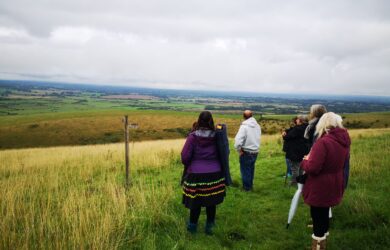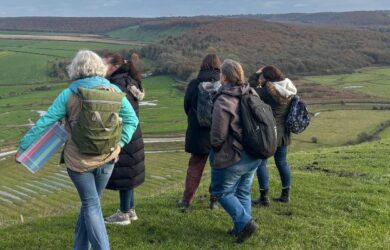
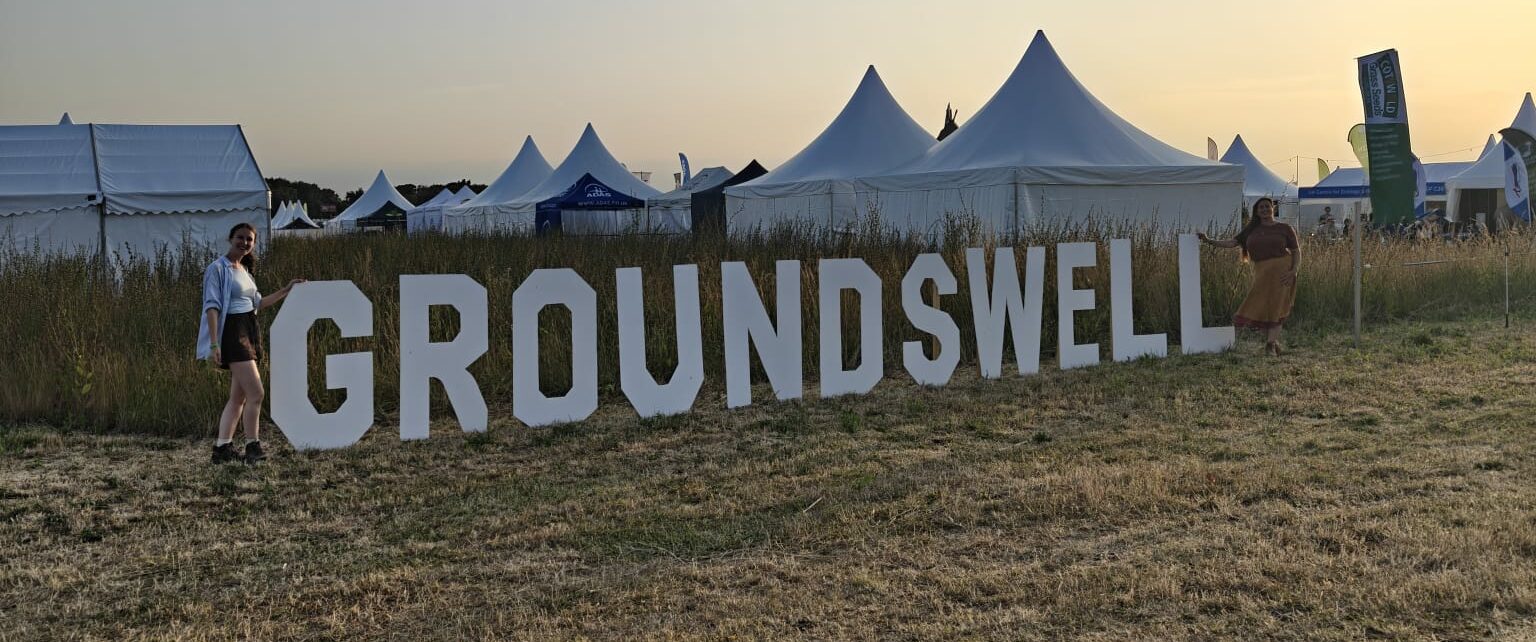
At the beginning of July, the Land Use Plus team headed to Lannock Manor Farm for the annual Groundswell Agricultural Conference. Rooted in regenerative farming practices, Groundswell offers an opportunity for farmers and those working in the food system to learn from each other and discover the latest progress in nature friendly food production. An intense couple of days with hundreds of talks and presentations, our team have broken down the key themes for you.
Sophie’s key takeaway – Recognise your role in the community
Community is always a hot topic at Groundswell, but this year the focus seemed even clearer. As we live in an increasingly divided world, the opportunity to come together around a shared vision of food and farming for the benefit of all felt extra special. I think the most impactful talk on this subject for me was from the CSA Network titled “Building community on your farm and why it matters”. The panel shared inspiring and practical examples of how they have brought people together on farm, and how they are all learning from each other. Modern farming is often a lonely and isolating pursuit, and yet food and its enjoyment bring us together. Their stories demonstrated clearly that getting community buy in has been key to their success but has also changed their communities for the better. We have some wonderful examples of community in Brighton, especially when it comes to food, and I hope that the Land Use Plus project can draw on these examples and help to grow opportunities for local residents.
Georgina’s key takeaway – The farm is at the heart of it all
Local knowledge is powerful. The message that you, as the farmer, are the expert on your land was my key message from Groundswell this year. Farmers rarely recognise or value the incredible skills they possess, but they have the power to make lasting change to how we grow food. The talk which most embodied this ethos for me was “Profitable and practical conservation and restoration grazing” which highlighted how, in collaboration with ecologists, farmers can use their knowledge to ensure land is farmed appropriately and efficiently. This talk also emphasised how important the farmer is to the product – they are, after all, the part of the food supply chain consumers trust the most. Centring your product on the story of the farmer, the animals and the land creates something the considerate consumer can be proud to buy into.
Ali’s key takeaway – Procurement potentials
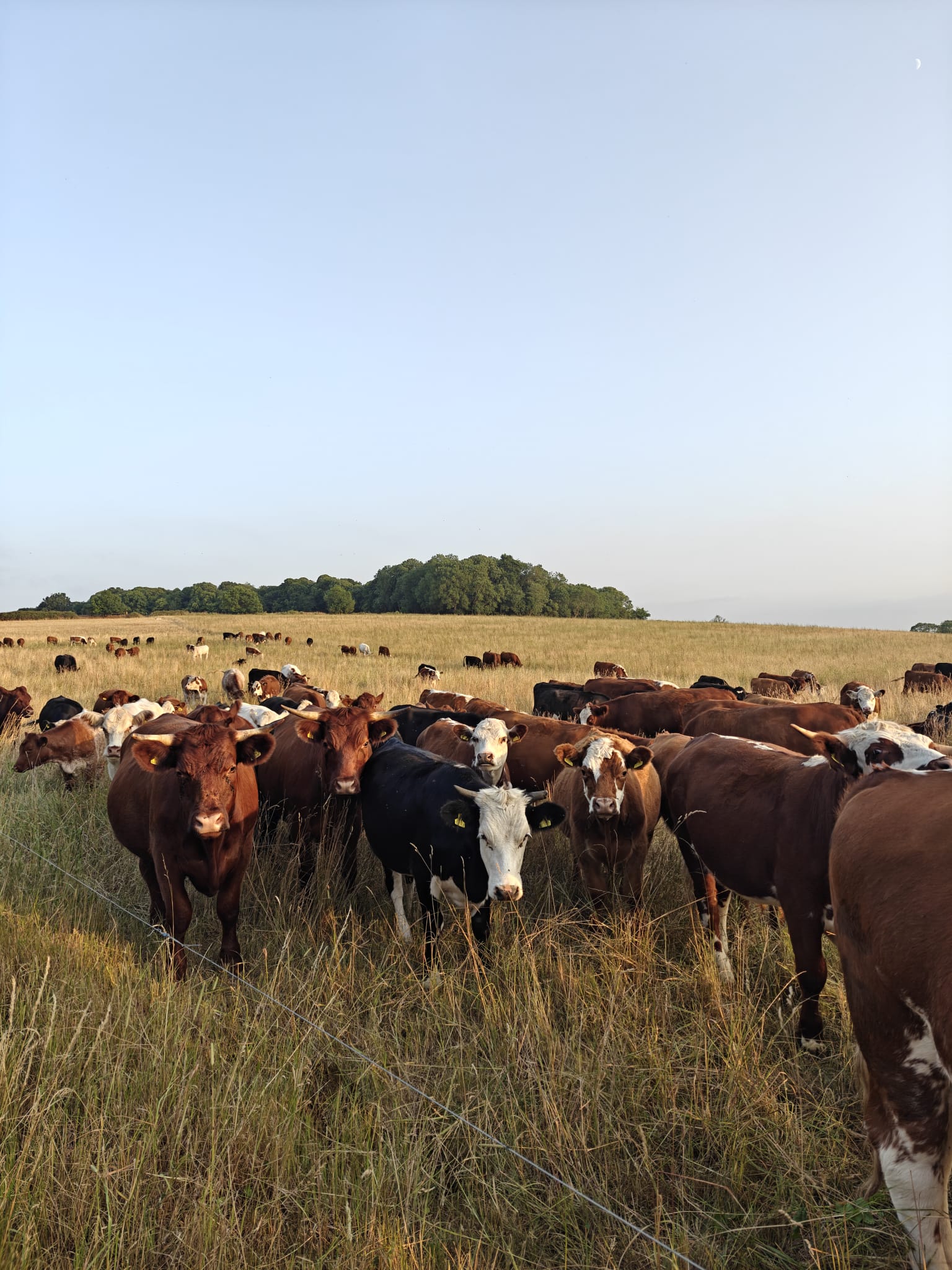
As a Food Partnership, we spend a lot of time working on emergency food provision. It can seem odd that another of our aims is in support of local food, given the increased cost associated with it. Procurement has huge potential to make quality local food accessible to all, and it was good to see this as an emerging theme at this year’s Groundswell. Particularly useful in this conversation was the panel discussion on “Reshaping supply chains for a regenerative farming future”. The Welsh Veg in Schools project has clearly demonstrated how powerful local public procurement can be in improving children’s relationships with food – even getting kids on farm picking the carrots they will be eating. Hodmedods highlighted that an easy way to increase the amount of vegetable protein grown in the UK is to use beans and pulses fit for human consumption as a cover crop. A clear point of confusion, however, is the definition of local food. This is something we need to look to clarify as this important work moves forwards.
We are pleased to see a Local Food Plan emerging in Sussex, which was featured in this discussion. Headed by Arun and Chichester Food Partnership, you can now feed into the development of this plan by completing this survey.
Our Panel Discussions
This year, Brighton and Hove Food Partnership took part in the line-up for the first time, chairing two panels.
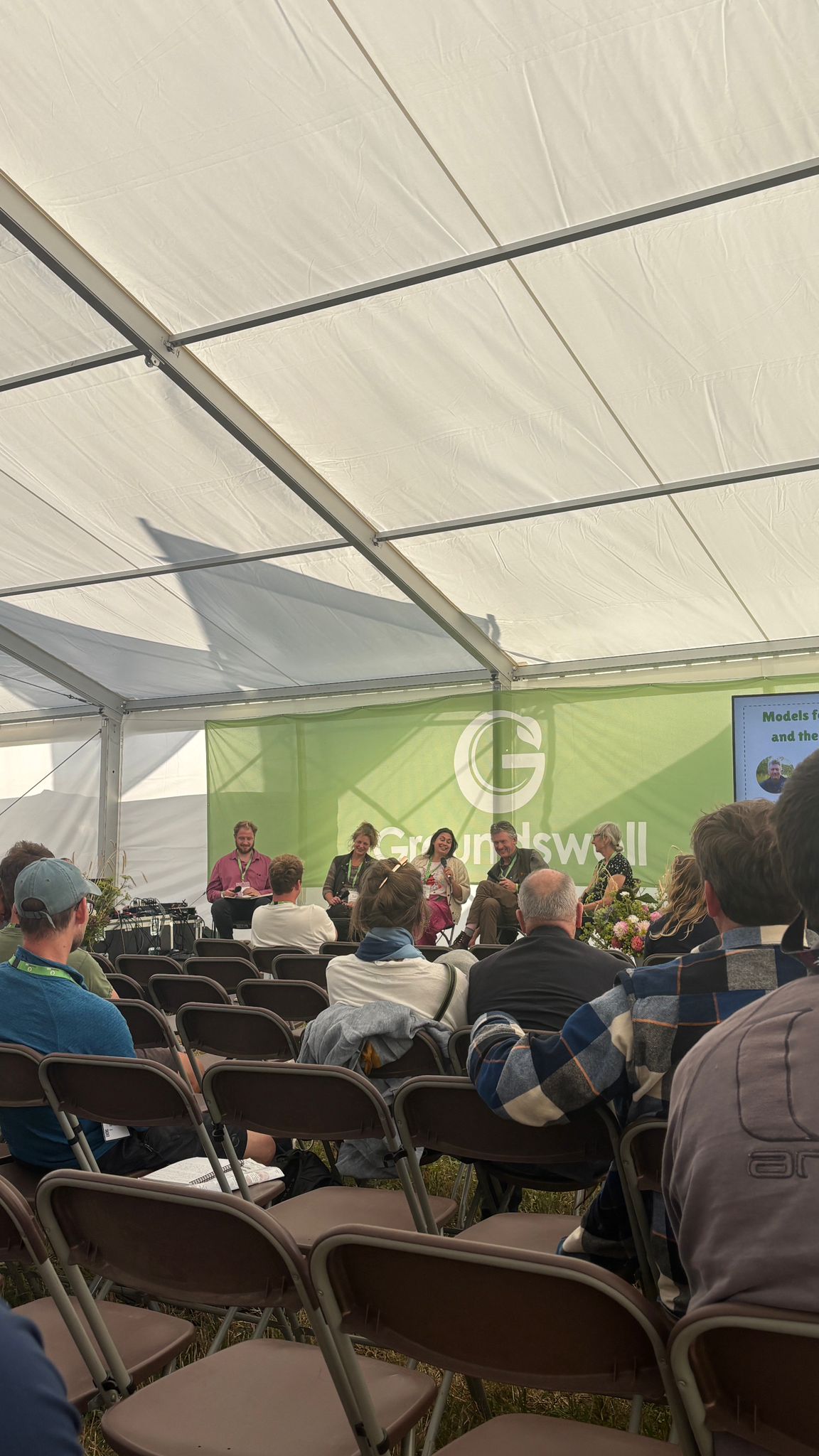
The first was organised by the CSA Network and the Sustainable Food Trust, and was titled Models for small-scale local meat and the infrastructure we need. Featuring CSAs The Goat Project and Swillington Organic Farm as well as Fernhill Fibre and MC Kelly who are both working to create circular farming economies and pushing for a better food system. A key theme was the need for small scale abattoirs to allow for more hands on, holistic farming practices which utilise native breeds. Without this vital infrastructure, farmers will be forced to sell into restrictive wholesale markets which may require them to change their models. Panelists also highlighted how important working with the community is to many of their models, and that making sure your farm is of a size that you can handle is essential to avoiding burn out.
Our panel on nature recovery
The second panel was ourt own and was titled Food: The secret ingredient in nature recovery and focused on how food can help us to tell the story of a habitat. Featuring speakers from Knepp Estate, The Deer Project, The Open Food Network and The British Deer Society, the panel all use story telling in their work to promote biodiversity. Knepp have recently opened a restaurant and farm shop which spotlights meat produced as part of their rewilding effort and communicates the benefits of animals on the land. Ben at the Deer Project includes in person sales and catering in his business model, this allows him to talk to customers about the importance of eating wild venison which is shot to balance deer numbers and allow for nature recovery. Both the Open Food Network and the British Deer Society are working to promote food which is created in a way which regenerates rather than depletes nature.
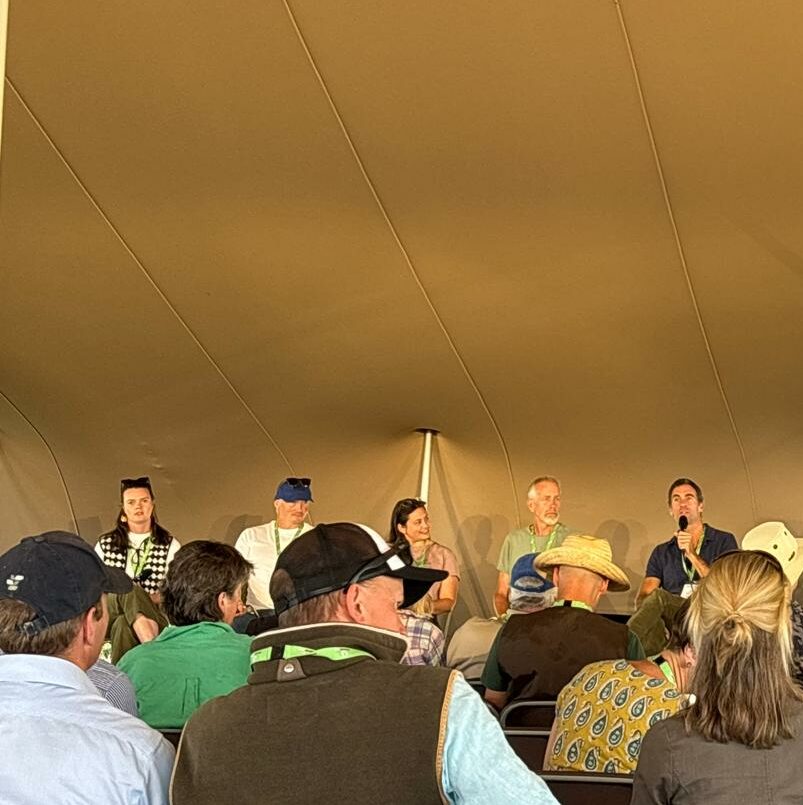
Both panels were well attended, each with an audience of 60+, and we were lucky enough to have very engaged and chatty audiences. Taking the time to spotlight projects which create food in a nature friendly way and highlight the learnings we are gaining throughout our Land Use Project is a key aim for us. We were particularly pleased to bring one of our Sussex Grazed suppliers along with us:
“As a first-time speaker I was a little nervous and really wasn’t sure what to expect. Within the first 15 minutes of arrival, I had met a handful of interesting like-minded people who shared the same outlook on food farming and nature recovery and were doing amazing things.
The panel discussion allowed me to bring the work of the Deer Project to a new audience and hopefully inspire others to talk more about the food choices we make. I’ve also put in an application to serve venison at next year’s event (which was definitely lacking this year).
I had the pleasure of meeting resident regenerative Rockstar Andy Cato, who had all the time and patience of a saint when meeting slightly tipsy attendees who had plucked up the courage to thank him for his efforts and help in being a louder voice than most of us can achieve, all in all I had a great time and met some fantastic people.”
Ben Marks, The Deer Project