
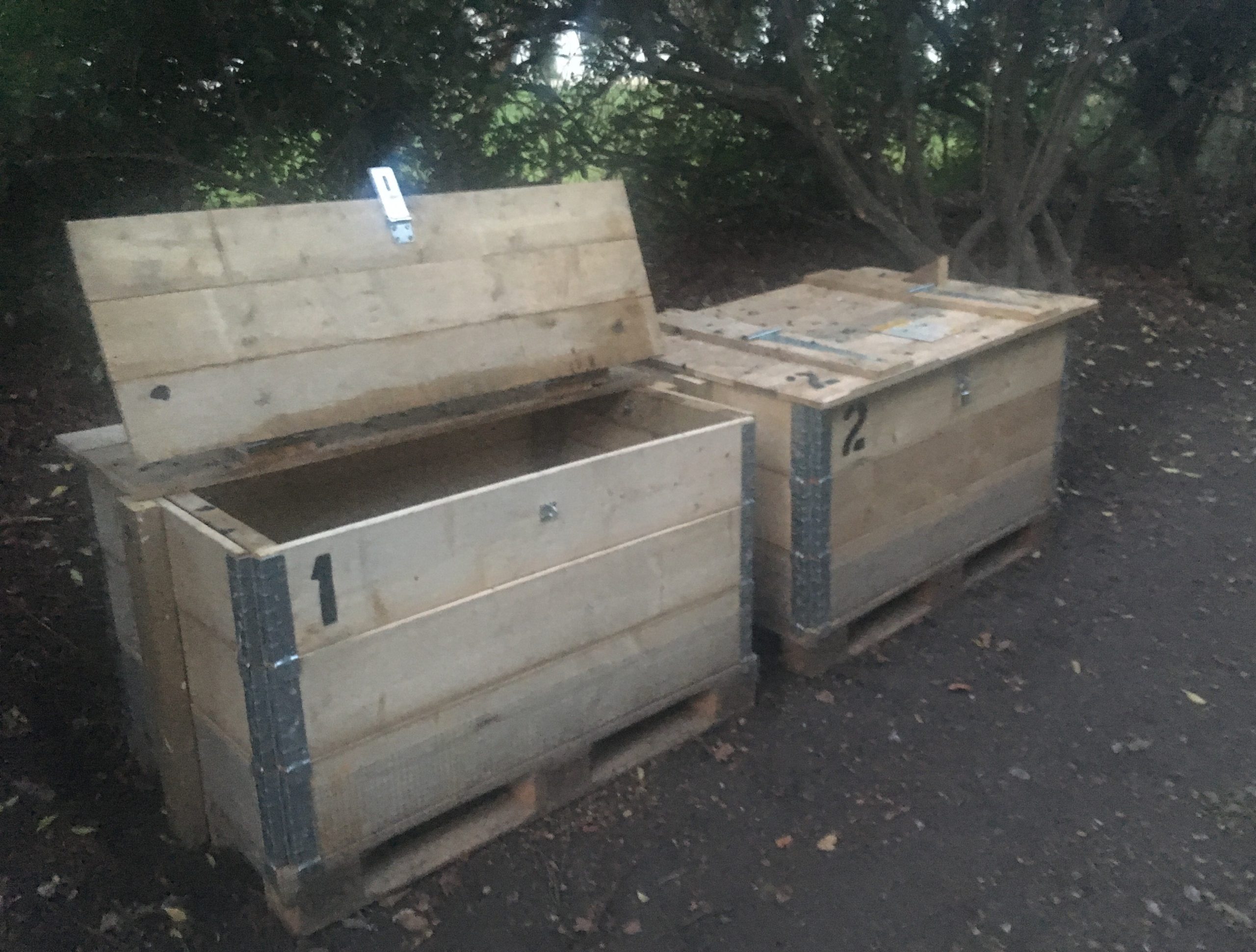
If you would like to start a community compost site at a nearby community centre, in a park, on a grass verge or disused green space near you, then please read through the steps below to understand the process. If you want to proceed, get in touch using the enquiry form at the bottom of this page.
Though sometimes the steps below don’t happen in this order, they all need to be completed before the bins are installed. Please be aware that the process of setting up a new scheme can take several months and requires volunteers to be proactive, organised and passionate about composting. If you are unsure about doing this on your own, we may be able to link you up with another community member who can help.
1. Find a suitable site
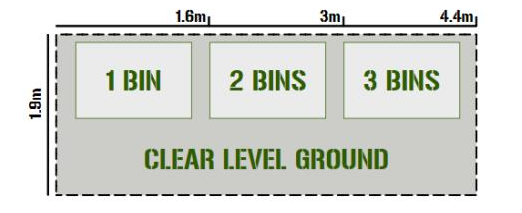
Is there a patch of earth near you that could be home to a couple of compost boxes? It needs to be flat, away from people’s homes, offices and open windows; in a well-lit and easily accessible area, and preferably on grass. Though some schemes may be smaller they work best if they have the following space:
2. Initial enquiries & funding
Once we have received your enquiry form, we will have a chat with you to discuss viability and arrange a site visit to assess the suitability of the location.
The next step is to consider funding options. We are funded by the Council for the coordination side of the project which includes; carrying out the site visits, seeking land owner’s permission, requesting Waste Exemption certificates, engaging with local Counsellors & Residents Societies, holding community consultations, training & ongoing support for volunteers, arranging the installation of the boxes and their maintenance.
Costs for the set up of the scheme’s equipment, carpentry and materials to build the boxes needs to be funded via another source. We share information on grant schemes and support where we can. Council Tenants & Resident Associations within Council properties may be able to apply via their Estate Development Budget.
When funding has been secured, and we seek agreement from the land owners and the Environment Agency.
3. Find others to join the scheme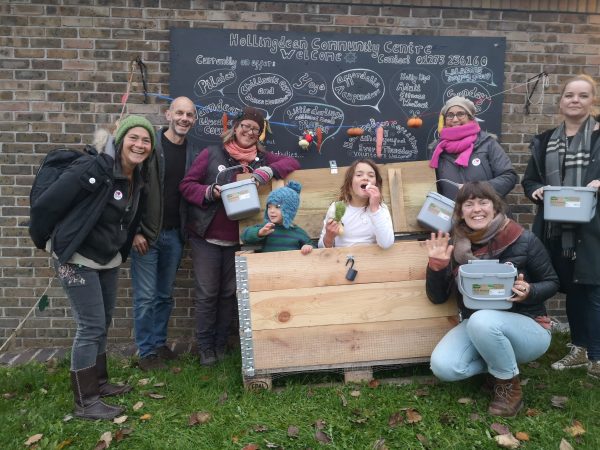
To start, it’s a good idea to have at least 10 interested residents including two compost monitors who will share the responsibility of the scheme. The contact details of the members are held by the Food Partnership and accessed only by monitors to comply with our privacy policy.
Usually the people who help set up a new scheme are the monitors. The monitors will need to agree to the Compost Monitor Roles and Responsibilities (pdf).
4. Involve the local community & land owners
A community feedback period will need to be held for the proposed site, this usually involves putting up posters and speaking to neighbours and residents groups in person and online to check there are no objections to setting up the scheme. Any concerns and objections that are raised during this phase will be carefully considered including any proposals for alternative sites. Ultimately the landowner (often the Council) will have to give permission and have the final say, but we do our best to work with local residents and neighbourhoods to balance the high demand for compost facilities as well as resident’s preferences. If a proposed site has mixed responses, usually a trial phase of 6 months is a way forward, but each site is different.
5. Bins installed
Once a decision has been made, the bins, locks and worms are ordered and the bins installed. Food Partnership staff offer training to new monitors and members.
 6. Composting begins
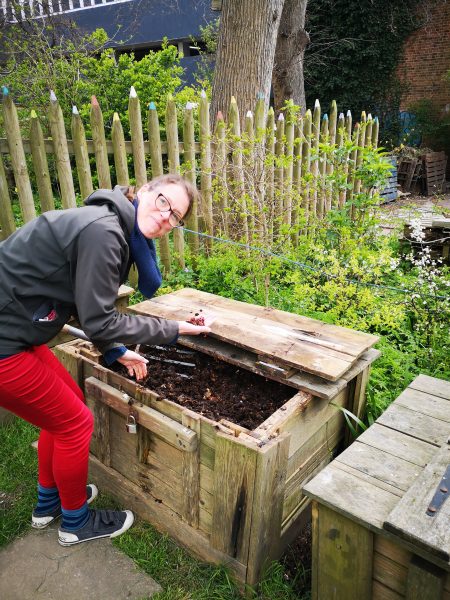
Residents are inducted to our member’s guide and begin adding their raw fruit and veg waste. The worms are added and composting begins. The compost monitors keep an eye on how things are going and contact members and the Food Partnership if there are any issues. Monitors organise a rota of members who help turn the compost regularly which keeps it healthy.
7. Compost is ready!
Compost is ready when it is dark and crumbly and no longer has identifiable food pieces in it. This usually takes about 8-12 months. Members get priority for taking the ready compost and whatever is left is offered to local community gardens or advertised by the Food Partnership for gardeners to come and collect it.
Our ‘Community Composting 101’ video below sums up the process:
Next steps
Please complete the form below if you are interested to start a new scheme – this process can take a few months at least to go through all the steps outlined above.
Please also note that applications from existing resident or community groups are often the most successful. Whilst we can assist individuals to link with likeminded neighbours to join forces, any connections with existing groups really helps.