
Our team visit Newtimber Hill and discover ‘Europe’s tropical rainforest’ beneath their feet.
You may not realise it, but the Sussex Downs are home to Britain’s most ancient grasslands and host iconic wildlife such as the Adonis Blue and Chalk Hill Blue butterflies – as well as one of Britain’s most endangered insects, the Wart-biter Bush-cricket. This rare calcareous (chalky) grassland dates back some 6,000 years when people first began clearing forests and is formed by grazing from both livestock and wild animals.
The thin Downland soil sits upon limestone (chalk), formed from the remains of tiny marine organisms from seas which covered much of Britain around 70 to 100 million years ago. Limestone is relatively alkaline and this, together with the warmer, drier climate of the South Coast, supports such a rich and diverse range of plants and insects that it’s sometimes referred to as ‘Europe’s tropical rainforest’.
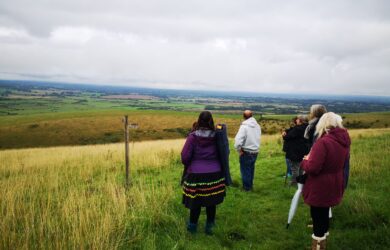
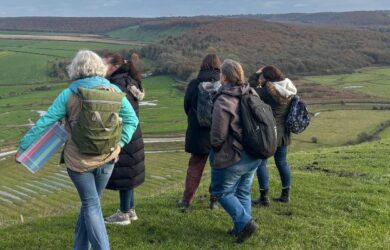
On a sunny July afternoon, the Food Partnership team ambled up to Newtimber Hill to take part in a biodiversity survey, led by National Trust ranger, Kim Greaves. The National Trust surveys sites periodically to monitor the condition of priority habitats. This particular survey was organised as part of Changing Chalk, a 4-year project looking to conserve and restore Chalk Grassland, bring histories to life and provide new experiences in the outdoors.
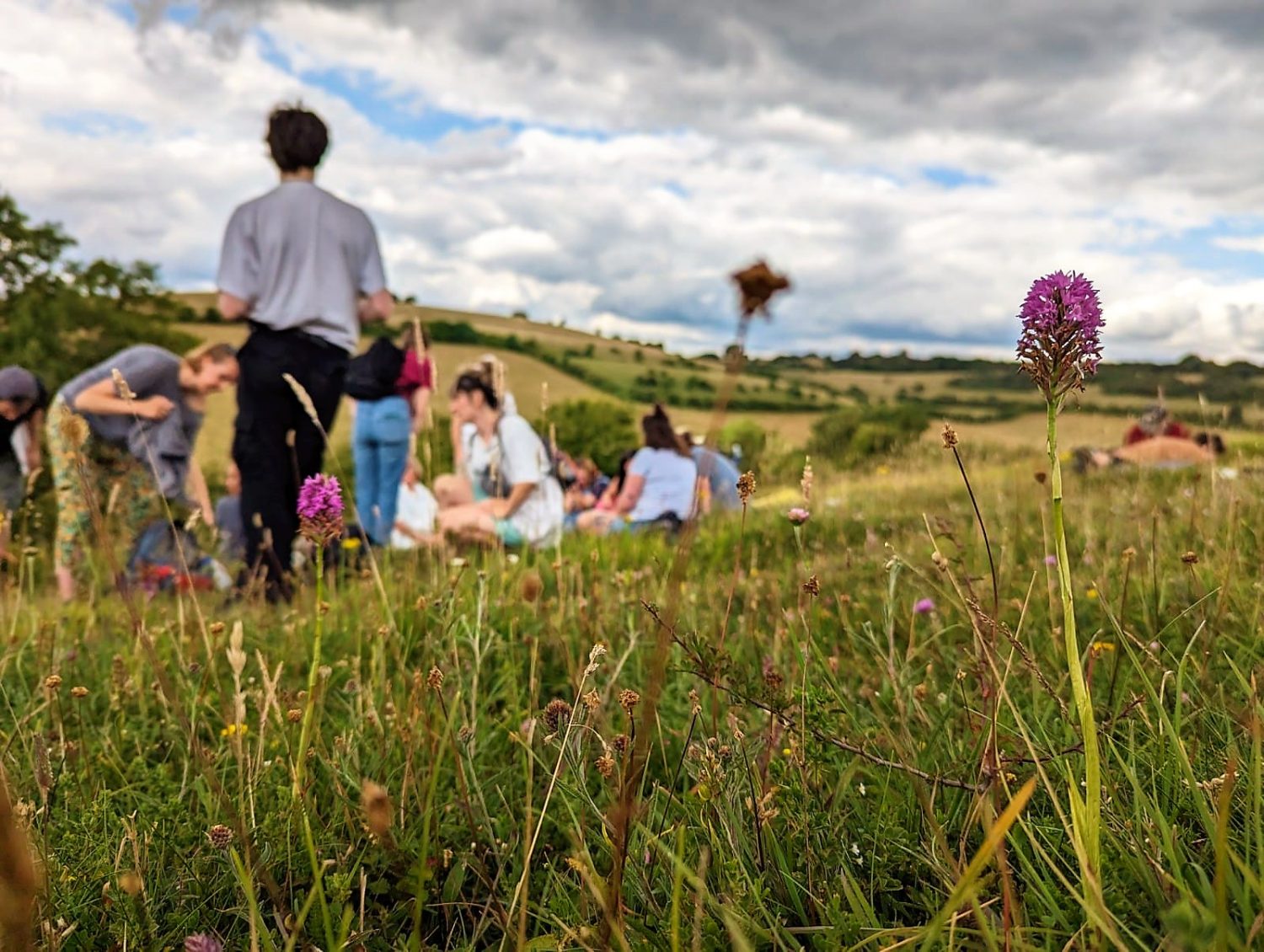
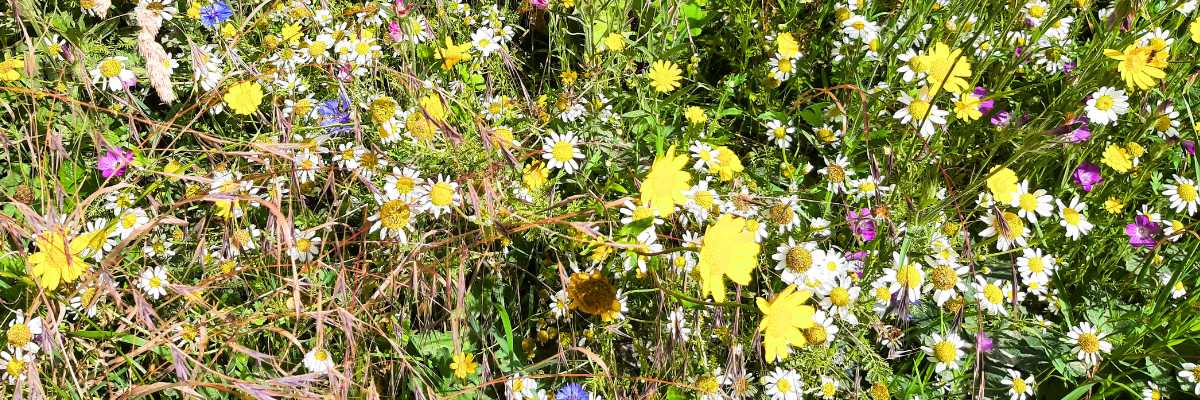
While butterflies flitted across the landscape and skylarks trilled around us, Kim and his team of surprisingly knowledgeable volunteers pinned a 2 x 2-metre string quadrat onto the hillside and invited us to look inside. As well as grass we were fascinated to find 20 species of wildflower. Not to mention grasshoppers and numerous other insects.
I’ve been walking on the Downs for nearly two decades, but that afternoon I realised how ignorant I am of its unique flora and the extent to which it supports the whole food chain. We found wild marjoram (Origanum vulgare), also known as oregano, a herb widely used in Mediterranean cooking. But the flowers are also an excellent food source for multiple insects, while Red bartsia (Odontites verna) is a spectacular and important plant popular with carder bees and wasps. In fact, one species of solitary bee feeds on nothing else.
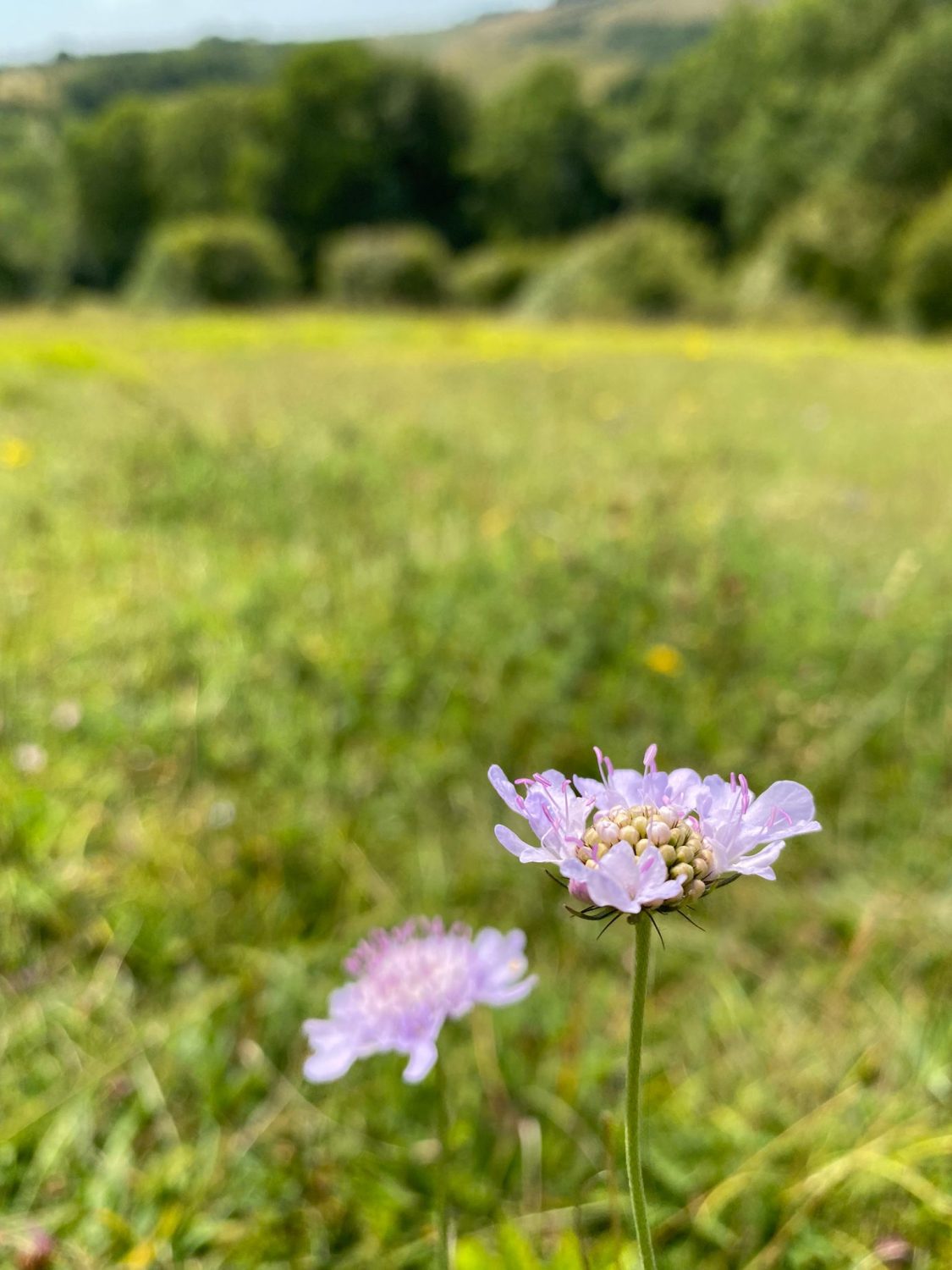
Birds foot trefoil (Lotus corniculatus) is a member of the pea family also known as ‘Eggs and Bacon’, or the less palatable ‘Granny’s toenails’. It gets its common name from the tiny yellow flowers that are shaped like birds feet and is an important source of food for the caterpillars of the common blue, silver-studded blue and wood white butterflies. The nectar of Devil’s-bit scabious (Succisa pratensis) attracts a host of butterflies and bees, including the painted lady butterfly that arrives here in summer from Europe and Africa. Its name comes from its truncated roots; they look as if they’ve been bitten off, as legend has it, by the Devil.
As well as supporting rare pollinators, these wildflowers have been important to humans for centuries. Take Viper’s bugloss (Echium vulgare), for example. This pretty blue flower from the borage family takes its name from ancient times when the plant’s root was used to treat snake bites.
The ‘frothy’ yellow flowers of Lady’s bedstraw (Galium verum) have a sweet, honey-like scent. The name is probably derived from the tradition of stuffing straw mattresses with it, particularly those of women about to give birth. Not a bad choice of bedding because as well as being soft and aromatic, it is also thought to have repelled fleas! Until the 18th century, the flowers were used in cheese-making. Its leaves and stems both curdled and sweetened milk and gave cheese its yellow colour. Traditional Cheddar and Double Gloucester cheeses were once made in this way.
It won’t surprise you to know that Eyebright (Euphrasia officinalis), a dainty, white-petalled plant with purple veins and yellow centres, was traditionally used for eye disorders. But it is also semi-parasitic, feeding off the nutrients from the roots of nearby grasses, which makes it a very useful plant for suppressing vigorous grasses and allowing more delicate wildflowers to thrive.
Among the most spectacular of our wildflowers is the Round-headed Rampion (Phyteuma orbiculare), now overwhelmingly localised, and nationally scarce. This deep blue / purple flower is also known as the ‘Pride of Sussex’ and, as our county’s flower, gives its name to the Rampion offshore wind farm.
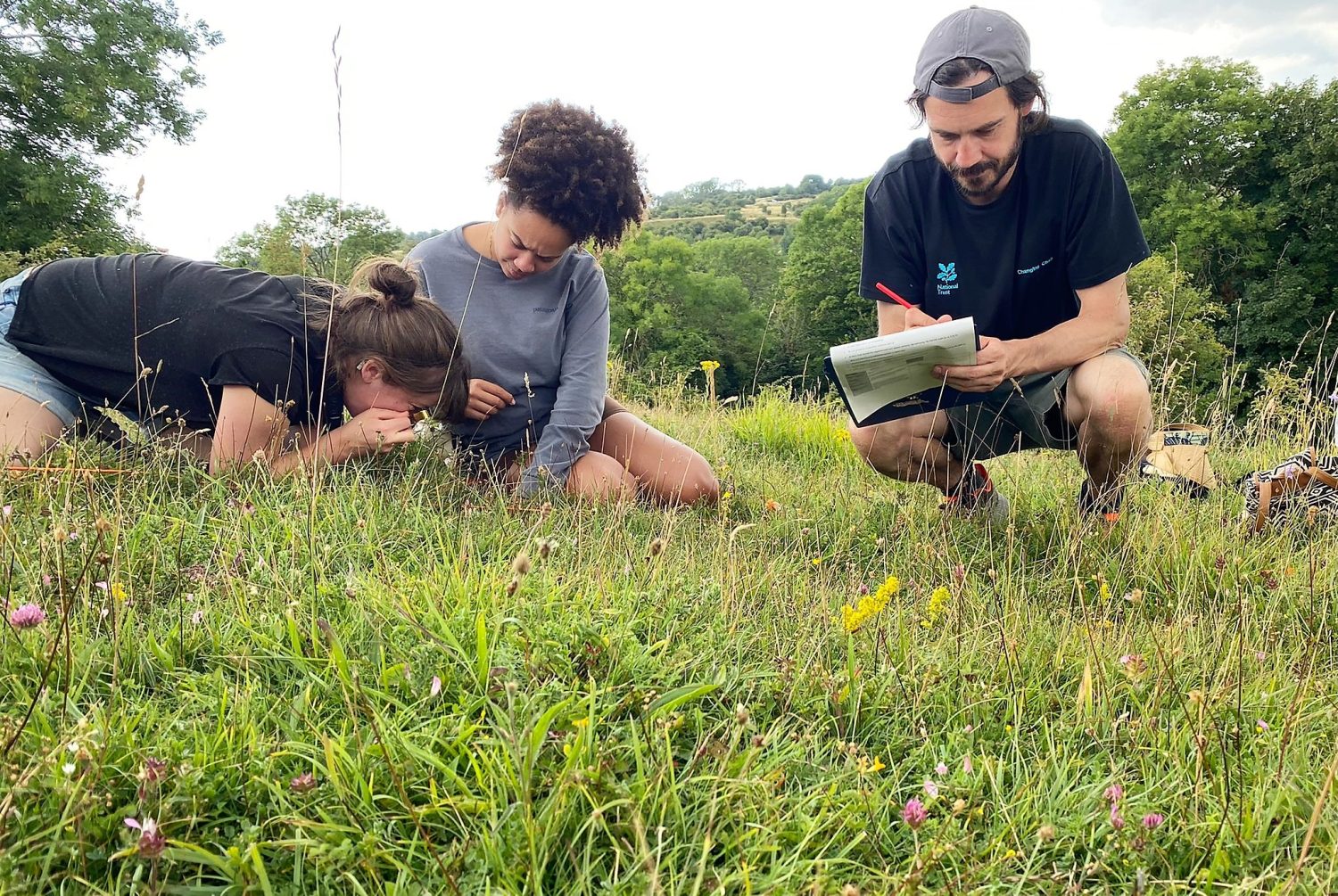 After an afternoon bent over to peer inside this treasure trove of biodiversity, we almost missed the magnificent Red Kite swooping over our heads. A reminder that these tiny, often ignored plants support a much wider ecosystem.
One of the rangers explained to us how to spot areas rich with wildlife. Looking across the landscape she pointed to bright green fields, indicating fertiliser has been applied and, therefore, too rich to support plants upon which our wildlife depends. By contrast, the areas that were a duller green were sure to be teeming with life. And we can’t forget the important part that conservation grazing plays in keeping the scrub down so these native species can thrive. This is why we launched our conservation grazing project, Meatshare.
Find out more about chalk grassland or the Changing Chalk project.
Or to volunteer with Changing Chalk, email the National Trust team at changingchalk@nationaltrust.org.uk

A list of the wildflowers we spotted:
Devil’s Bit Scabious
Small Scabious used to treat scabies
Field scabious
Round headed rampion
Lady’s bedstraw
Red bartsia
Fairy flax
Red clover
Birds foot trefoil
Selfheal
Hoary plantain
Eyebright
Yarrow
Greater knapweed
Mouse-ear hawkweed
Quinsywort
Salad Burnet
Germander speedwell
Restharrow
Wild marjoram