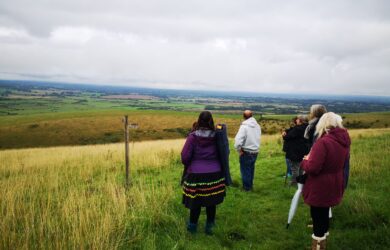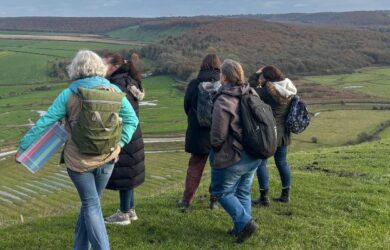

The Land Use Plus and Sussex Grazed Team attended the Oxford Real Farming Conference for the second year running. With over 150 events ranging from talks to workshops, it was the largest yet. It brought together farms, landworkers and industry representatives to discuss the future of farming, particularly through the lens of the agroecological movement. Despite the cold weather, the conference was filled with warm messages of hope, optimism, and the urgent need for radical change in our food and farming systems, making it an energizing start to the year for the team.
Local Economic Development: Supporting New Entrants in Farming
One of the key takeaways from the conference was the importance of supporting new entrant farmers. If we want farming to continue as a viable career in the UK, it’s crucial that these new farmers are not only encouraged but supported in their ventures. A talk titled ‘How do we actually fund an agroecological transition?’ featured Hamish Evans, who suggested a regenerative economic system in four parts: on-farm level strategies, crowdfunding, new ownership models, and bio-regional economics. This approach emphasizes the need for funding mechanisms that enable the transition to more sustainable, local farming systems. Will White from Sustain shared insights on the importance of fairness in the food supply chain, emphasizing that those who contribute to our food systems should be paid fairly for their work. The role of local councils, like Powys County Council, in working with organizations such as Shared Assets to support small-scale horticultural enterprises and new entrant farmers was also highlighted in a talk on ‘Making Public Farmland Work for the Public Interest’.
Building Community and Local Food Systems
There was a recurring theme at the conference around the need to build resilient, localised food systems that connect farmers, consumers, and local governments. Initiatives like Every Bite Counts from the Devon Food Partnership and LUSH (Linking Up Suppliers and Hubs) are excellent examples of networks that promote local food consumption and create connections between farmers, businesses, and consumers. The LUSH model is a great example of how food can be delivered to food insecurity programs while making sure farmers are paid fairly for their produce, making it win-win all around.
There was also a lot of discussion around alternative food distribution methods that bypass supermarkets, which often offer farmers unreasonably low prices for their produce. Many farmers currently have no choice but to accept these low prices. Shorter supply chains that allow for greater connections between producers and consumers are essential, and models like our Sussex Grazed Meat Box scheme serve as good examples of how this can work while benefiting the environment too.
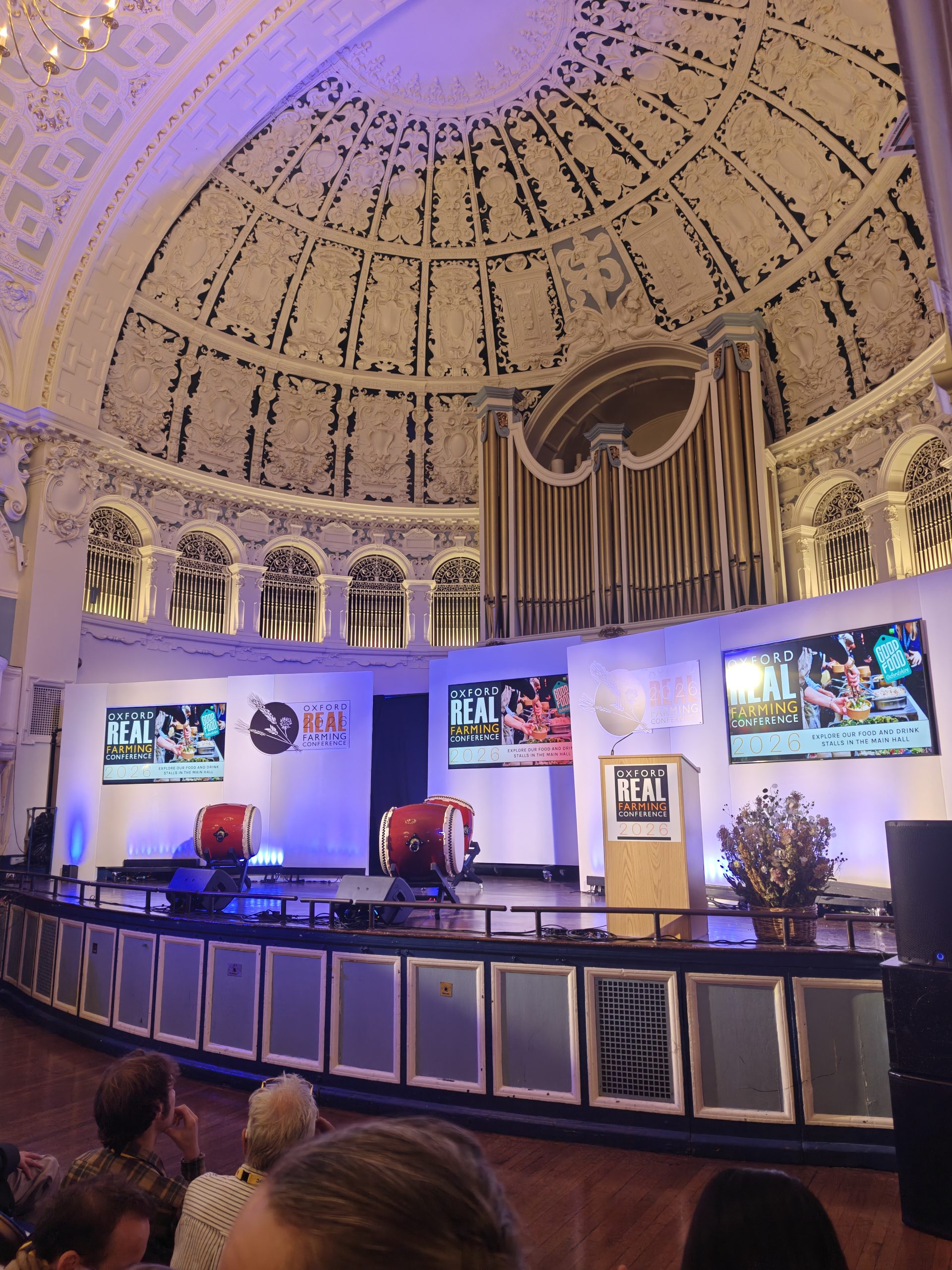
Resistance to Unsustainable Systems: Challenging the Cheap Food Narrative
One of the most eye-opening discussions revolved around our obsession with cheap food. Did you know that in the UK, we only spend about 10-12% of our income on food, whereas in other parts of the world, it can be as high as 30-40%? For context in the UK, food accounted for 33% of our total spending in 1957 and in the past this way more. This drive for cheap food has some serious downsides for health, the environment, and our farmers’ well-being. James Rebanks, in the opening plenary mentioned that we are paying out a terrifying £268 billion every year on health issues linked to our food systems. The health risks associated with ultra-processed foods, as well as the environmental toll of intensive farming practices like pig and chicken farming, were scrutinised. Plus, there’s the mental health strain on farmers dealing with stress and financial instability due to rock-bottom food prices.
As we work toward solutions, it’s essential that they prioritise the well-being of everyone involved in the food system. This is where a just transition is key, which involves adapting farming systems to be fair, sustainable, and inclusive. For example, reducing the number of broiler chicken farms and de-intensifying poultry farming could be starting points for change. Currently, UK planning frameworks tend to support the intensification of farming, creating tension between the goals of food security and nature recovery. The government is in a difficult position, trying to balance these competing priorities, but there is growing recognition of the need to find a middle ground that prioritizes justice for farmers, consumers, and the environment.
Education and Knowledge Sharing: The Key to Sustainable Farming
Education and knowledge sharing were central themes at the conference. Farmers play a crucial role in educating the next generation about food and farming, which is part of a larger conversation around sharing knowledge about sustainable food production practices. School food systems were highlighted as a starting point for improving national food systems by prioritizing local and sustainable food. Procurement for school meals can support markets for farmers, while also teaching children about the value of local, seasonal produce.

Farmer and mother Holly Purdey spoke passionately about the importance of providing high-quality, nutrient-dense food in schools. She emphasized that for many children, school meals are their primary source of nutrition, and these meals need to be both nutritious and sustainable. There were also discussions about introducing more sustainable sources of meat, such as deer, into school meals, providing a nutrient-rich, environmentally friendly alternative to more traditional options.
Tools like the OASIS framework and TAPE+ are helping farmers measure and implement agroecological practices, track progress, and align with policy goals. For farmers, knowledge-sharing networks are invaluable, helping guide them toward practices that ensure their farms are viable, sustainable, and diversified.
Key Takeaways: A Call for Systemic Change
After an action-packed conference, one thing is clear: our food and farming systems need a major overhaul. The discussion around cheap food is no longer sustainable—it’s time to rethink the entire approach. Here’s what stood out:
- Fair pay for farmers: We need to make sure farmers are compensated properly for their hard work and dedication, especially to more environmentally friendly farming. This could be facilitated by a Universal Basic Income for Farmers, a campaign championed by Jo Poulton. Read more about it and about Jo’s mission here.
- Educating consumers: It’s crucial to help people understand the real cost of food, why we shouldn’t always go for the cheapest option and that the seasonality of produce should be celebrated.
- Challenging the cheap food narrative: Cheap food has serious consequences on health, the environment, and the well-being of our farmers.
- A just transition: We must create systems that support farmers in their movement towards more sustainable and agroecological farming practices, that serves the general consumers but also protects the farmers and landworkers themselves.
The future of farming in the UK depends on how we tackle these issues head-on and build a more equitable, sustainable food system for all. Let’s continue to support initiatives that promote local, sustainable food systems and fairer economic models for farming. Our food choices matter, and it’s time for us all to take responsibility for the systems that produce our food.
The Land Use Plus and Sussex Grazed projects are dedicated to championing a transition to more sustainable and equitable agroecological farming systems, collaborating closely with farmers and inspiring change through education.