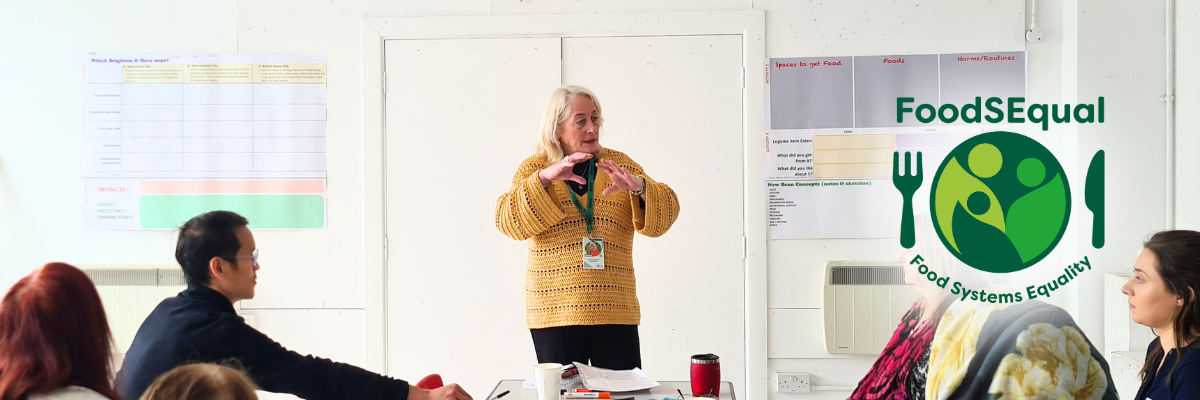
In this blog, Amanda Lucas and Sara Fernee share their journeys as Community Researchers at the Brighton and Hove Food Partnership. Community Researchers are connected to community food shops within less affluent communities to find out about the reality of people’s day to day food experiences – and to use this learning to make positive change to our food system.
Read their other blogs What is the FoodSEqual project? and What we have learnt so far.

“What is a Community Researcher?” and “What is the FoodSEqual Project?”
These are questions we are often asked when we tell people about our work with BHFP. It’s a challenge to explain succinctly what FoodSEqual is and how we go about finding out about peoples’ food realities and challenges, but we are getting lots of practice!
We researchers have different backgrounds and community connections in Brighton and Hove, often based around the City’s Community Shops. This gives us an excellent grounding for engaging and listening to local people.
The journey
We took part in a wide a range of training covering relevant academic methods and concepts and community development work basics (e.g. safeguarding and boundaries). Our first task was a collaborative one; to make two videos about local community gardens.
Bevendean Community Garden video
This activity helped us start thinking about what a ‘community’ is, and how our own experiences values and assumptions affect our idea of this. Our work commenced as we were emerging post Covid-19, remote working made it harder to get to know each other but this collaborative task helped.
Surveying
The surveying task for ‘Flavour Project’ introduced us to devising a questionnaire and gave us our first taste of meeting people in a community setting. We all really enjoyed being part of the design process, learning about survey bias and engaging with people in real life.
Workshops and focus groups
Then we moved onto our first lot of community food workshops/focus groups. We worked closely with the academics at University of Sussex (who partly designed the workshops), to make sure that the workshops were appropriate for our areas. The aim of the workshops was to find out what people are currently cooking and eating, and what types of things they consider when making food choices. We then used the data from the workshop to learn and implement a research technique called ‘thematic analysis’ . We learned that fish and ‘beans and pulses’ are two food groups that people would like to eat more in Brighton Hove. Being part pf the ‘research cycle’ from beginning to end was invaluable to our progression and confidence in Community Research.
Participant Observation
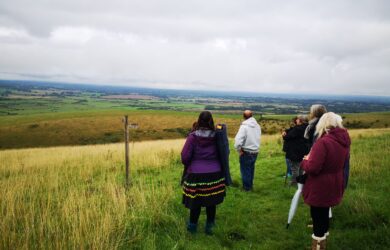
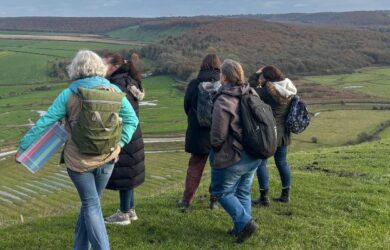
The next research skill we learnt was called ‘Participant Observation’ and we were privileged to be invited to Rock Farm during some community visits to put these research skills into practice. We looked at people’s interaction with space and activities of the day, took notes, discussed our thoughts as a team afterwards and fed back the information to stakeholders.
Visits
Periodically, we embarked upon visits to meet colleagues and project partners at Reading and Tower Hamlets giving us a greater sense of our role in the project and have vital community research is to its success.
Sara: “Our trips to London by train to meet with other research teams on the FoodSEqual project really helped us get to know each other better, enabling us to gain a deeper understanding of food systems and to challenge each other about assumptions and expectations.”
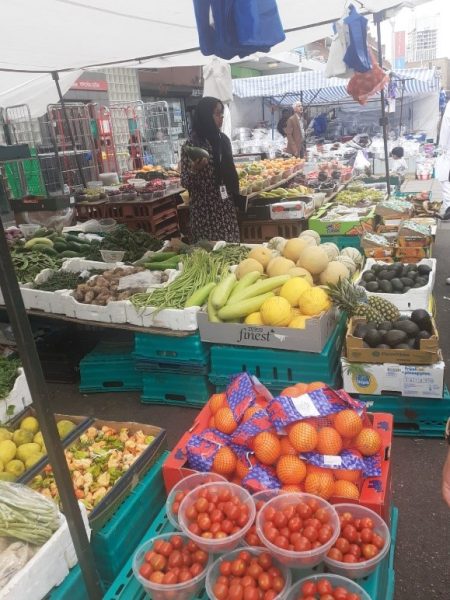

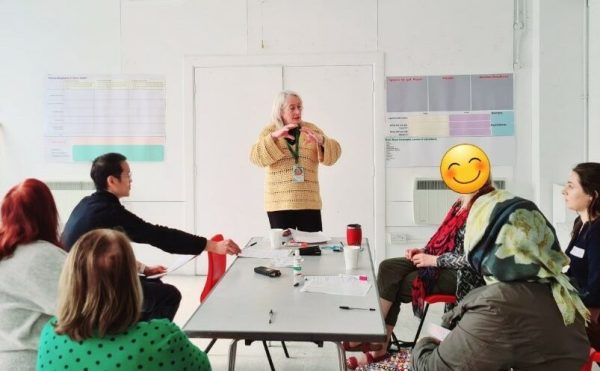
FoodSEqual team day workshop in the Community Kitchen in Brighton, and visit Watney St Market.
Leading Community Workshops
The latest workshops about Fish, and Beans & Pulses have allowed us to take a more leading role alongside project coordinators, growing our confidence and putting our skills and training to the test. At one location we engaged an interpreter as the majority of the group spoke Bengali. This was both challenging as we needed to adapt our pace, and rewarding, as it ensured the group could fully understand our questions and freely discuss their ideas.
Overall
We have learnt a lot and developed trust within our team, the wider research team and our communities– We have the confidence to say – “are we asking the right questions?” and “we heard (our community) say this” and “can we check that we know what you mean?” We can now advocate for our communities, know the best times and locations to engage people and identify and adapt when we don’t think people have understood. Our growing confidence enables us to examine how to be more useful as community researchers and have faith that the voices of the communities we care about are being heard.
Learn more
FoodSEqual (Food Systems Equality Project) is working towards ‘Co-production of healthy, sustainable food systems for disadvantaged communities.’
To receive occasional updates on the FoodSEqual project and here about opportunities to be involved in the workshops or other research activities sign up for the mailing list or contact:
Shelley@bhfood.bozboz.dev, 07935481677
Website | Newsletter | Twitter | Facebook | Instagram