Volunteers are a powerful force, having a tangible impact across our neighbourhoods in Brighton and Hove every day. Volunteering to support others with food peaked when people mobilised en masse during the COVID-19 Pandemic, having a profound effect across Brighton and Hove.
But 5 years on, reflecting on this time of decisive action to get food to people, our director Vic said
“What is so frustrating is how institutionalised the crisis response has become… and years of involvement can take a toll on the volunteers and project co-ordinators. Everyone wants long-term, structural solutions to the problem of poverty… No one that stepped up in 2020 to help expected to be needed for this long.”
This blog delves cautiously into a sensitive topic – the problematic side of food bank volunteering, in what has evolved from grass-roots beginnings into an institutionalised food support ‘sector’. Emma, our Networks Officer, uncovers some of the unintended consequences of reliance on the voluntary sector to alleviate the symptoms of poverty.
The pressure on volunteers mounts up and up
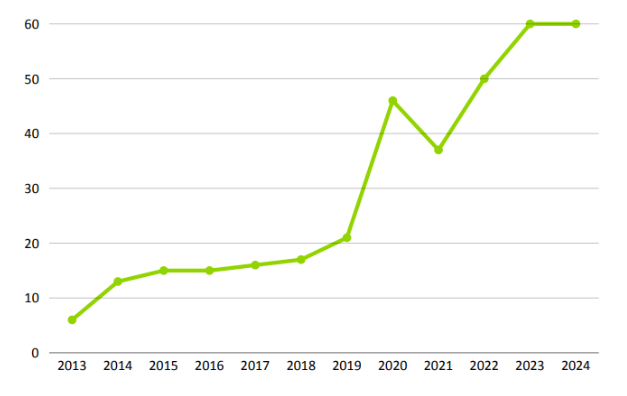
It’s a fact that more single people, pensioners and families need help to afford the rising cost of essentials right now. Our annual survey of food projects shows an alarming rise in the last decade, with 6,300 people receiving food support each week in 2024.
Those who seek help can be referred by the Council, voluntary sector, health services and education settings, while others self-refer. As well as support with immediate crisis, many of the city’s 50+ independent food banks, community meal projects, and affordable food shops offer a range of wrap around services. This includes referral to advice and mental health support, a warm dry place with a chance to meet people and other low or no cost items such as clothing and toiletries.
This vital support system is powered by the dedication of volunteers who give over 3,400 hours each week, with very few projects having paid staff. The growing network of projects depends on donations and surplus food to keep their shelves stocked and meals served. While there are many benefits and reasons to volunteer for food projects, recent reports highlight significant issues.
New reports raise concerns
Carl Walker is a Community psychologist, Director of Adur & Worthing Food Partnership, and founding member of the Alliance for Dignified Food Support. He presented findings of the new report on Managing hunger trauma in community food support to our network last month. This research shows there is a psychological toll on volunteers brought about through dealing with the emotional hardship presented by the people they support, at the same time as trying to run projects on a shoe-string budget, whilst dealing with the vagaries of food supply from surplus sources.
Carl Walker and the reports co-authors argue that this pressure amounts to ‘systemic betrayal’ and results in moral injury of the volunteers themselves. This coincides with the release of FoodRise’s report Used by, which criticises supermarkets for effectively “dumping” their food waste – often damaged, expired, or nutritionally inadequate – onto the voluntary and community sector, placing an unacceptable burden on these already stretched organisations. These reports collectively call for systemic change to ensure a more dignified and sustainable approach to food support.
These findings line up with our own city-based research. Beyond Food Banks found that some of the key challenges facing emergency food providers were:
- high demand and long-term dependency on food support
- a lack of fresh produce
- volunteer capacity
Projects reported fatigue, burn-out and the need for succession planning for when people step back from key roles for their own mental health. The overwhelming message is that this can’t go on.
Sharing the stress in Brighton, Hove and Sussex
The Food Partnership facilitates collaborative networks for community food projects. These provide opportunities for peer-to-peer support, with 1-1 support from the Food Partnership available for projects at difficult times. We work with groups to find solutions and advocate for change at the city level and system level. Here’s what we’ve been hearing and discussing with food project workers in the last few months:
Burn out is here and it’s complicated
‘Some days its ok. Some days you just can’t see this need for support ever ending and feel helpless’
Rather than being a defined breaking point, burn out can come in waves. Most people we spoke to agreed that this pressure is a reality for them. Some organisations that provide food may be trauma informed, so this recognition is built into their work. For others, when they first hear they may be taking on vicarious trauma, it is often an unexpected realisation.
The message can be a hard pill to swallow – that what they are experiencing is ‘moral injury’, that this kind of voluntary work can be seen as exploitative or abusive, and that successive Governments have forced this responsibility upon the voluntary sector. But many will feel validated by these reports recognising of the helplessness, betrayal and struggle they are feeling.
One food project organiser told us how they started this work because they wanted to support the community they cared about. But because of the sensitive and high-pressure relationships they have with visitors to the project, they have found themselves withdrawing from their community outside of their work. It can be complicated to sensitively navigate vulnerable people’s Dignity in Food Support, and hard to switch off when reminders are all around you.
Training programmes will be part of the next steps from community psychologists like Carl. Advice training is currently provided by Citizens Advice Brighton and Hove , and The Food Partnership recently ran a course on “building skills to handle difficult situations” led by Emma Reeves from Trust for Developing Communities. Other options might be buddying or forums, particularly for those staff or volunteers at the top of the organisation who might feel the need to hold all of the pressure themselves. But we acknowledge that volunteers might just want to do their bit, and not want to become counsellors or benefits law advisors.
The message is that volunteers can only do so much. The hunger trauma report begins to explore how food project volunteers might unionise. Policy makers may need to consider the question “what if food bank volunteers went on strike?”
Two wrongs don’t make a right
Looking at supermarket shelves, you might not realise there is a huge amount of surplus being discarded behind the scenes every day. An alliance of 8 projects in our Surplus Food Network harness these unpredictable flows, with a fleet of volunteers picking up food that would otherwise go to waste and turning them into meals or food bank stock. In one fortnight, East Brighton Food Co-op moved a massive 8.5 tons of tomatoes, broccoli & cheese to local food projects.
This work is inspiring. But the resourcefulness of projects in the face of the double problem of household food insecurity and over-production has negative consequences. We currently have the mind-bending situation where a community organisation must run a fundraising event to raise money to pay for the petrol costs for a volunteer to pick up surplus food from a supermarket, only to open the crate to find that half of it is inedible.
FoodRise argue this practice of ‘donating’ inedible food legitimises a model of overproduction, without retailers needing to pick up the financial and climate costs. And that’s without even delving into the moral or health implications of people in food insecurity being supported only by donations, low-nutrition store cupboard basics, and the produce that supermarkets have discarded.
Food banks can’t solve food insecurity, but they are an essential lifeline right now. They desperately need food donations that are good quality and in date. Poverty and unrealistic retailer demands must be curbed by those with the power to do so – our change makers and policy makers.
We all need systemic change
“We are providing a sticking plaster, when what we really need is surgery”.
Food project leads have tried to patch up these problems locally, but are stuck for what more to do in the face of the continuing national poverty crisis. Demand remains shockingly high for those working in these areas, with many experiencing high need even in times which historically were seasonal quiet periods. Solutions need to come on a broader level.
As a Food Partnership, we will continue to inform policy with our Food Strategy Action Plan and campaign for an end to poverty and food insecurity. The food support sector needs funding which recognises that their role is not over. They must be given the resources to keep their doors open with certainty, until our society has truly ended the need for food banks. We have been campaigning not only for the Household Support Fund to be extended but for a long-term financial solution, and welcome last week’s announcement of a new £1bn multi-year crisis and resilience fund.
But if our social security system truly covered the cost of life’s essentials in peoples’ time of need, reliance on voluntary food support would reduce. That’s why I will be lobbying on behalf of the Emergency Food Network at Westminster on the 18th of June for the Guarantee our Essentials Campaign, alongside Trussell Trust representatives from across the UK. With the welcome news of an update to Free School Meals still fresh, will this positive momentum persuade our MPs to update Universal Credit too?
Let’s help volunteers do what they do best
Despite the challenges, an amazing array of people continue to share time, food and companionship week on week. Volunteers don’t want to stop – they want to be supported so they can perform their roles safely.
Our Director Vic again, with a message to project co-ordinators who are struggling –
“Please reach out to us at the Food Partnership. Trust us – you aren’t the only person feeling this way. We can try to help you find solutions, to have a break or transition the project. We can come to you at a time that suits you. And please keep connecting to each other – we know when you are busy that attending networking or training seems like a luxury you can’t afford, but these activities might be just what you need to help you run your group.”