
This Valentine’s Day we invited compost enthusiasts from across the South Coast to join us at Community Base to share the love of living soil as part of our Climate Action Fund project Food Use Places.
We dived deep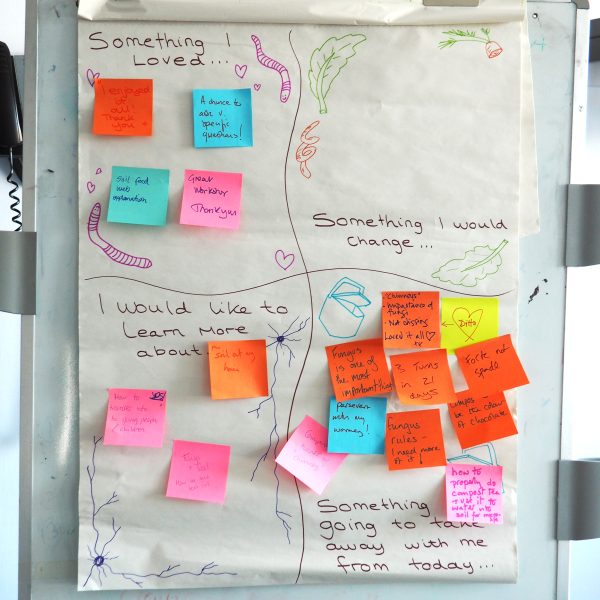 into the compost pile with the amazing presenters below:
- Noeleen, Volunteer Compost Monitor for The Patch at @WilliamClarkePark
- Tom, Compost Tumbler and Living Soil Guru from @oldtreesoil
- Perry, Certified Soil Food Web Lab Technician of @soilredemption
Together, they shared their compost knowledge, enthusiasm and tips for making compost that is bustling with life and nutrition. Noeleen shared her experience as a compost monitor at the event, explaining the importance of properly maintaining a compost pile and why compost monitors are so essential to our citywide network of community composting.
Noeleen’s role involves regularly checking the compost and updating scheme members if any changes are needed, as well as making sure that some of the golden compost ‘rules’ are adhered to. These include making sure food waste is cut up small enough for it to break down correctly (as whole vegetables can end up cooking in the high temperatures of compost tumblers!) and maintaining moisture levels in the bins – adding more carbon if it’s too wet, or vice versa sprinkling it with rainwater if it’s too dry. Noeleen also takes out the things that shouldn’t go in, like ‘compostable packaging’ which takes too long to break down.
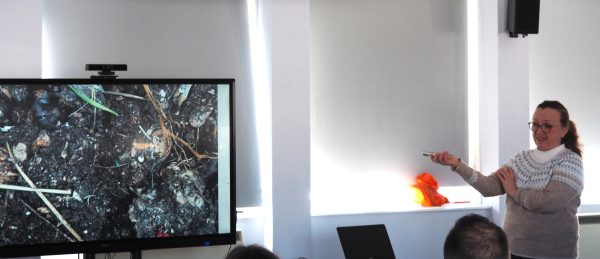 Thanks to superstars like Noeleen, one of our 88 volunteer community compost monitors, our city’s food waste is getting turned into compost within our city, rather than being ferried down to Newhaven’s incinerator or finding its way to landfill. In 2022, Community Composting saved 160 tonnes of food waste from going to the incinerator, with a Co2 saving of 320 kg. This helps us create circular systems within Brighton & Hove, whereby locally made compost is used to nourish soils in our allotments, homes, and community gardens.
Tom and Perry gave a fantastic short explanation of the complex soil food web and the importance of composting to the best of your ability. One of their top tips was to use a fork to turn compost instead of a spade, as turning with a fork allows the heap to remain aerobic whilst not breaking up the microbes and fungi. More microbes mean living soil, which will help restore soil health.
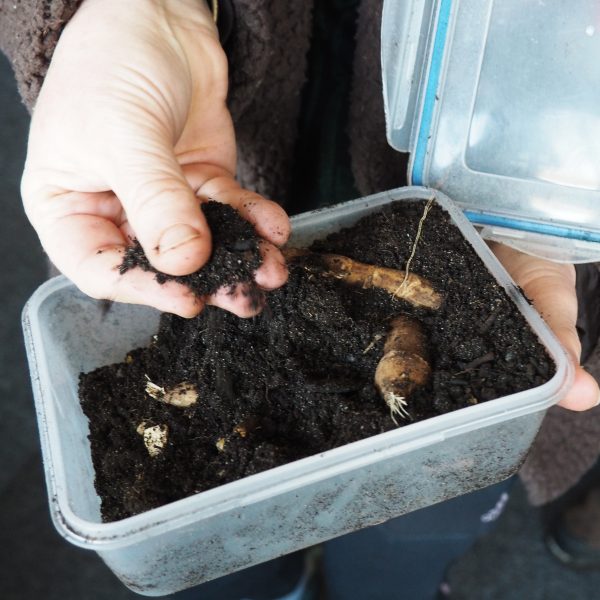
Attendees were invited to bring a sample of their soil to the event, to get it checked out by Perry, who is a certified soil food web lab technician. Perry tested this under a microscope to see if it is biologically complete. Sadly, in many cases the soil was somewhat lacklustre, which demonstrated that there is a deeper world to compost than initially meets the eye – and one that needs love and maintenance to thrive.
Tom from Old Tree Soil is our compost whizz for the CAF project, helping us set up hot composting tumblers at community sites such as at The Patch, a scheme that processes around 150 households’ food waste. From veggie peelings to small bones, (almost) everything edible can go in a Joraform tumbler, which makes them an invaluable resource for creating hyperlocal circular food waste systems. 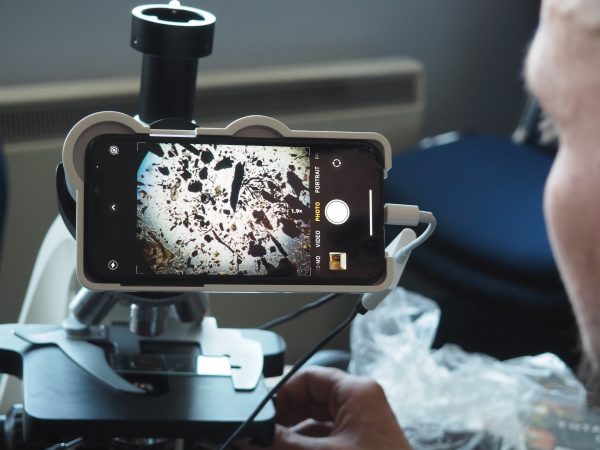
Composting can be complex, but with a little love and commitment it can help us restore our earth in Brighton & Hove and beyond. A big thank you to all those that joined us on the 14th at Community Base – one day maybe this will become an annual feature as big as Valentine’s Day!
If you are interested in attending our next Loving Living Soil Event send us an email expressing your interest and we’ll contact you back when we have the next one scheduled in.
Thanks to funding from Brighton & Hove City Council Carbon 2030 fund we can set up more schemes next year so if you’re interested in setting up a community compost site head to our website to find out more.