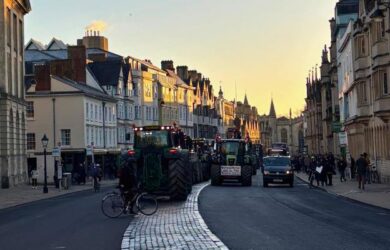
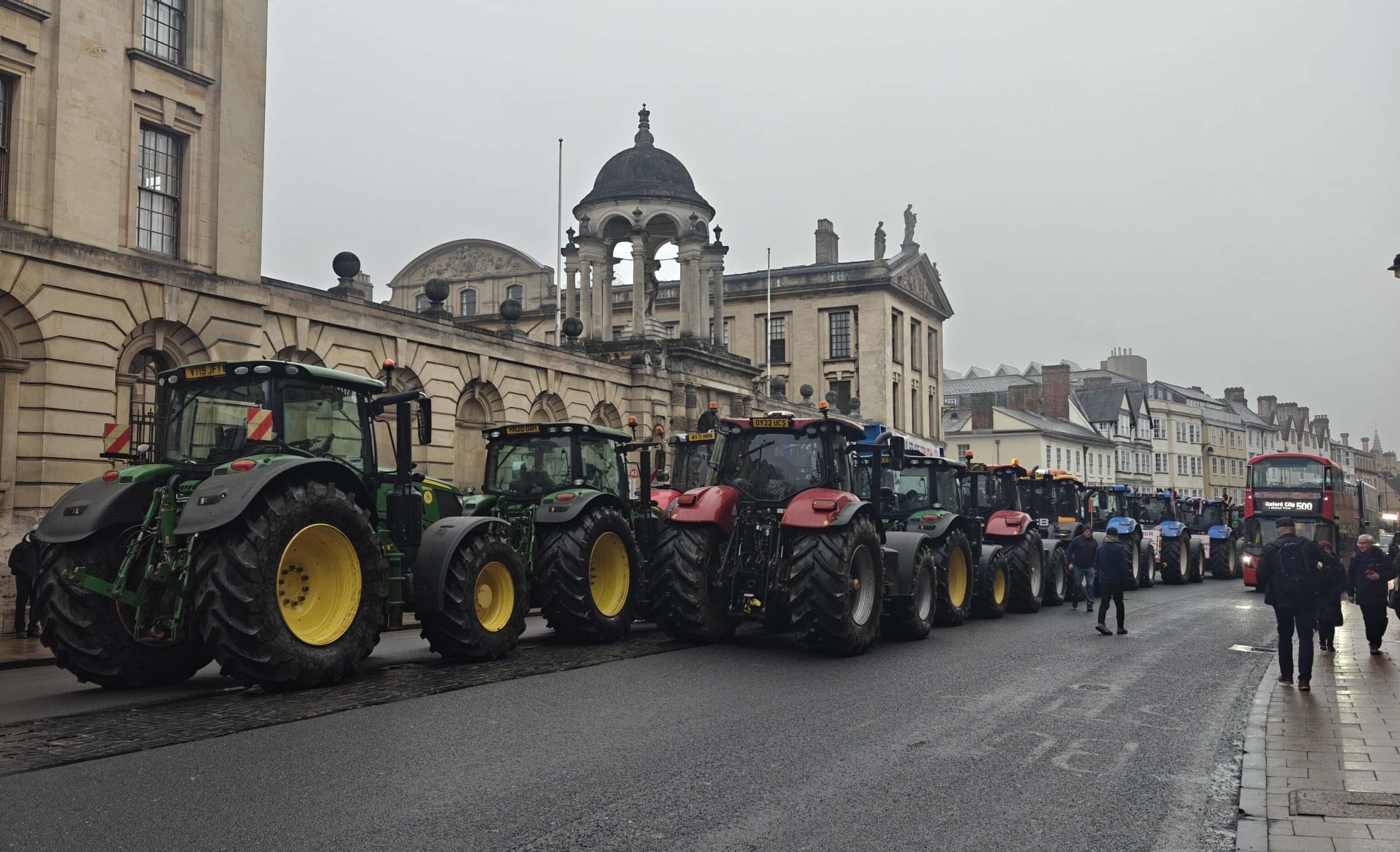
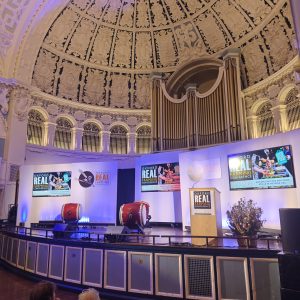
From the opening ceremony featuring poetry, Taiko drums and Charlotte Church, the Oxford Real Farming Conference brought its usual unexpected and wholistic approach to farming back to the centre of Oxford. This two-day event, filled with talks, songs and engagement is always a great way to kick off the new year. For me, it is an opportunity to step out of the Land Use Plus Project and draw inspiration from an energetic and driven group of people at the forefront of farming and food production for nature and planetary recovery.
One of the most inspiring talks I attended was an opportunity to hear from Rae Hippolyte, one of the founders of Folx Farm in East Sussex. Her talk was entitled “Upsetting the value chain: Folx Farm’s food access pilot” and focused on their project to bring culturally appropriate foods to the Bangladeshi community of Tower Hamlets. You can read more about their FAF project here, but it reminded me that, in a country divided by the hatred of a vocal few, we are strongest together. People from all backgrounds worked together to grow foods rarely available in the UK. Despite being a cultural melting pot, the diversity of food we grow or, even, import is minimal. We grow less than 35% of the fresh produce we consume in the UK, a percentage which needs to increase greatly if we are to know true food security. Projects like Folx Farm show us that with drive and (essentially) funding we can disrupt a failing food system and create our own, even if “only” at a local level.
Talks were crowded this year, which was both disappointing when you couldn’t get in, but also heartening to know that demand for this kind of thinking is rising. After being unable to get into 3 talks, I ended up in a brilliant workshop run by Sustain; Action against industrial livestock production. This workshop highlighted the refusal of planning for Cranswick’s limited mega poultry farm in Methwold, Norfolk, due to environmental concerns. A key takeaway from this session, other than the power of community, was the idea of defining a farmer and the farm. What Cranswick were planning to deliver wasn’t a farm; it was an industrial unit staffed by workers, not custodians of the land. Chicken is the most consumed meat in the UK and is often considered to be an environmentally friendly alternative to red meat due to lower carbon outputs. In stark contrast to this messaging, both poultry and pork production is being increasingly industrialised in the UK, leading to horrific environmental impacts.
Whilst attending the provocatively titled “The demise of Plant Based Foods: cause for celebration or concern?” the subject of pasture raised meat was obviously a hot one. This debate reached new heights in recent years with the publication of George Monbiot’s book Regenesis, which argued for synthetically produced foods to replace land intensive grazing systems. Nikki Yoxall, regenerative cattle farmer in Aberdeenshire, argued for a more nuanced approach to the externalities of food production. Nutritional density, biodiversity increases and other such factors should be considered when discussing negative environmental impacts. All agreed that an increase in consumption of plant-based foods is positive for the planet but wanted to see investment into infrastructure which allows for whole plant foods to be better utilised. Currently, most peas and beans grown in the UK are shipped to Europe for processing, highlighting again just how vulnerable our food security is to international shocks.
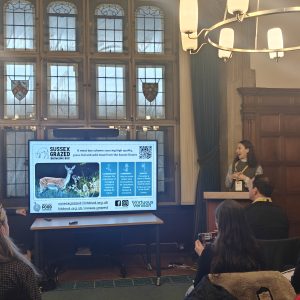
The highlight of the conference was the opportunity to put together and chair a panel on “Venison: quality meat with a positive impact”, in collaboration with The British Deer Society. Featuring their CEO David McAuley, The Country Food Trust’s CEO SJ Hunt and Wiltshire Wildlife Trust Director of Nature Recovery Carrie Starbuck, the session explored how informed, collaborative and responsible deer management can protect land and wildlife while offering a sustainable, ethical, and environmentally friendly food product. From direct-to-consumer sales to venison in canteens and food banks, the panel modelled both the problem and the solution through their own projects. Land Use Plus and Sussex Grazed Project Co-Ordinator, Georgina, also took part in this panel, highlighting the work of Sussex Grazed and the Wild Venison Network in creating local, direct sales from deer managers to the public. She also presented the work of Plumpton College, who offered venison to their students as part of trial in 2023. We were delighted when this was picked up by both The Times and the BBC. It was a particularly proud moment to see how far Georgina has come since she attended ORFC last year as an intern on our project.
Overall, themes of resilience, transparency and localisation in the food system rang through, with a strong desire for government to support British infrastructure over international deals. Partnership working and the power of community was highlighted again and again, and I left feeling just a little more hopeful about both the future of farming and the future of the UK.