The Local Meat Report
There is a very real risk of losing the last remaining abattoir in Sussex, Downland Traditional Meats. This report lays out the importance of small-scale abattoirs to the local environment, economy and animal welfare, and suggests potential methods for ensuring we do not lose this valuable local resource. Data has been gathered from a range of sources, including NFU surveys, government data and local knowledge. It is our hope that this report can offer a foundation on which to build a stronger, further reaching local meat system for Sussex and the surrounding counties.
Why support local abattoirs in a “post-meat” world?
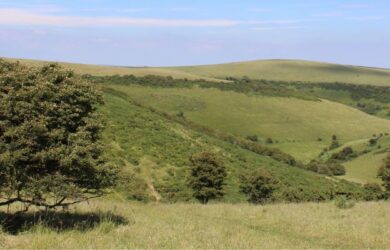
Whilst the conversation around eating meat and the environment typically demonises grazing animals due to carbon emissions and supplementary feeding, it is important to consider place and the appropriate crop for a landscape. The South Downs is primarily made up of chalk downland with very thin soils and are therefore not ideal for growing crops without considerable inputs. Historically, this land has been used to graze sheep, which were then brought into the fold in valley bottoms at night to fertilise growing land. Whilst deforestation did occur, it happened over the course of thousands of years, and allowed an internationally important habitat, chalk grassland, to thrive. Due to agrological intensification following the Second World War, the UK has lost 97% of its species rich grasslands, and 80% of its chalk grassland, in the last 80 years. Chalk grassland is vanishingly rare, found only in north-west Europe, and widely regarded as one of the most biodiverse habitats on Earth. Grazing animals are essential to preserving and restoring this “European Rainforest”. This habitat is as much a defining feature of the South Downs National Park as the extensive forests in the west.
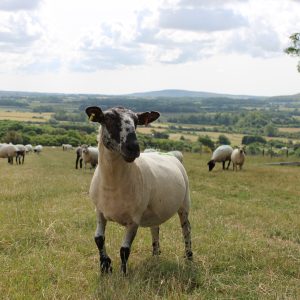
Conservation grazing is the practice of using, primarily native breed, ruminants to selectively graze out “problem” or invasive species, most often without the need for supplementary feeding. In the case of chalk grassland this includes scrub such as hawthorn and bramble, and grasses such as tor grass, reducing crowding and creating the correct conditions for desired species to thrive. This is what connects chalk grassland recovery to local abattoirs. Native breed animals are typically smaller and less homogenised than the products we are used to seeing in supermarkets, who have strict specifications as to what makes an “acceptable” cut. Large scale abattoirs most often supply directly into the wholesale market, meaning that they do not accept these sorts of animals, and farmers have no opportunity to get their meat back. If farmers are able to sell their own meat, they are also often able to make a small premium which tells the story of their farm and recognises the slow and sustainable pace at which these animals were grown, in harmony with nature.
Small scale abattoirs are closing across the UK at an alarming rate. This is having a knock on effect on local farms and businesses, causing some farmers to stop farming or change their locally focused model. As fewer small abattoirs exist, farmers and their livestock are having to travel further distances, driving up food miles and causing unnecessary suffering to animals. This lack of resource is forcing many to feed directly into the national market as most large abattoirs do not offer a kill and return service. There is also an impact on food sovereignty and security: with no abattoir, and a cattle market under threat, Sussex’s main crop is grain followed by a small amount of horticulture.
To read the full report, click here.
How can you help?
MPs will be debating the merits of small abattoirs on 8th May at 3pm. Please contact your MP and tell them why small abattoirs matter to you.
Here are some key points to include:
Better for the environment
- Small-scale abattoirs support local regenerative food systems which often include animals better suited to our landscape (smaller, native breeds), but which do not meet the requirements of a standardised wholesale market
- Native breed animals often make excellent conservation graziers. The UK has lost 97% of its grasslands since the Second World War, and 80% of its chalk grasslands. Grasslands are a carbon sink and haven for biodiversity which are best maintained and restored by grazing
Supporting Local Economies
- Without small abattoirs, farmers can struggle to sell their meat directly to the public as most large abattoirs do not offer a kill and return service. This removes a key way in which they can build relationships with their local community and diversify their offering in the form of farm shops etc
- Many farmers would have to reduce their herd size or perhaps even stop farming entirely if they were unable to access a local abattoir. This leads to the death of family farming as land is brought up by “super farms” who often don’t have the same sense of guardianship over the land
- The loss of small abattoirs also affects associated professions such as butchers, delivery drivers, and vets
- Restaurants who value quality, sustainable meat with a story will find it harder to source it, impacting their sales and local food tourism
- Opportunities for local level public procurement of meat are also removed if there is no readily available supply
Animal Welfare
- As fewer abattoirs are available, animals have to undergo ever increasing journeys to slaughter – causing unnecessary suffering and upping the carbon costs of British meat
Food Security
- National and local food security is also impacted by the loss of local food infrastructure, leading to offshoring of food production and a more vulnerable food system
Within Sussex, there is support for a new or improved local abattoir from Local Authorities and nature organisations as it meets or supports several biodiversity and local economy aims. We need MPs to support changes to planning and regulation to make it easier (not harder) for small abattoirs to operate. Grants and subsidies are also vital to help local develop and protect local food infrastructure.
If you would like any further information, or to get involved with our Meat Working Group, please contact sophie@bhfood.bozboz.dev