Why buy British?
-
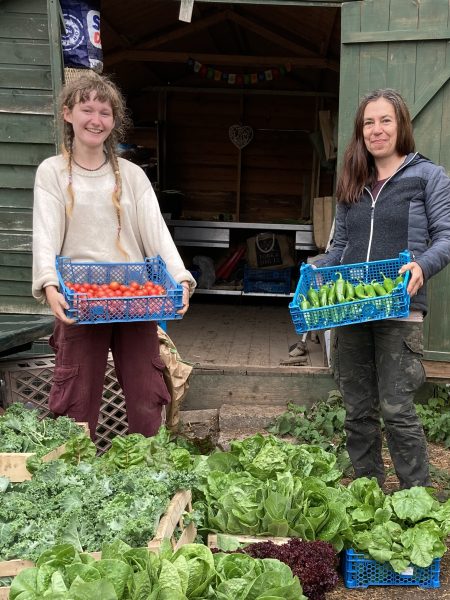
Some of the Fork and Dig it Crew bringing in the harvest Transparency: Shorter, more localised supply networks are easier to understand as there are fewer middlemen. This means you are often able to find our far more about the product you’re buying allowing you to make an informed buying decision which fits your values.
- Nature Recovery: The UK is one of the most nature depleted countries in the world, in large part due to our farming history. However, when you buy locally produced food, you can seek out farmers and growers who are working with nature rather than against it. Planting bee and bird seed banks, utilising agroforestry and conservation grazing are all methods which support nature whilst producing food. Food production (particularly the farming aspect) contributes 15% of UK greenhouse gas emissions, which has fallen by 40% since the 1990s. By prioritising farmers and growers who actively work to reduce their outputs, you can help to bring this number down further.
- Animal Welfare: We are lucky to have and maintain some robust animal welfare, however there is always space for improvement. Transparency afforded by shorter supply chains often mean that you can actually see the animals being farmed for your table which can help give peace of mind that they have lived a happy life. When meat is imported from countries with lower animal welfare standards, forcing prices down. British farmers who raise their animals in a caring manner are undercut by those who may not.
- Economic benefits: The food and drink industry is the largest manufacturing sector in the UK, supporting 4.2 million jobs. It is worth over £153 billion to the UK economy. By shopping locally, you can ensure that your food budget goes back into the community, supporting local people and businesses. When you spend £1 in a local business, up to 68p of it can stay within the local economy, as opposed to 40p when spending it at a large business.
- Food Security and resilience: Only 60% of the food eaten in the UK is produced here, with the rest being imported from other countries. This percentage drops year on year. As we saw with COVID, producing more food in the UK allows us to ensure we have access to enough food during a crisis. Growing food here at home also allows us to develop climate resilience in our crops. If we stop buying British in favour of imported foods, there is greater risk of food shortages as we will become increasingly dependent on other countries to feed our population.
- Local Connection: By buying local, British food you have the opportunity to connect to the land around you. In Sussex, we have traditionally grown market garden vegetables, apples, and other orchard fruit. Sprawling chalk grassland, particularly in East Sussex thrives when grazed thoughtfully by sheep and cattle. Another traditional crop for the area is grain, although this it is trickier to source this locally nowadays.
How can you support British farmers?
-
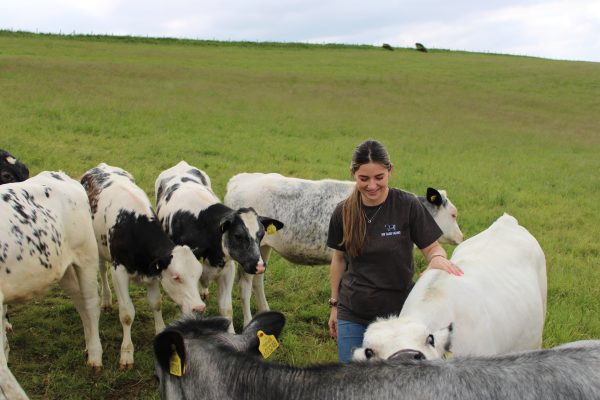
Farmer Abbie with some of the BW Carr’s Farm herd Shop local: As we’ve established above, shopping local is great for understanding where your foodcomes from, ensuring it meets your values and supporting the local economy. There are lots of places to buy local produce in and around Brighton and Hove; farm shops, farmers markets and box schemes are all brilliant ways to support your local farmer. Check out the Buy Local tab on our website for more places to shop.
- Have a conversation: Most people selling locally produced food are delighted to talk to you about how they source. This food is a unique selling point for them and part of their identity as a business. There’s no such thing as a silly question, so just be brave and ask them about the food they stock.
- The Open Food Network: A great place to find local producers who are selling direct to consumer is the Open Food Network. This open-source platform puts the power back in the hands of the producer and champions transparency, especially in pricing. Check out our meat box scheme, Sussex Grazed, if you’re looking to buy locally and sustainably raised meat.
- Read labels: Food labels can be confusing, often using misleading imagery or wording to imply the food is something it isn’t. It is a requirement that the country of origen or production is listed on the label, so look out for that. Be careful of foods which say “packed in …”, this is a typical way to mislead consumers as it is not necesserily the country of origin.
- Meet a farmer: One of the best ways to support British farmers is to meet them and understand their concerns and values. Initiatives such as Farm Schools and Open Farm Sunday allow consumers to engage more fully with farmers and understand how food is produced.
- Make your voice heard: Farmer need our support. Check out these campaigns from the National Farmers Union or get behind Basic Income for Farmers. Riverford’s Wickedleeks and the Soil Association both regularly lead campaigns which specifically support more regenerative farming methods.
We hope this quick guide helps you to support British Farmers. If you are interested in our Land Use Plus or Sussex Grazed projects, explore our other blog posts here.