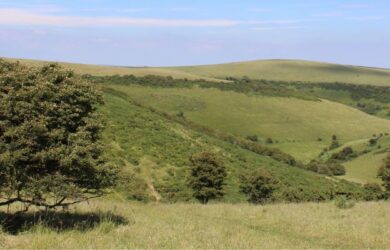
Have you ever wondered about the sheep up by Rottingdean Windmill, Devil’s Dyke or Dorothy Stringer School? Who do they belong to? What are they doing there? Where do they end up?
The answers are held by the Sussex Wildlife Trust, The National Trust and Brighton and Hove City Council; three of the Changing Chalk project partners, striving to “bring 630 hectares of chalk grassland into improved management for wildlife”. These organisations employ contract graziers to manage their land using conservation grazing. Eventually many of these cattle and sheep are sold into the meat market.
Sussex Wildlife Trust
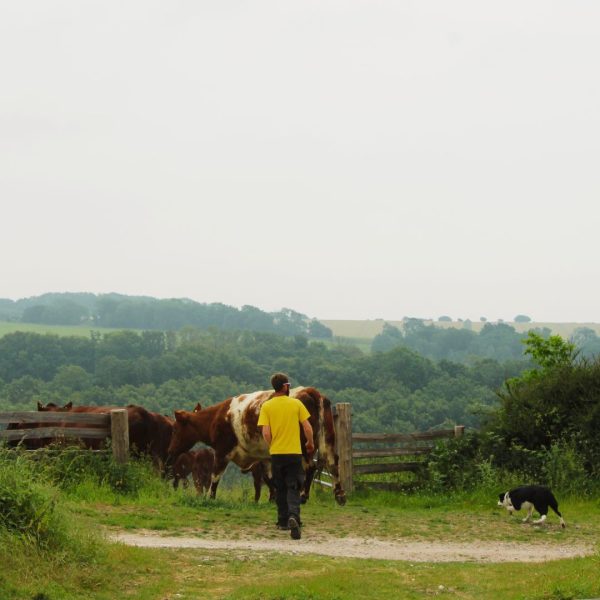 Tom Parry is the grazing manager for the Sussex Wildlife Trust. He manages 1000 acres of mixed grassland across seventeen sites in East and West Sussex; from Pevensey Marshes to Leythorne Meadow in Chichester, including Ditchling Beacon and many more reserves in between. The farming operation is based on the Wiston Estate, where they run a mixed farm system with arable crops, Sussex cattle and Romney and Herdwick sheep. These rare breed sheep are well suited to managing encroaching scrub, pushing back hawthorn and bramble as they nibble. They also fertilize the pasture and crops as they ruminate; a symbiotic relationship between land and beast.
Tom gives a detailed, yet succinct explanation of his grazing management on the Sussex Wildlife Trust website. He writes… “historically our nature reserves would have been farmed, with no notion whatsoever of conservation grazing. The link between healthy animals and healthy habitats alone, bringing about a perfect conservation grazing regime.” A poignant reflection on the long history of Downland farming heritage. Sheep have been grazing the Downs as far back as medieval times and woodlands were cleared as long ago as the Bronze Age to make way for farming settlements.
Although meat production is secondary to the SWT’s conservation aims, they have supported the Sussex Grazed meat box scheme by supplying delicious Romney lamb for the April share. Future shares with the trust will include hogget, mutton and beef.
The National Trust
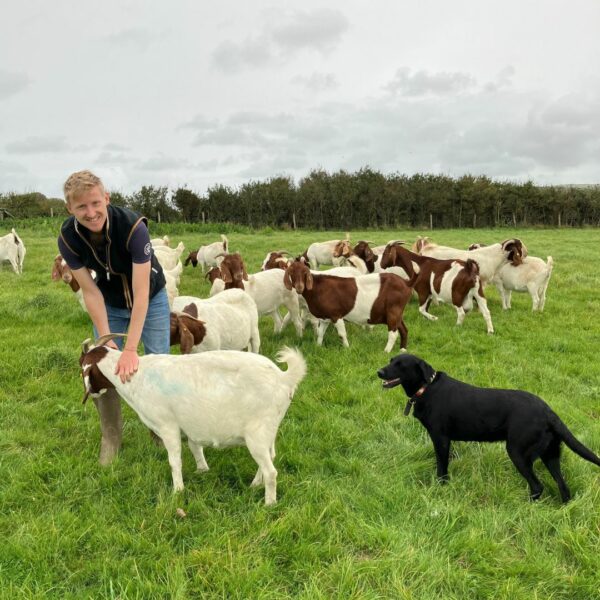 The National Trust also employ farmers for their grassland management. The Brown Family of Litlington graze a portion of the estate out to the East of the county, as Ed Brown described to us in a visit to Clapham Farm in April:
“We’ve been tenants for the National Trust, at Frog Firle, for just over 30 years now. Any management plans are discussed and agreed and it’s not ‘We want you to do this – go do it!’ There’s a lot of collaboration and really good, long-term relationships between the farming team and the National Trust Rangers.”
Similar to the Wildlife Trust, Ed Brown’s conservation grazing work dovetails with the family’s own mixed farming model of grain crop and meat production: He describes this holistic approach:
“It’s having, for instance the sheep grazing our wheat crops to cut down on using pesticides and growth regulators. And then you’ve got the farmyard manure going on the fields, so it’s a natural organic fertiliser and then in return you’ve got straw for bedding, feed and the grain coming back so it all sort of works together and then you’ve got the rotation of different crops moving around the farm.”
“Where each enterprise feeds into the other, and supports the other, is a good sustainable way for us to move forward both from the environmental side but also economic.”
The Browns believe in creating more sustainable local food systems and support our work in this area; supplying the Food Partnership with Boer Goats, lambs and Sussex cross cattle for our Sussex Grazed meat box scheme.
*You can listen to Ed Brown on our Savouring Change Podcast Episode #4.
Brighton and Hove City Council
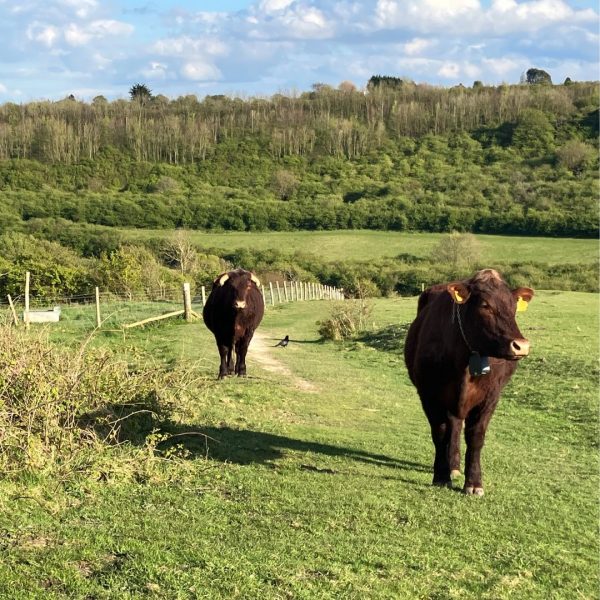 Brighton and Hove City Council own some 13,000 acres of land which makes up the City Downland Estate. 94% of this land falls within the South Downs National Park, which gained its status in part due to the rare Chalk Grassland found here. You can often find conservation grazing animals managing land around the urban fringes of the city, and in some of the city’s parks:
“The council has reintroduced grazing as part of our work to expand and conserve chalk grassland in and around the city… Grazing improves the open space for wildlife and people.” BHCC
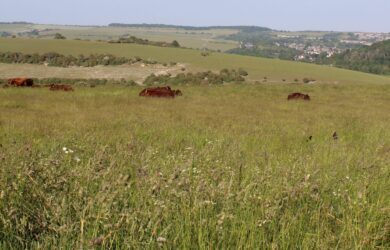
The herd of Sussex Red cattle at the council’s Wilding Waterhall project work together in a ‘no fence’ grazing system. They learn where their grazing boundaries are from an audible warning from their GPS collars. There is shared knowledge in the herd, as they communicate how and where to graze; consuming the right plants for their health and wellbeing and even developing a respect for ground nesting birds and precious ant hills. These hi-tec cattle are trained to graze; they are the exceptions to the rule and will not be sent to slaughter. With a trend towards older beef animals amongst high-end butchers and the restaurant elite, could we see a Waterhall Sussex Red on the menu, 8-years down the line?
In our next installment we will delve deeper into conservation grazing vs food as we explore grazing management and food systems at a landscape scale.
- Explore the importance of grazing animals in managing and restoring rare chalk grassland.
- Help to create better local food systems; for consumers, retailers, farmers & producers.
- Make available shares of local lamb, beef & goat from local conservation grazing animals.