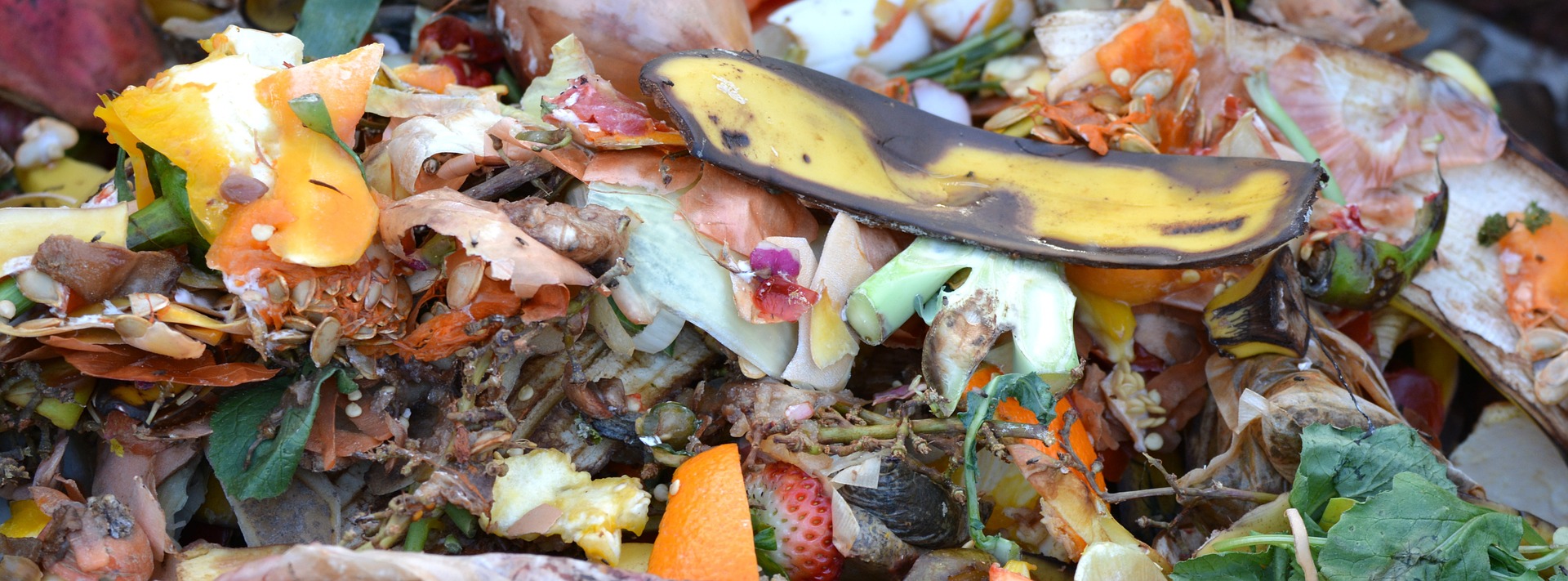
What do you see when you look at a compost pile: decaying matter, or a treasure trove of biodiversity, nutrition, and community?
Comments from a recent member survey reveal the latter: our community composting schemes have provided a source of pride and empowerment for citizens across the city. These sentiments reinforce the results of our most recent monitoring report: demand and enthusiasm for composting across the city remains high, and it continues to provide an effective channel for people looking to recycle their food waste. Below we explore the findings of our survey and monitoring report in more detail.
One member told us what the like about it:
‘Composting my food waste is an amazing daily environmental act! I like how community-rooted the scheme is and know lots of people on wait lists trying to join.’
After an audit this year we now have a more up-to-date picture of our member numbers, which has highlighted compost schemes where there is increased capacity. This has enabled us to induct new members from our waiting lists.
However, the majority of our schemes remain full with long waiting lists, which is a bittersweet situation – demand outstrips capacity, showing that enthusiasm for composting across the city is showing no sign of stopping! As one member of our survey noted – ‘I love the composting scheme, but I wish there were more sites so that more people could get involved’. We continue to receive regular enquiries about setting up compost schemes, both from within Brighton & Hove and nationally and we have plans to open new schemes at the hot-spots in local neighbourhoods.
‘We love that there are people in this city that are driven to make composting happen.’
After many years of consultation and negotiation, we finally opened the successful Queens Park composting scheme. We’ve also got the go-ahead to open a new scheme at Adelaide Crescent, an area which has long had demand but until now no agreed site. We remain humbled by the commitment of community groups to opening up composting sites, despite some local challenges.
‘Being able to compost fruit and vegetable waste, plus our efforts to reduce and recycle means we send very little to landfill. The recent bin strike was no problem for us as we generate less than half a bin bag of waste a week’
Over the last year, from the 980 households involved in community composting, it is estimated that approximately 250 tonnes of waste have been diverted from the waste stream. This corresponds to roughly 25 trucks worth of waste that are diverted from the road over the year, and with it 250kg of C02 saved. As multiple survey-respondents noted: ‘As a plant-based household we have a lot of fruit/veggie waste’!
‘It helps reducing waste and produces compost for the garden. It helps to build local connections and makes me feel like I’m actively contributing to saving the planet.’
Considering Brighton is repeatedly named the most vegan-friendly city in the UK, we’re happy to know that community composting schemes are helping plant-based households across the city divert their food waste from the bin, contributing to a broader picture of sustainability within the city. It is not only the food waste that is diverted, but also less compost being bought, as members and gardens across the city use compost for food-growing. This results in less peat being extracted from the ground, and represents a circular economy approach: a crucial element of sustainability that we are able to model with community composting.
‘I love this scheme…I like the community aspect – feeling like we are doing something together. I have met a couple of people through being part of the scheme so that helps [me] to feel more part of the community’
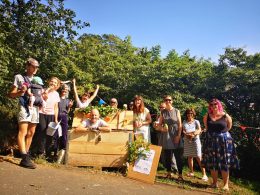
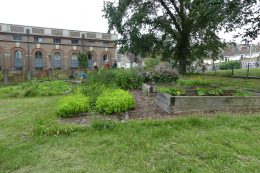
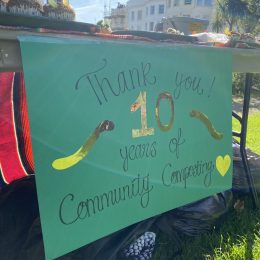
Survey respondents repeatedly noted the sense of community that they get from managing a community composting scheme. Members have taken joy in using the compost they have created to feed the soil in their local parks, and the opportunity to spend time intentionally in nature whilst composting: ‘lovely to discover the lovely little garden at St George’s Church, where I spent hours drinking coffee with mates during lockdown’. Composting community was celebrated in Food Partnership style last Summer when we celebrated 10 years of composting by holding a compost monitor party, that featured worm-themed cakes and plenty of chat about vegetable peelings. As part of the celebration we asked members why they chose to be compost monitors, and our favourite response was that “the compost chose me.” Many of the compost monitors that attended have been diligently supporting their schemes for a number of years, including one who has been a compost monitor for ten years!
‘So empowering! I hated seeing food waste plonked into a black bin liner and sent off to landfill. So much nourishment going to waste! Not any more :D’
Finally, the theme of empowerment was a recurrent one. Members shared how compost schemes enabled them to feel like they were ‘doing their bit’, however small, for the planet. Thinking about climate change can often feel overwhelming, but the act of composting gave members a sense of being able to make small and significant contributions.
Together these sentiments demonstrate that composting is far more than just waste management, and is instead an active process. It brings people together in the act of shared care for their compost, through turning and monitoring. This changes perceptions of compost from something to food use – finding different ways to reuse food – rather than just seeing it as the removal of food waste. Schemes of Brighton & Hove continue to prove that the many heaps of soil across the city are also heaps of fun and community for their members.