
The Food Systems Equality project (FoodSEqual) is a national project working towards a fairer food system. Over the last five years we’ve been working with diverse communities, aiming at enabling more choice and agency over food. We have been listening to what people want from the food system. With this information the project is striving towards new products, new supply chains, and new policy frameworks.
In our first year of research, we learnt that beans and pulses, and fish are the top two types of food residents would like to eat more of. Later on, we delved deeper, and the community came up with a chickpea recipe kit as the best way to help people eat more pulses.
We interviewed two key participants from our workshop series, Mary and Paula, who each contributed a recipe that made it into the final kit. This is the story of how local recipes, shared with love, are now transforming how Brighton & Hove cooks.
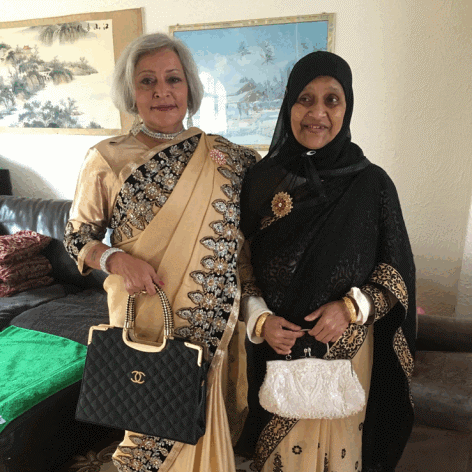
Paula
Paula has been a big presence in our recipe development workshops; with her infectious energy and welcoming personality it’s no surprise she’s such a pillar of her community. She shares food she’s cooked not just with her large family, growing strong with 19 grandchildren and 6 great grandchildren, but with her neighbours, who are so used to her help they call her “Paula’s free taxi”!
Paula’s chickpea and tomato curry is an Anglo-Bengali fusion inspired by both sides of her heritage. This recipe was adapted from one Paula’s sister would cook for her children. With a mild creamy sauce, the gentle spices are excellent for anyone but especially for anyone unfamiliar with curries with more of a kick.
Paula grew up in Brighton, but her sister lived in Bangladesh for most of her life. After meeting briefly as children, her sister tracked Paula down years later, after their children were all grown. They spent time together both in Brighton and in Bangladesh, and much of it was in the kitchen. Nothing she learnt from her was passed down in writing, Paula learnt this recipe and many others by watching her sister cook. A traditional method that leads to recipes adapting over time, so each family’s version is entirely unique.
When she found out her recipe had been chosen, Paula called her daughter to let her know how proud she was. Growing up in the 70s, Paula frequently experienced racism around food in school, and expressed to us her hopes that this meal kit could help make food from different cultures more familiar to kids today. Alongside these hopes, Paula found the project a great place to reconnect to her catering background and find herself again in retirement. “Who is Paula? What does Paula like? Feeding people!”
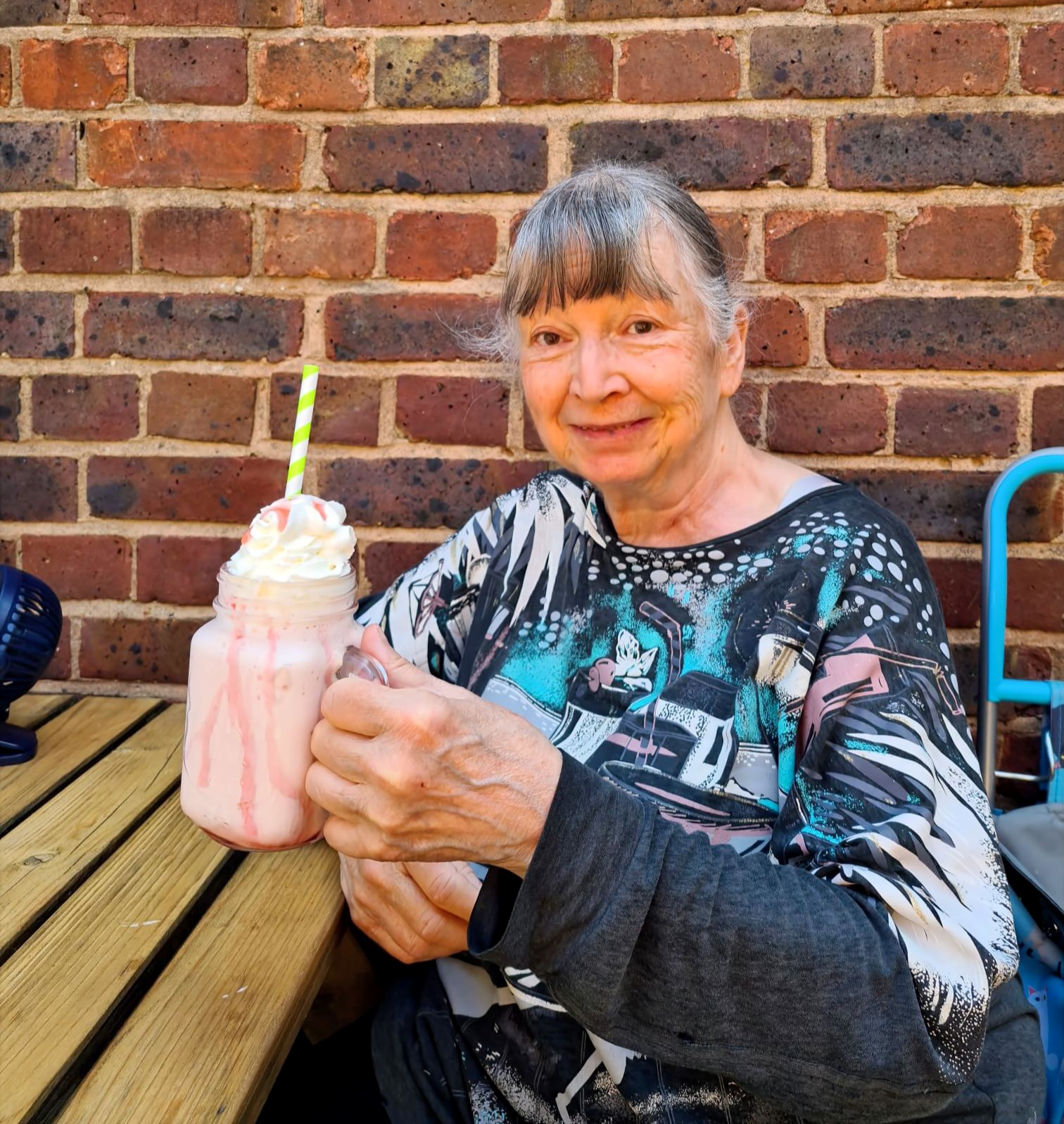
Mary
Mary, a “born and bred” Brightonian, with Anglo/Irish heritage and Nanny to 8 grandchildren, remembered how food has changed over decades from meat, two veg. and seasonal fresh food, to multi-cultural societies bringing new food staples and spices.
Mary’s food culture included Anglo/Irish upbringing; living in Naples and Rome with Italian and American families, which added to her food fusion. Mary is heavily involved in the local community, helping to run projects involving art and crafts, yoga and dancing!
Mary participated in all but one FoodSequal community workshops, sharing experience and knowledge of the local community, and giving us, as researchers, a sense of continuity. She loved the social connection and contributing to projects that enable positive impact within communities.
Mary encountered chickpeas recently, at a community event, likening them to potatoes – a healthy staple that takes on different flavours. Whilst finding it hard to like chickpeas, she found they can be disguised within recipes, as a cheap, healthy store cupboard stand by. “As long as you have pasta in and you’ve got potatoes, chickpeas, rice or lentils, you have the starting point of a filling meal”
Mary’s Chickpea Pasta recipe developed from her experience of bringing up children on a tight budget, outside of the City centre, where fresh food was not easily available and supermarkets were miles away. The recipe uses chickpeas with flavours that are familiar to many families’ palates; a pasta dish with a rich tomato sauce. Across the board, the other participants loved Mary’s recipe selection! Mary particularly liked that you could mix your cupboard staples, so if you had a little pasta or lentils or chickpeas, the different staples could mix together seamlessly to form a meal.
Mary says of her time as a FoodSequal participant: “It’s been brilliant! Everyone’s cultural experiences were different, bringing in new foodstuffs, recipes and cultures.”
What’s next?
Mary and Paula are just two of the 60 + people who generously gave their time and voices to our local FoodSequal research. Sharing food knowledge through families and community is a natural part of day-to-day life for many of our participants.
Our research is simply a way of recording and disseminating this knowledge further; to other families, communities and ultimately to decision makers. Bringing to life the aspirations of local people and highlighting the obstacles faced in achieving them. Together we co-produced Chickpea Meal Kits.
Our research has demonstrated that our Chickpea Meal Kits can make healthy, sustainable and affordable cooking accessible to more families in Brighton and Hove. They address obstacles that local people told us they face, like; access to local low cost food, mental load around cooking and meal planning and food racism.
The power of co-production is not only in welcoming and acknowledging the skills and knowledge we find in communities, but in the increased trust in outcomes created for the community by the community.
We will be sharing our findings through the development of a Toolkit for schools and community organisations to take this work forward. Our toolkit will highlight the power of community involvement in creating solutions like our Chickpea Meal Kits alongside practical resources.
The Toolkit will include:
- The three community chickpea recipes
- Nutritional information
- Downloads of recipe cards and logos
- Information and guidance on supply chains
- Carbon footprint data
Our shared hope is that the Toolkit resource will enable community co-produced meal kits to become a concrete reality in the future.
None of this would be possible without the contributions of the participants and we cannot thank them enough for their honesty. Their willingness to share and be open about their daily lives, their challenges and vulnerabilities.
By Cailan Magee, Emma Moore, Mary Funnel, Paula Ayling