Guest Blog by Leah Salm
On a blustery morning last summer at the Weald allotments, one grower smiled and said, “You can come here, weighed down by various problems, and then you just forget all about them.”
Over the past two years, I’ve had the privilege of listening to dozens of stories like this from growers across Brighton & Hove — stories of restoration, creativity and care that show how much more these spaces are than simply places to grow food.
My name is Leah Salm, and I’m a PhD researcher at the Natural Resources Institute, working in collaboration with the University of Sussex. My research project, Bite-Size Biodiversity, explores the edible biodiversity (of crops and varieties) in community gardens and allotments, and asks how these growing spaces connect people, land and urban ecosystems — and ultimately what that means for a fairer, more sustainable food future.
The are many urban food challenges in the UK, from cost-of-living pressures and declining access to green space, and the proliferation of access to unhealthy and ultra-processed foods. With more than half of Brighton & Hove residents living in flats, and huge inequalities in health outcomes, we need to look closely at the potential of food growing spaces as multifunctional landscapes for social and environmental health.
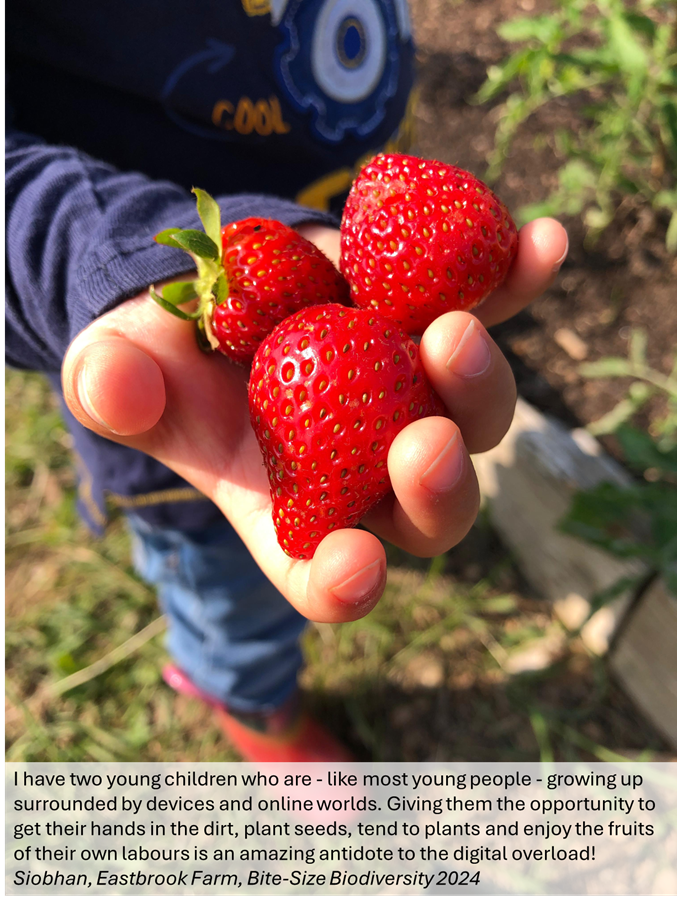
I’ve used creative and participatory methods that share storytelling power with the growers themselves. Together, over 100 growers and community gardens have taken part in collecting information on the diversity of crops and experiences in the city. A subsection has also catalogued their ‘Plot Stories’ – a collection of over 200 photos and videos to give an in-depth immersion into what it means to be an urban grower.
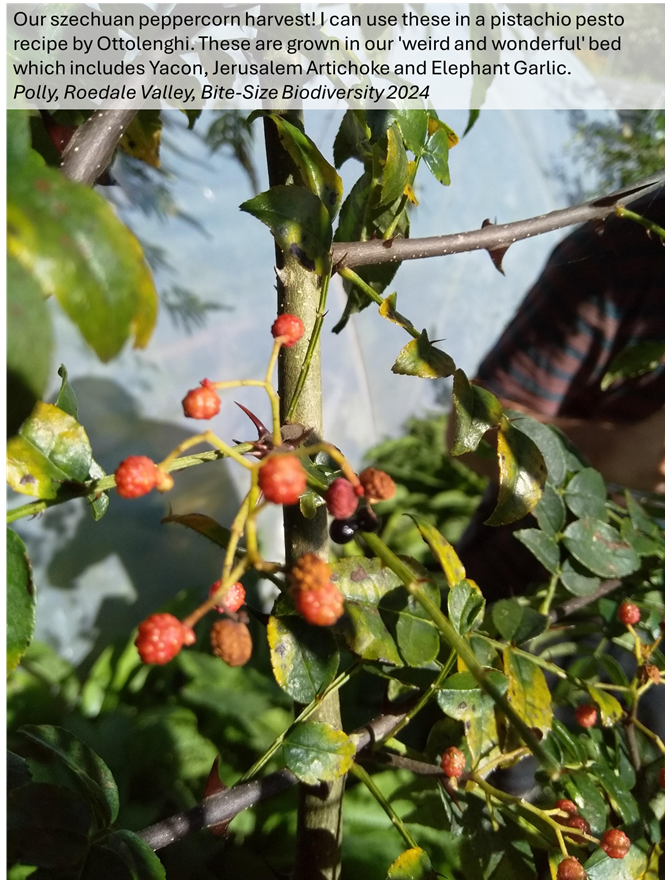
The growers I’ve worked with cultivate extraordinary diversity — from heritage beans and apples to tropical fruits like passion fruit and kiwi, and spices like Szechuan peppercorns. This study has, for the first time, been able to evidence this diversity: a total of 208 unique crops and almost 700 varieties of edible plants were recorded within these growing sites ( view the full range of crops illustrated in this graphic).
This diversity brings ecological benefits to the city, but it’s also social and cultural. The photo stories and conversations reveal that these crops reflect family preferences and memories, experimentation and curiosity, and exchanges between neighbours. One grower noted during a workshop that “everyone in Brighton grows the same rhubarb” because it has been passed on and on.
A key finding of this work is that these spaces act as pockets of adaptation and resilience in the face of climate change. When most of this data was collected in 2024, the season was one of the most difficult on record — a cold, wet spring led to a “plague” of slugs and snails. Growers adapted their approaches, adjusted planting schedules and changed which crops to grow, with many saying they’ll prioritise more perennial varieties in the future. Underpinning these adaptations were the sharing of knowledge, camaraderie, and the exchange of seeds and plants when others had failed.
Beyond the act of growing food, many described their plots as spaces of restoration and creativity — essential antidotes to fast-paced city life:
“I work in a desk job and there’s no creative output at all. It’s Excel spreadsheet after Excel spreadsheet, and I think having that space to just be a bit creative.”
These stories invite people to see urban agriculture not only as a technical practice but as an emotional and cultural one. As one grower put it:
“I feel a deep connection with my past, with my parents, but particularly my grandparents and my uncles and cousins, because when I’m growing, I get a sense you’re carrying on that tradition”.
Together, these insights show that these spaces do vital, often invisible work. They contribute to urban biodiversity, climate resilience and mental well-being. They also show that environmental care isn’t separate from social care — the two are deeply entangled.
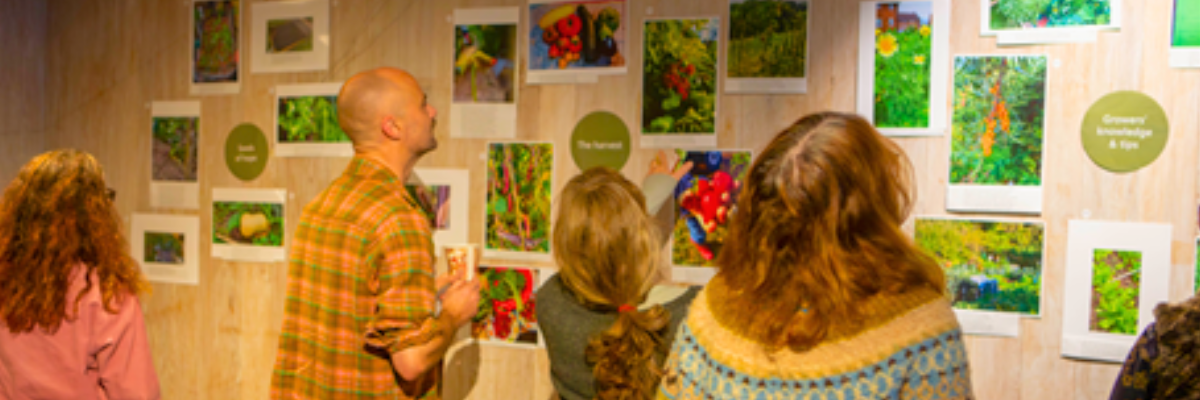
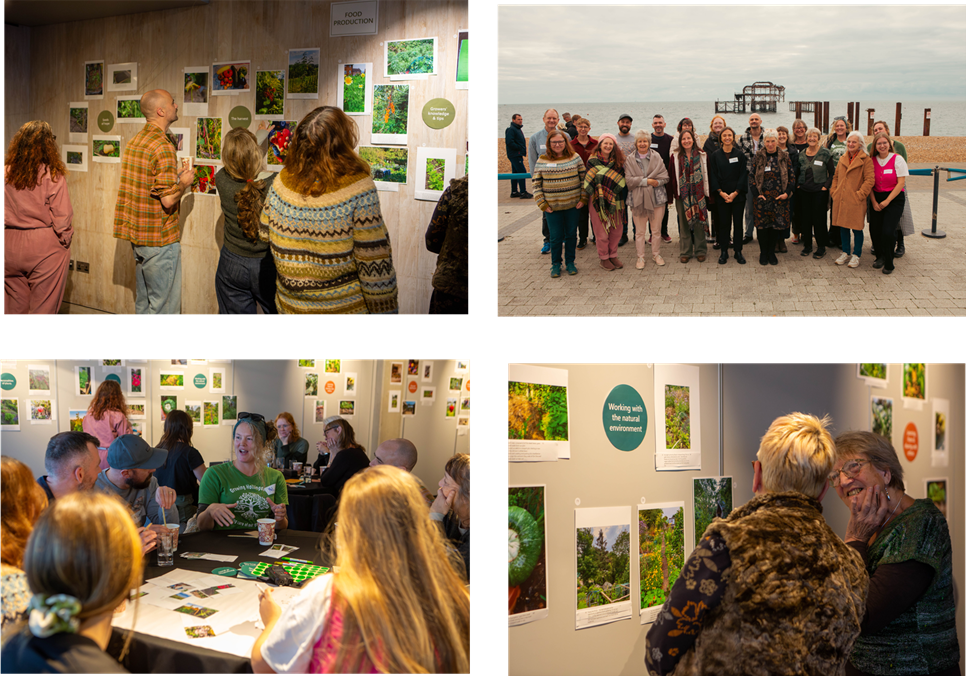
This summer, I exhibited the growers’ Plot Stories and launched a recipe booklet of recipes from growers all over the city (download a digital copy here). The exhibition and recipes belong to all of the city’s growers and will hopefully travel to other Brighton venues in the coming months, continuing to inspire conversations about food, care and climate (If you would like to host this exhibition, please get in touch).
The challenge now is to ensure access and equity: who gets to benefit from these green, nourishing spaces? Allotments remain oversubscribed and at times unevenly distributed, and those in more deprived areas are often under greater threat. If other cities are to follow Brighton’s lead, we’ll need policies and investments that expand provision, remove barriers and recognise growing as essential community infrastructure.
These findings can support local and national decision-makers who are already talking about biodiversity, climate adaptation and social care and inequalities — showing that allotments and community gardens are already delivering expansive benefits that need to be valued across multiple government departments. The formation of the city’s Edible Brighton working group, which brings together organisations and local government, is an encouraging whole-city step toward an “edible city” — one that supports growing not just within allotments, but across neighbourhoods and public spaces.
This project reminds us that growing food is rarely just about crops. It’s about people finding grounding and connection in a changing world — about care that extends from soil to society. I’m deeply grateful to all the Brighton growers who shared their time, photographs and reflections with me. I believe the roots of a resilient food future are already here, quietly spreading across the city and creating an infrastructure of care and hope.
If you’d like to learn more or access the published materials as they emerge, please get in touch: l.salm@greenwich.ac.uk
Phase two of this project is now underway, exploring the interactions of perennial crops and beneficial insects, led by Emily Millerchip at the University of Sussex.
This work is funded by the UKRI, through the UK Food Systems Centre for Doctoral Training Programme.