
Well into the 1960s, food waste from Brighton & Hove’s households was collected and reconstituted into very appetising-sounding ‘pig swill’ – something that supposedly resembled bread pudding, and was used to feed local pigs. When in Barcelona a few weeks ago at the Edible Cities Network conference, I heard a similar story: up until 1968, Barcelonans had their food waste collected by local farmers, who would use it as fertiliser for their crops. Both are examples of ways that cities have always been ‘edible’, despite our current popular understanding of cities as places where food is consumed but not grown; wasted but not recycled.
What role can cities play in making our food system more sustainable, and what are we capable of creating within our concrete jungles? These ideas were central to the ‘Advancing the Edible City’ conference, which took place from the 15th-17th March. As a partner project in the Edible Cities Network, I attended the conference on behalf of the Food Partnership, and share my main takeaways from the event below.
Contradictory Cities:
Cities are complex and contradictory places. One of the speakers from Barcelona City Council summed this up well: cities produce 72% of global carbon emissions, are the places where 70% of our world’s food is consumed, yet are also predominantly the places where alternative food systems are imagined and explored. On the one hand, city councils have relatively limited power: they cannot regulate budgets and they have little sway over supermarkets and agrifood businesses. On the other, they are at the seat of political and cultural innovation. Another speaker was more critical of cities, explaining how they modify the rural environments around them, causing a one-way flow of resources from rural areas into cities, whilst at the same time creating pockets of massive deprivation within urban areas: 35% of the population of Barcelona living under the poverty line, with many unable to access the food around them that is being taken from the countryside.
Cities can be both empowering and disempowering places. The question that ran through the conference was: how do you take the ‘utopian bubbles of food experimentation’ that come out of cities – such as community supported agriculture schemes, community gardens, food co-operatives – and leverage this experience to help enact change at a bigger scale. Transformation cannot happen without cities, nor can it only happen within cities – cities may hold the majority of the world’s population, but they certainly do not hold the majority of the world’s land. How is it possible to use the ideas, experiences, and knowledge of food systems transformation that is gained within cities, but towards making change at larger scales?
Certainly, the conference did not provide the answers to this question, but did leave me with interesting questions to consider about the role of cities in enacting change at a local level, but also at national and international levels. An interesting concrete example of how to use some of the power of cities to support the rural came from the Barcelona ‘Joint Office of Sustainable Food’, who are running a sponsorship scheme whereby schools and restaurants ‘sponsor’ peri-urban producers to get access to their food.
Agroecology is key:
Agroecology was a term I heard repeatedly across the conference, and is certainly a buzz word within the sustainable food movement. Whilst the term is catching on in the UK, it was interesting to notice how integrated it is in Barcelona. Indeed, food strategies across the UK are yet to adopt the term – the National Food Strategy recommendations of 2021 mention it once, and the Government Food Strategy white paper released in response don’t mention it at all. Yet, as one of the keynote speeches explained, agroecology has the capacity to help cool the planet. Agroecological growing methods such as using crop-covering plants and ‘no-dig’ farming method help to keep carbon within soil, which can make a significant contribution towards halting carbon emissions.
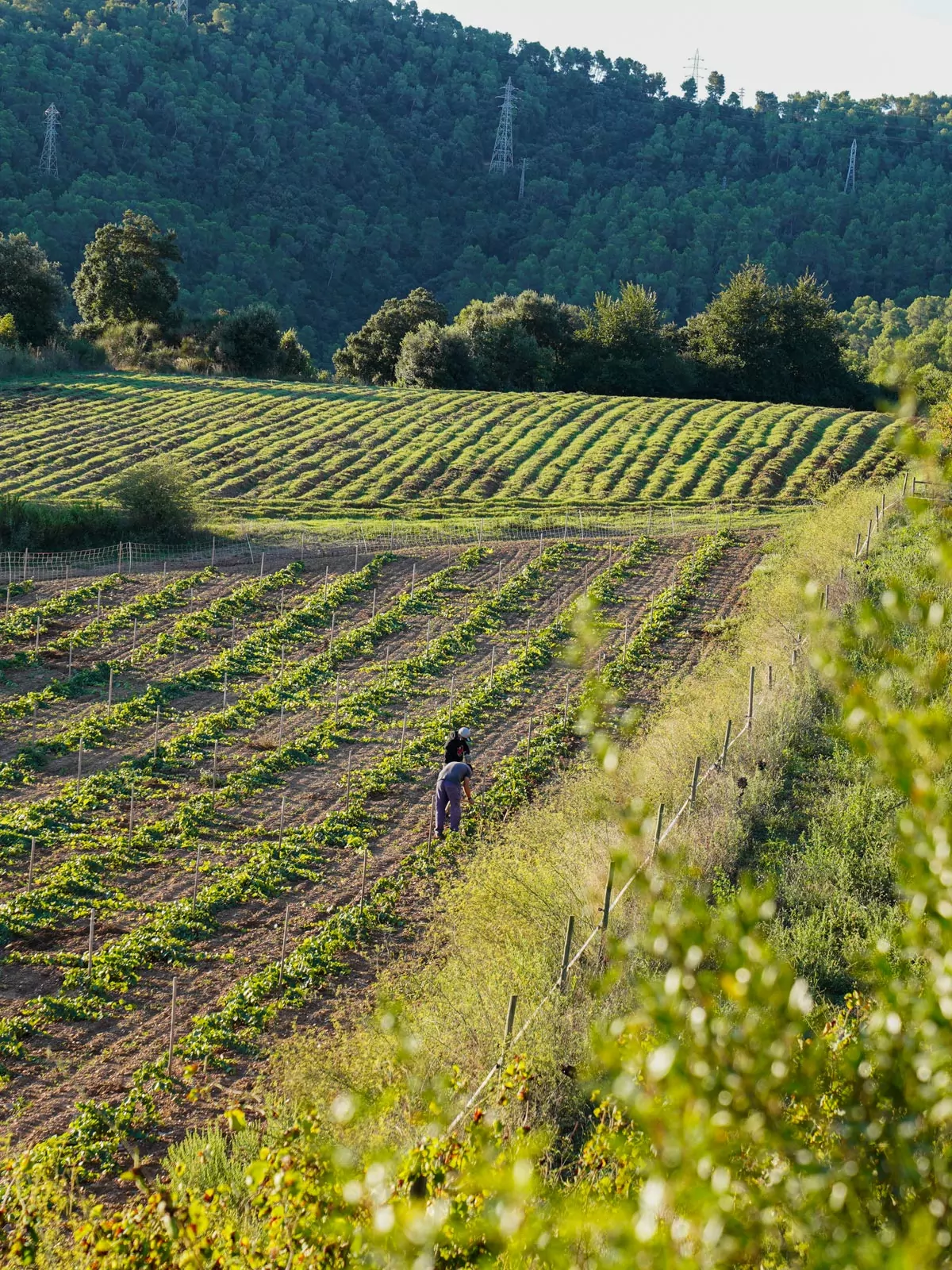
Agroecology is defined as a holistic approach to food growing – anything gown under the agroecological banner must embrace the following: ecological processes that are locally adapted and environmentally friendly, and importantly, a ‘systems approach’ that considers interactions beyond the growing site and their impacts. That is: agroecology is as much as political movement as it was a way to grow food, and is one that thinks about all the people, places and plants involved in growing.
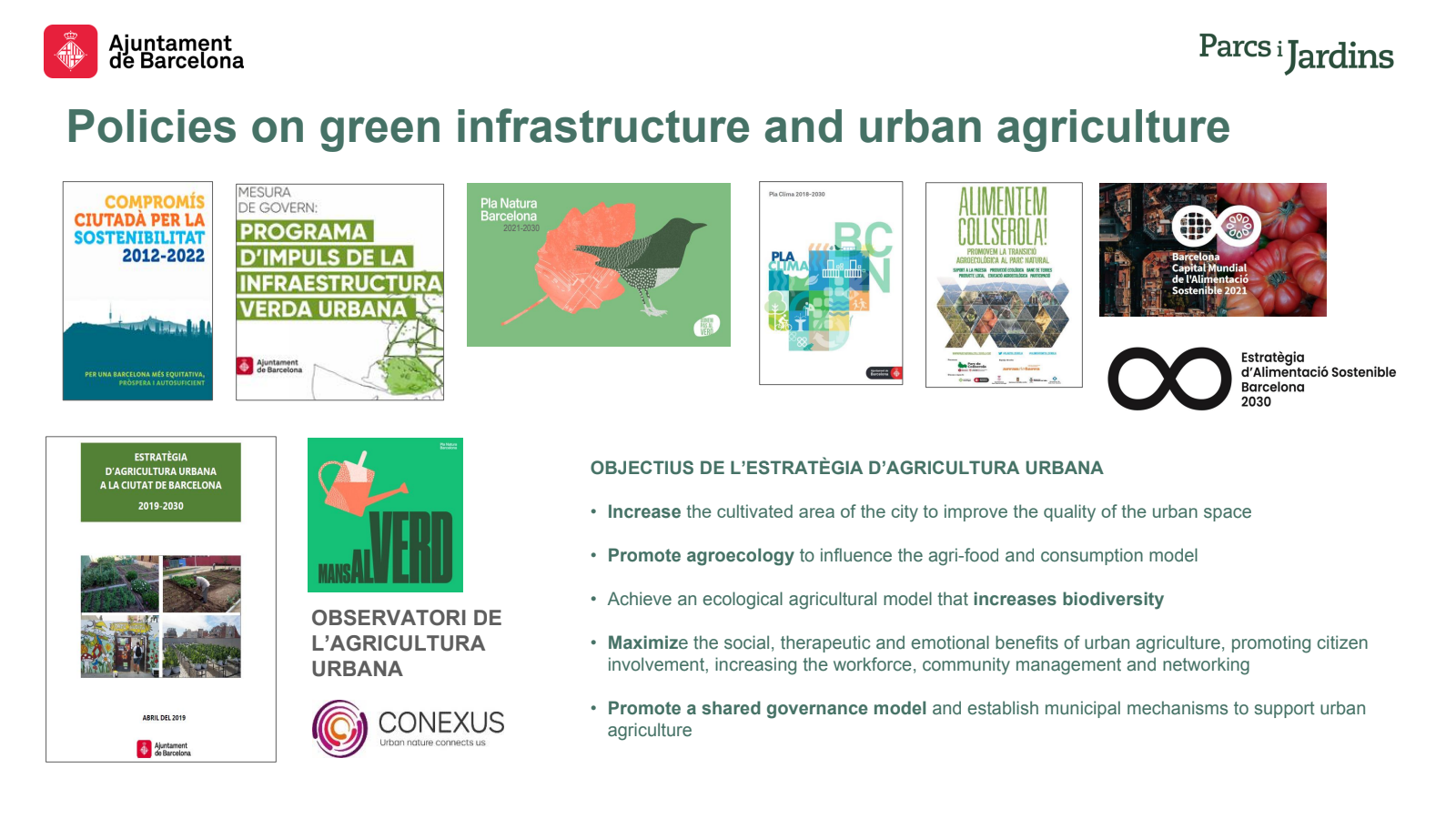
Agroecology is woven into the city’s ‘Sustainable Food Strategy’, which has as a mission statement the aim ‘to have a food system with a more sustainable production and consumption. A transparent, participative, resilient, secure food system, with just and equitable relationships, inspired by agroecology, which tackles the climate emergency and the extinction crisis, and which prevents food loss and waste.’ The words in bold I have added myself, to emphasise the human and social core which seems to be at the centre of this thinking. Similarly, the city’s ‘Urban Agriculture Strategy’ has ‘promoting agroecology agroecology to influence the agri-food and consumption mode’ as one of its key goals. Of course, as it stands these are declarations within a food strategy – how and if this evolves into human-centred policies is a different question, but it felt exciting to see concepts such as agroecology making their way into city food-planning policies with a goal of longer-term behaviour change.
Award Winners:
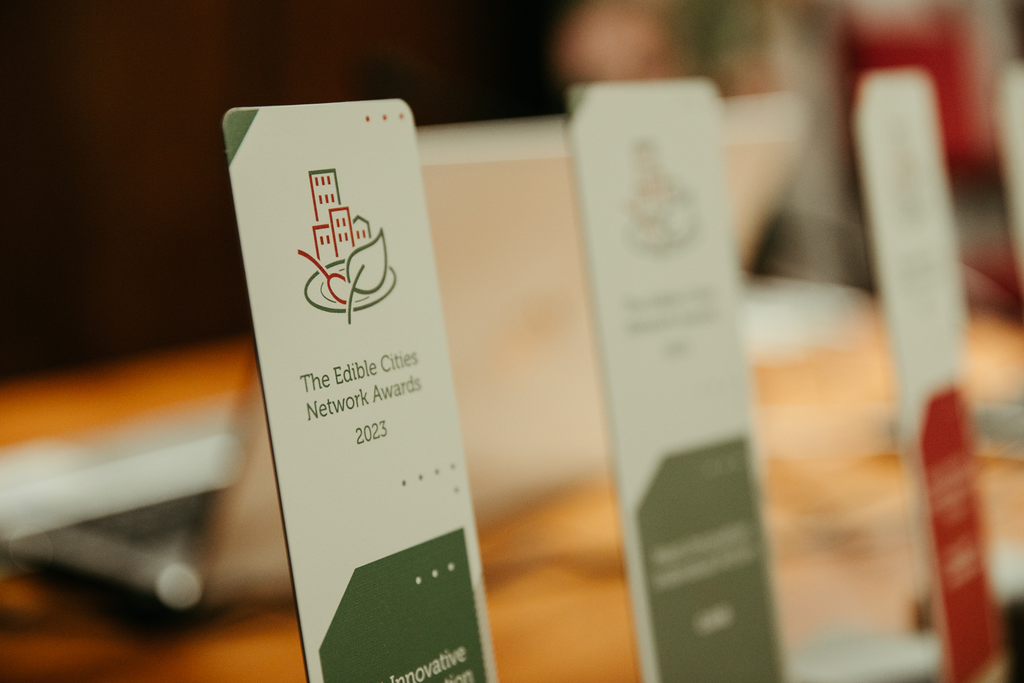
The conference was also an opportunity to celebrate the prizewinners of the Edible Cities Network 2022 awards. Against a backdrop of serious discussions about theory and politics, it felt touching to have the opportunity to celebrate humans who were using the tools and capacities they had to try and enact positive change to people and food in their cities. The winners of this year’s awards are below, and I would highly recommend checking all their projects out:
Most Innovative Indiviudal Action: CUIB
Operating as a plant-based bistro and a community-space, CUIB is a hub for sustainability in Romania’s second-biggest city, Iași. The hub operates a membership system that allows for a solidarity-model approach, its menu is currently 90% locally-grown menu, they use saved food wherever they can, food waste is turned into compost for growing new crops, free meals are offered to vulnerable communities, and it is making plans to go fully zero-waste.

Most Innovative Individual: Trees de Bruyne
Trees de Bruyne founded the NGO ‘bark.today’ at the beginning of 2022 in Aalst, Belgium, and has overseen the project since then, helping it grow into a thriving food forest in the town centre that has had over 330 participants. ‘Nature-connectedness’ drives the project, which includes mindfulness, storytelling, creative endeavours, and nature-based education within the food forest, creating new connections and long-lasting knowledge about urban food within the city of Aalst.
Most Innovative Social Engagement Process: Centre of the Earth
‘The Centre of the Earth’ is an urban farm that has been operating for over 10 years in Athens. Its goal is local mitigation and adaptation to climate change through sustainable food production, taking an approach that focuses on sharing agroecological and organic growing skills – with a particular focus on catering to vulnerable groups. Activities are co-designed and adjusted in conversation with participants, and to date over 75,000 adults and 60,000 children have participated in educational activities on the farm.
Best Overall Edible City Approach: Essbare Stadt Köln
Edible City Cologne is a citywide strategy working to make Cologne more ‘edible’. Its basis is an Edible City Action Plan which sets out how the city can improve its food system. This developed as a participatory project that became part of the city’s political agenda, and includes a programme covering edible public green spaces, community gardens, urban orchards, and more. As well as public spaces, they also focus upon bringing gardens into schools, housing associations, and companies.
—
As ever, attending a conference threw up more questions than it did answer them, but one of my main takeaways was that the impact of urban food initatives goes deeper than might meet the eye. On the surface they may just look like areas where fruit and vegetables are grown, but at a deeper level they represent a willingness to use space and resources in our cities in a more sustainable manner. Understanding how to translate these experiences into policy practices that embed sustainable food more deeply into cities is the next step – and is the reason why networks such as the Edible Cities Network, and conferences such as ‘Advancing the Edible City’, exist.
Check out the Edible Cities Network website for more resources, info, and inspiration about the growing network of Edible Cities worldwide.