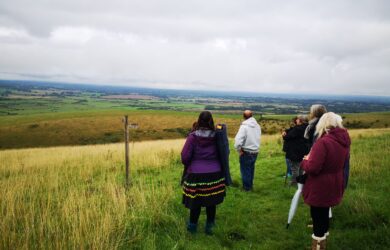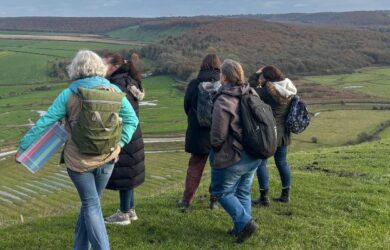

How can we make cities more edible? This question is at the core of the Edible Cities Network, a Horizon 2020 project that focusses upon ‘Edible City Solutions’. These are projects, processes, and ideas that focus on improving the social and environmental resilience of cities by working on urban food system innovation. We are a partner in the Edible Cities Network, and I recently got the opportunity to take part in a staff exchange event in Berlin, and the general meeting in Ljubljana, visiting Edible City Solutions across the way.
As a Food Partnership, we spend a lot of time thinking about how we can make our city more edible. But food is complex. Start thinking about food and suddenly you’re thinking about food systems –Where do they grow it? What do they use to water it? How long can they stay at a site for? Are they legally allowed to be there? The list goes on. Making your city more edible is about a lot more than just the food grown itself.
Visiting Germany and Slovenia was a chance to observe new, and creative approaches to tackling these issues. During the trip it became clear to that many of the challenges we face are shared, despite geographical differences. Below are examples from Berlin and Ljubljana of ways to approach these issues creatively, turning them into ingredients for success.
SPACE:
Land is at a premium in urban spaces. This is a fact we are well-aware of in Brighton & Hove, which, due to its spiralling housing costs, consistently gets rated one of the most unaffordable places to live in the UK. Urban gardeners are well-aware of this issue, too: gardens are but one of the competing priorities for town-planners to contend with, as they weigh up whether a place should be designated as housing, a park, or a food-growing site.
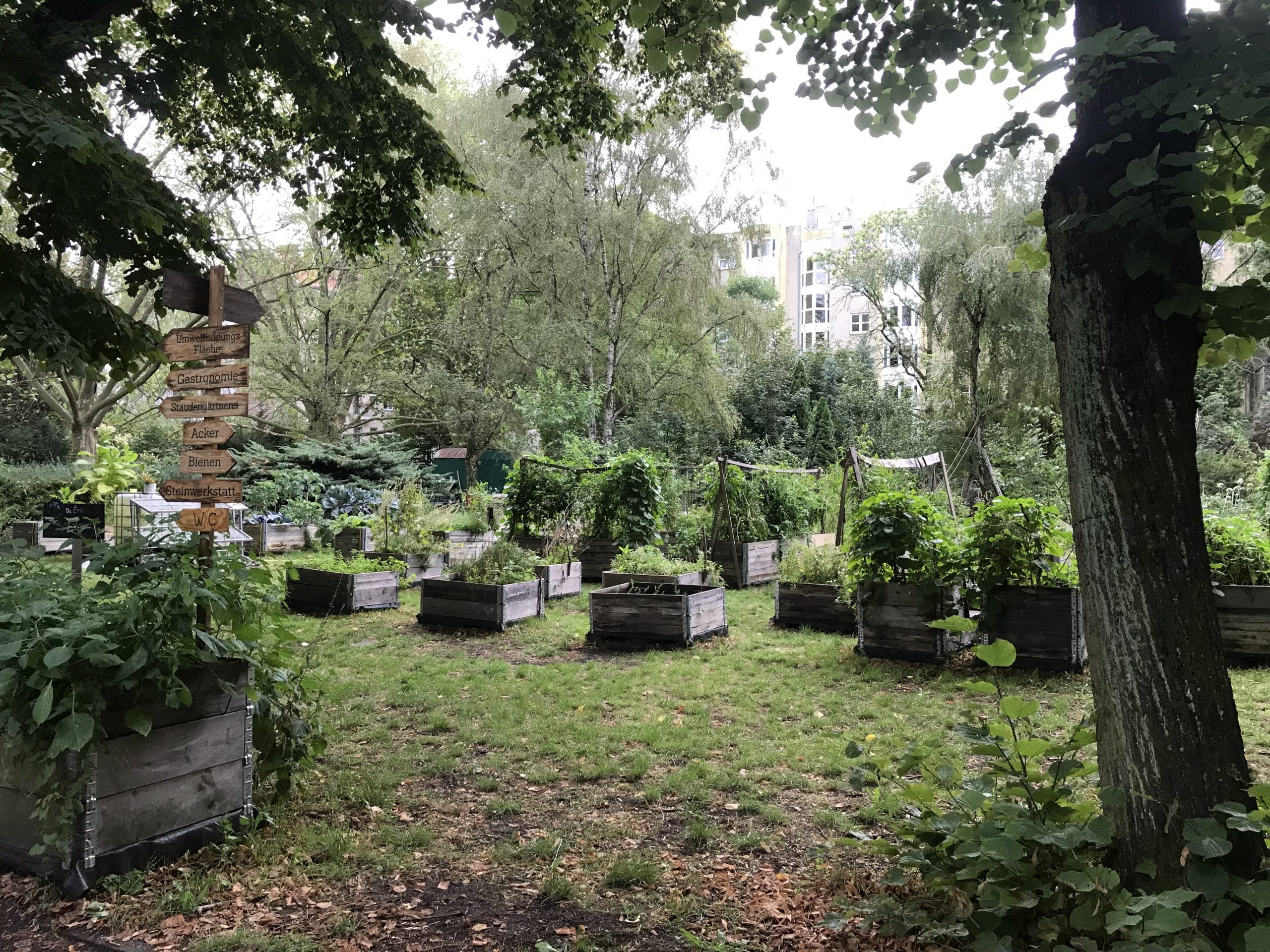
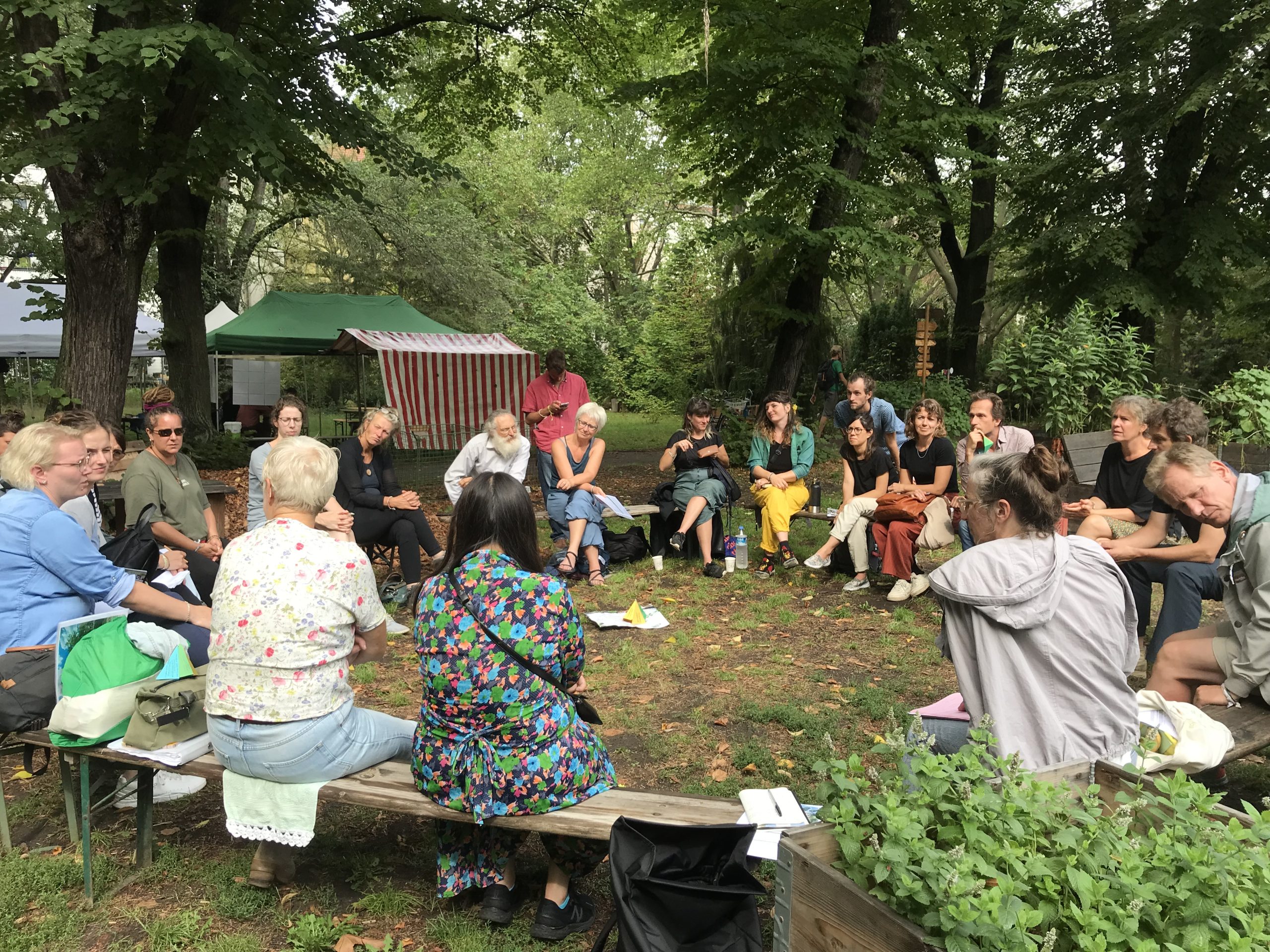
Visiting our project partner the Prinzessinnengarten Kollektiv in Berlin, however, gave us new food for thought: their successful community garden and café has been operating out of the St. Jacobi cemetery since 2019. This agreement came about as the St. Jacobi cemetery shut its doors to new funerals in 2018, and was looking for ways in which they could continue caring for the space without the income from funerals to do so. The Prinzessinnengarten stepped in, and now care for the whole 75,000 square metres of the cemetery, whilst using 5000 square metres to grow food from. Their activities aren’t limited to food growing, however – there is also a café on site, selling food made in the garden, and space for cultural activities.
In Ljubljana, we visited the Krakovo Garadens – 1.5 hectare of market gardens, directly in the city centre. The space is 700 years old and has been preservered within the city as a heritage site – an important nod to the fact that food growing is an important part of urban landscapes. Both modelled new ways of thinking about using space in our cities.
WATER:
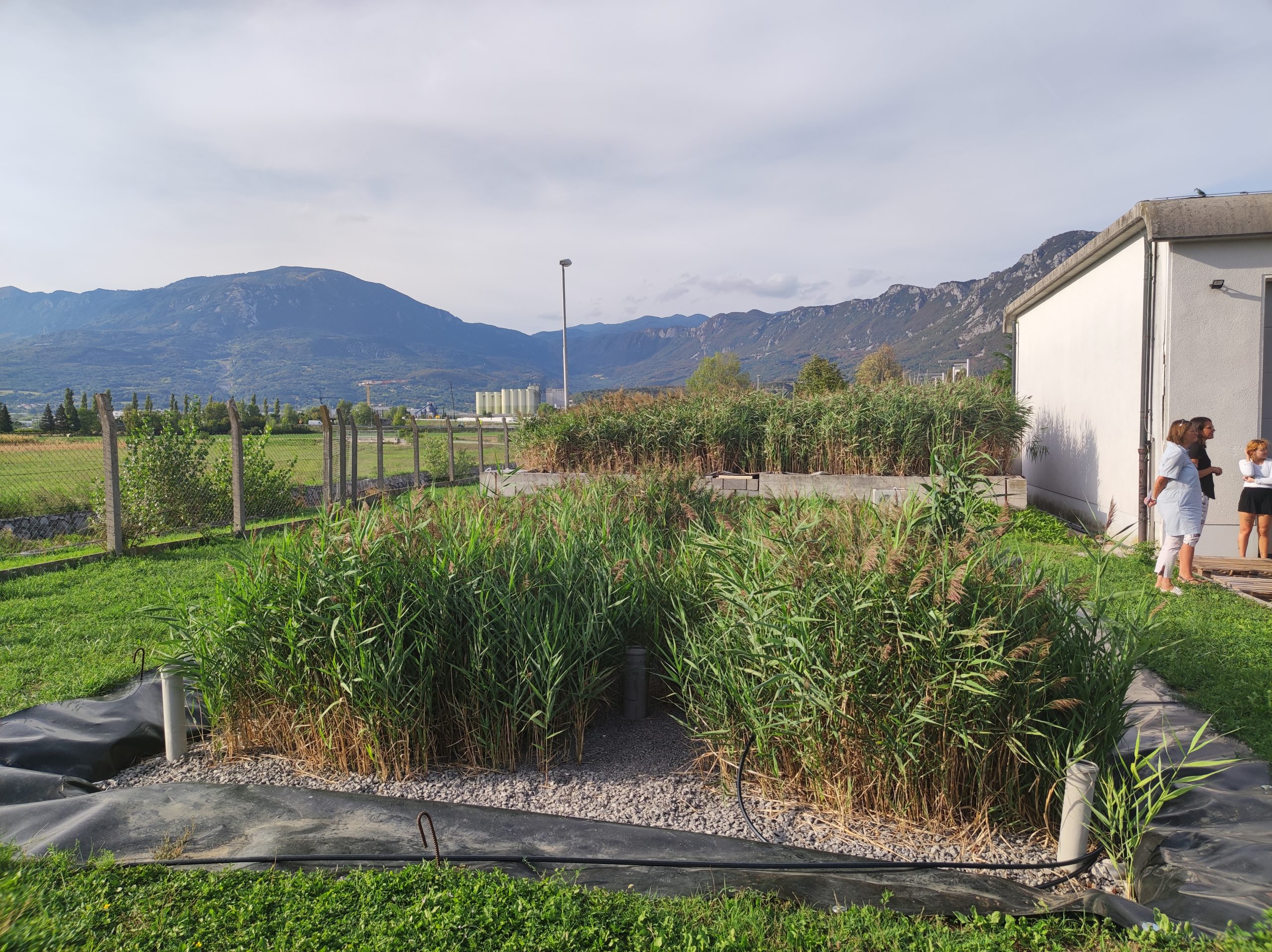
After one of the hottest Summers on record and an enduring hosepipe ban across the South East, the issue of water has been on the minds of food-growers. In both Berlin and Šempeter-Vrtojba, new ways of using water circularly were being piloted. In a community garden on the outskirts of Berlin, I saw a water filtration system – installed in the garden – that allowed ‘grey water’ (waste water that isn’t sewage) used in the garden’s kitchen to be filtered, and then reused for watering plants in the garden. On a larger scale, in the municipaity of Šempeter-Vrtojba we were invited to see the pilot stages of a project in where waste-water was getting treated and filtered, and used experimentally to grow a healthy looking crop of tomatoes. Both reminded me that growing food holistically also involves thinking about circularity – not just of soil and crops, but also of water.
TIME:
Food growing is a slow game, which comes as a welcome retreat in our fast lifestyles. Plants take months (or years) to grow, soil needs time repair, you’re at the whim of the seasons. These rhythms don’t necessarily work with those of the city, whereby urban gardens are often only given temporary leases, and are moved on when developers come in. Gardens become ‘fillers’ for areas that are awaiting development, and once the contract is signed, the gardens must go. Remember The Mound gardens on Church Street in Brighton? These guerrilla gardeners were moved on by property developers ten years ago, for a plot that until recently remained empty.
The story is similar in Berlin. Yet the Prinzessinnengarten, when threatened with eviction from their first premises (which they leases on a series of 1-year contracts) were able to garner enough public support and outrage to secure a 5-year lease. More impressively, however, are the new possibilities that gardening in a graveyard has opened up for the collective, who are now relaxing into a 25-year long contract in their current garden. This allows for a form of food growing that is long term, and anchored into neighbourhoods. Being secure in your tenure allows you to look to longer-term, holistic projects, which the collective are currently undertaking. One such is their plan to develop a gardening and mourning group, looking at how to use gardening as a support for those mourning in a changing city landscape.
POLICY:
Urban agriculture in the UK is historically a grassroots-led movement, initiated by engaged citizens and operating in a realm somewhat outside of city planning and policy. Organisations such as Food Partnerships can act as a helpful meeting ground, helping gardeners understand the language and challenges of the council, and vice versa. The Edible Cities Network serves a similar role, too, helping build up ‘city teams’ consisting of a variety of stakeholders from across a city. Putting people in the room together who wouldn’t normally speak to one another can have surprisingly positive and unintended consequences: as a gardener from the Prinzessinnengarten reflected, taking part in this Edible Cities Network project has meant that you have a way to understand one another’s problems, and learn to speak each other’s language.
And what happens when you have food growers, town planners, councillors, and more together talking about food growing? We learned how the city of Berlin is in the process of publishing its first ever ‘community gardening programme’, which will enshrine in state legislation the importance of community gardening and makes efforts to support, secure, and protect Germany’s diverse pockets of community gardens. The programme was written as a participative process, involving over 200 stakeholders across the city, and is the city’s first programme that actively recognises the importance of urban gardening for the city and sets it as a priority.
In Ljubljana meanwhile, policy enshrines the fact that 20% of the food eaten in kindergartens needs to be sourced locally, and the city is committed to investing in its local farmers, through policies that fund them and encourage them to continue growing food in the city. Current estimates say the city could be 50% self-sufficient if it tried, and the urban planning department in Ljubljana have stepped up to the challenge of making this a reality. Indeed, the city has in policy that certain areas of the city won’t have its grass cut, to allow bees and wildlife to flourish – and signs are provided explaining why this is the case. Urban food system transformation often starts at grassroots level, but cities need to actively recognise the importance of food growing and its multiple benefits for a city. Ljubljana and Berlin prove cases in point for this transformation.
—
The movement to make our cities edible and to bring people in urban areas closer to their food is a relatively new one, and requires creativity and vision to help us imagine how we can use space in our cities differently. Having the opportunity to see new ideas modelled in practice – drinking freshly picked tea and eating local produce in a graveyard in Berlin, for example – are the kinds of experiences that remind you that it is possible.
Check out the Edible Cities Network website for more resources, info, and inspiration about the growing network of Edible Cities worldwide.