Communities make compost, compost makes communities
Thinking about the global scale of climate change can be overwhelming. Yet, actions that start locally, and are community orientated, can make a real difference – such as community composting. Our schemes help build resilient communities whilst reducing our city’s carbon footprint, which is why we would love to see more community composting schemes locally and nationally. Our video below gives a brief introduction into how to set up and maintain community schemes, and below we explain why we love them.
Everyday activism
The city of Brighton & Hove has declared a climate and biodiversity emergency, and plans to become carbon neutral by 2030. Community composting schemes are a vital step in our city’s roadmap towards this. They enable multiple closed-loop cycles across our city whereby food waste is turned into nutritious matter that feeds our city’s soils – without ever having to leave the city boundaries.
Our community composting schemes aren’t just about reducing waste – they also bring together pockets of active citizens across the city, connecting over their shared desire to waste less food. Solutions to the climate crisis need to involve both environmental and social solutions. Whilst we need to reduce waste, we also need to create resilient, engaged, and responsible communities committed to making this happen.
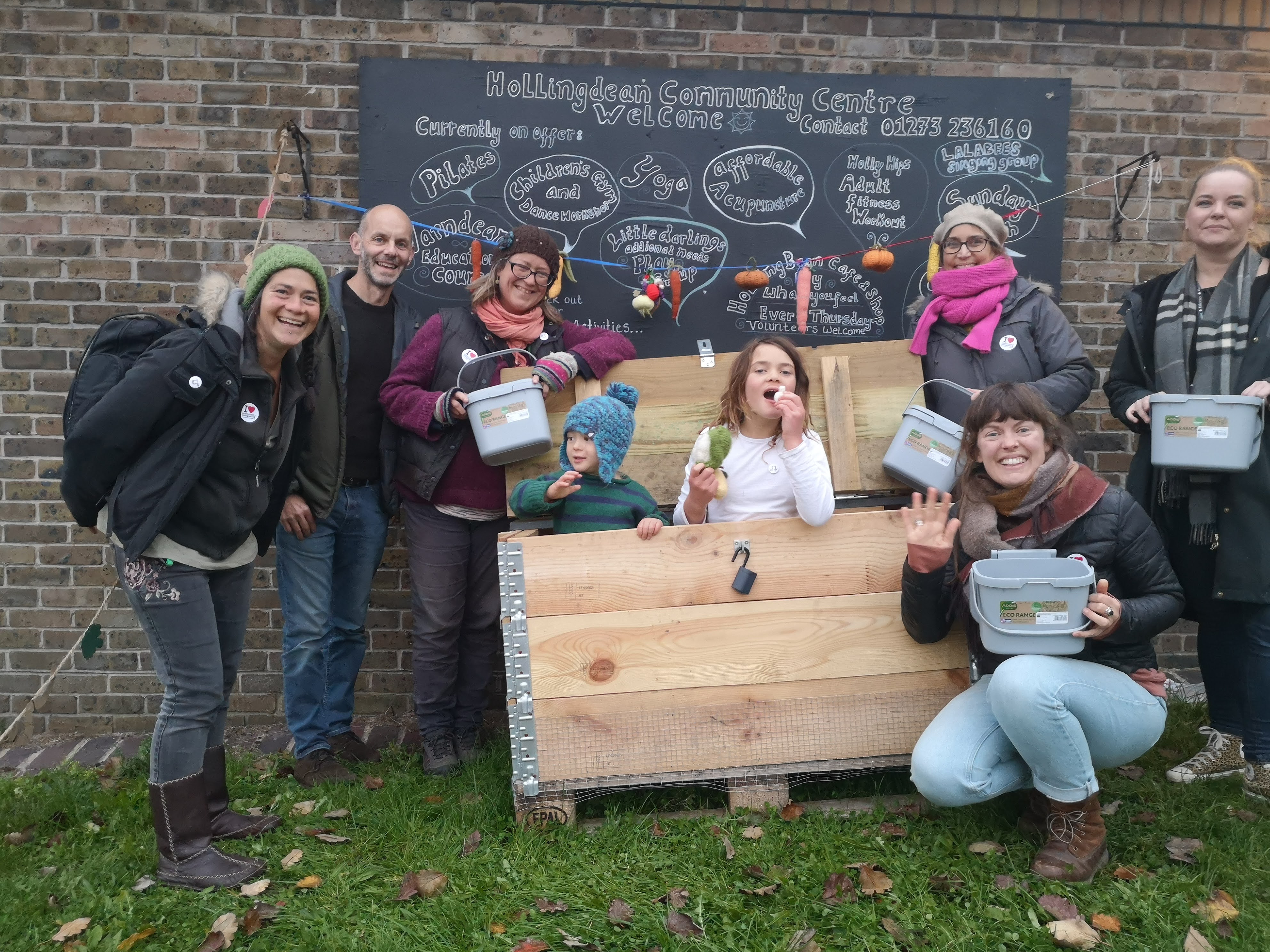
Community composting schemes act as incubators for exactly that. Schemes are made up of between 40 – 100 households, and are largely self-managed. We provide the compost bays, the compost caddies for people’s homes, and the maintenance, but it is up to the residents in each scheme and their volunteer compost monitors to keep turning the compost, distributing it, and monitoring the quality of the compost. Multiple members of our compost schemes have reported how this shared sense of responsibility has helped them feel ‘more part of the community’, through the act of ‘feeling like we are doing something together’. The importance of this cannot be overestimated – only by starting small and local are the vast majority of us able to make sense of the larger problems we face in the world today, and feel like we can do anything about it.
Closed-loop nutrient cycles
Local community composting schemes also have massive environmental benefits, too – more so even than domestic food waste collection. Community composting keeps fertility within the community, and by making compost locally we reduce the need to buy commercially-made compost, which often contains peat. Compost produced within our schemes often goes on to be used in the local park where the schemes sit, or is distributed to community gardens across the city. Not only do they help residents of a city avoid food waste, but they also help regenerate local soil by providing organic and nutritious matter that improves local soil quality. This avoids the heavy carbon output of transporting compostable waste to a processing centre, which can be often be over an hour’s drive away. Moreover, commercial incinerators rely on fuel to run, whereas community schemes are completely natural. 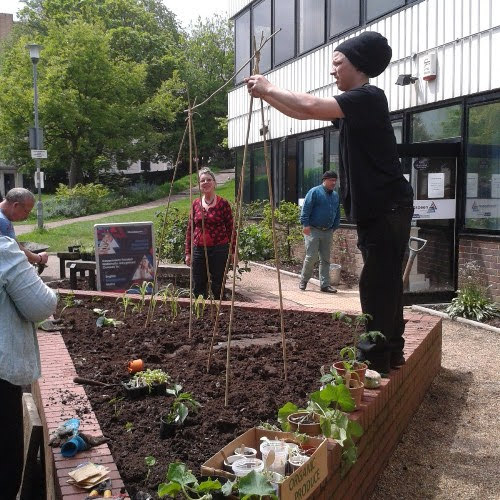
Setting one up yourself
Perhaps the best thing about this process is that community compost is easy to start, and largely tends to itself once established. In what can only be described as a dizzying political landscape, the challenges we face often feel overwhelming. Starting a community composting scheme is a tangible step that we can all take towards establishing carbon neutral cities. We are encouraging people across Brighton & Hove, and further afield, to try it out for themselves and see how easy it is to create compost communities.
Get in touch with us if you’d like to set a scheme up in your neighbourhood within Brighton & Hove. If you’re from further afield and are interested in starting a scheme in your city, get more information here, and sign up for our ‘setting up a community composting scheme: our story’ webinar in October here. If you’d like a consultation, contact us.